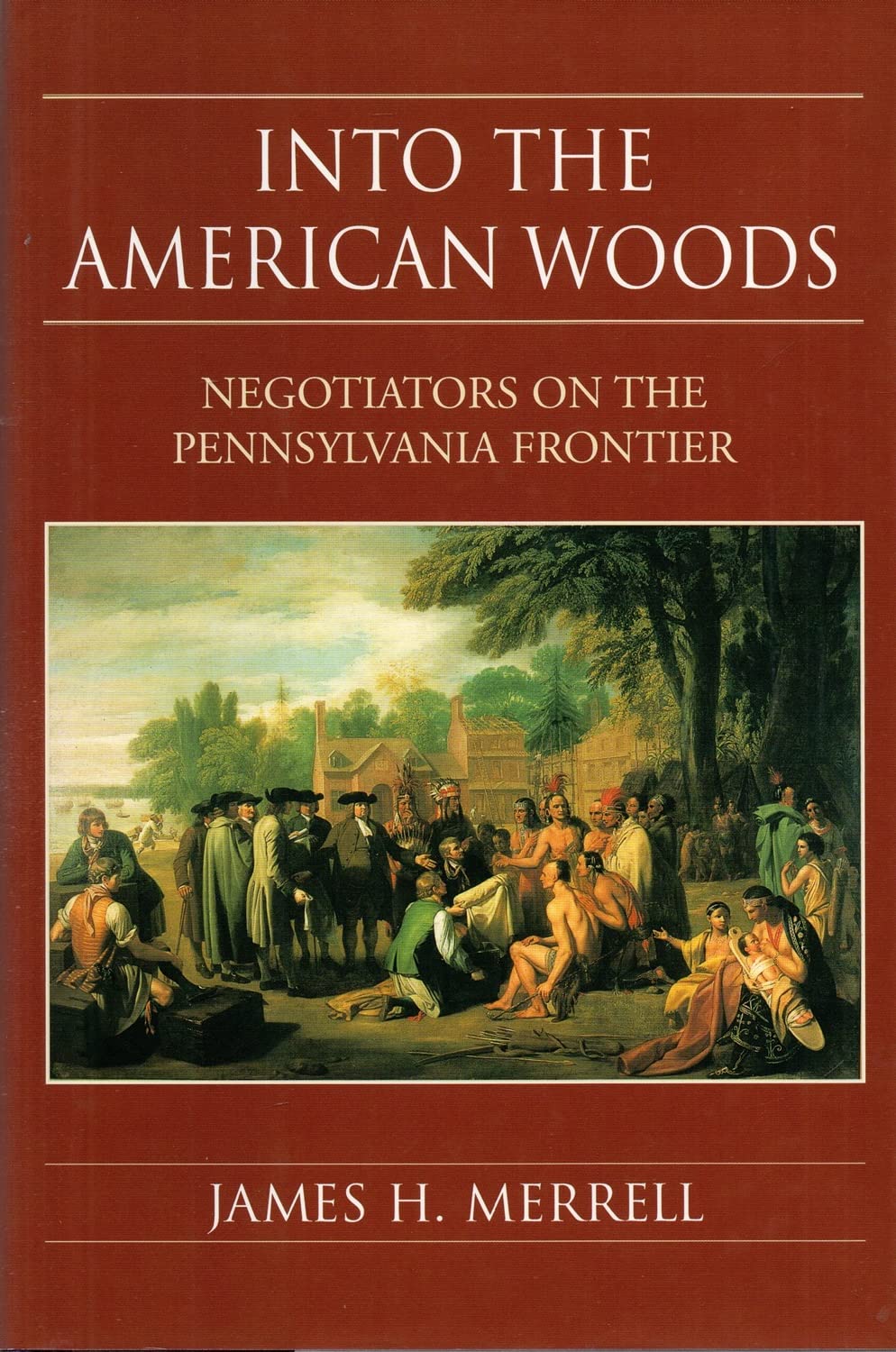
Into the American Woods: Negotiators on the Colonial Pennsylvania
$25.95
by James H. Merrell



Focuses on the variety of people who acted as intermediaries to prevent war and win peace between colonial settlers and native Americans in the early 18th century. Merrell (history, Northwestern U.) emphasizes the risks they took trying to reconcile two very different cultures, their successes and failures, occasional dishonesty, and the contempt they often suffered from both sides. Annotation c. by Book News, Inc., Portland, Or. Although the American West was ultimately won by killing nearly every Indian who got in the way, the initial contacts between native and Euro-American cultures were for the most part peaceful, defined by the social and geopolitical norms set by the land's original inhabitants. Into the American Woods examines how semiprofessional negotiators defined a "middle ground" in frontier Pennsylvania where schisms between Anglos and native Americans were temporarily appeased for mutual economic and political gain. English colonial administrators, seeking to purchase land, establish trade, and avert conflict, became dependent on opportunists at the colony's edge, such as German entrepreneur Conrad Weiser, or trader George Groghan, to negotiate with the Delaware, Shawnee, Iroquois, and other regional tribes and bands. Uninterested in learning the ways of new arrivals, the native peoples sent sons of mixed European and Indian heritage or Christian converts to negotiate on their behalf. By trading wampum, using sign language, and scribbling pictographs, these go-betweens developed ambiguously effective means of bridging cultural divides. Negotiators, however, did not fully trust each other's intentions and maintained the prejudices of their own cultures. The French-Indian Wars lessened the effectiveness of councils or other forms of negotiation and tensions between Anglo and Native American civilizations intensified, culminating in the infamous "Paxton Boys" massacre of 1763. Each stage of Merrell's lively, extremely well-researched analysis is filled with colorful "woods lore"--anecdotes often comic in nature, focusing on the rampant alcoholism and bawdiness of frontier life--which illustrate the personalities of key negotiators, as well as the strategies and conditions by which White and Native America conversed in the early 18th century, an era when the wampum belt carried more power on the frontier than the flintlock. --John Anderson More than 100 pages of notes and acknowledgments testify to the extensive research on which this book is based. Merrell (The Indians' New World, Univ. of North Carolina, 1989), a prize-winning professor of history at Northwestern University, concentrates on the interactions between Pennsylvania colonists and their Indian neighbors during the first half of the 18th century. More specifically, he focuses on the "go-betweens"?intermediaries, interpreters, and negotiators?who mediated between these two groups as they alternated combat and killing with periods of uneasy peace. Although the book is supposedly organized chronologically, it skips back and forth through the years confusingly. Peripherally interesting discussions of travel rigors and wampum also detract from the emphasis on the fascinating men who took on the difficult role of negotiator and were essential to establishing and maintaining relationships between the Indians and the settlers. Libraries that specialize in early American and Native American history will find this a useful addition.?Morton Teicher, formerly with Univ. of North Carolina Copyright 1999 Reed Business Information, Inc. The struggle between American Indians and European colonists is usually envisioned as a series of broken treaties, forced marches, and war, but things played out a little differently during the "Long Peace" in the Quaker province of Pennsylvania, where William Penn's "benevolent views of Indians" and the Delawares' willingness to negotiate with the interlopers made for a relatively peaceful coexistence until the predictably bitter end. But what mortar held these disparate cultures together? Who made dialogue possible? A forgotten group of tough and resourceful individuals Merrell refers to as negotiators and go-betweens in his original and illuminating "chronicle of contact." Expressive and imaginative, Merrell vividly recounts the adventures of key individuals, assessing their temperaments, motivations, successes, and failures, all the while taking care to reveal the "rough reality" behind official accounts. Working as a translator and negotiator was truly dirty and challenging work involving treacherous journeys both literal and psychic, and the willingness to betray the very people you became close enough to communicate meaningfully with. Merrell makes human a crucial facet of our history. Donna Seaman A pathbreaking scholarly work, by one of the nation's leading historians of the interaction between Native Americans and European newcomers in early America. In this deeply researched book, Bancroft Prizewinnin