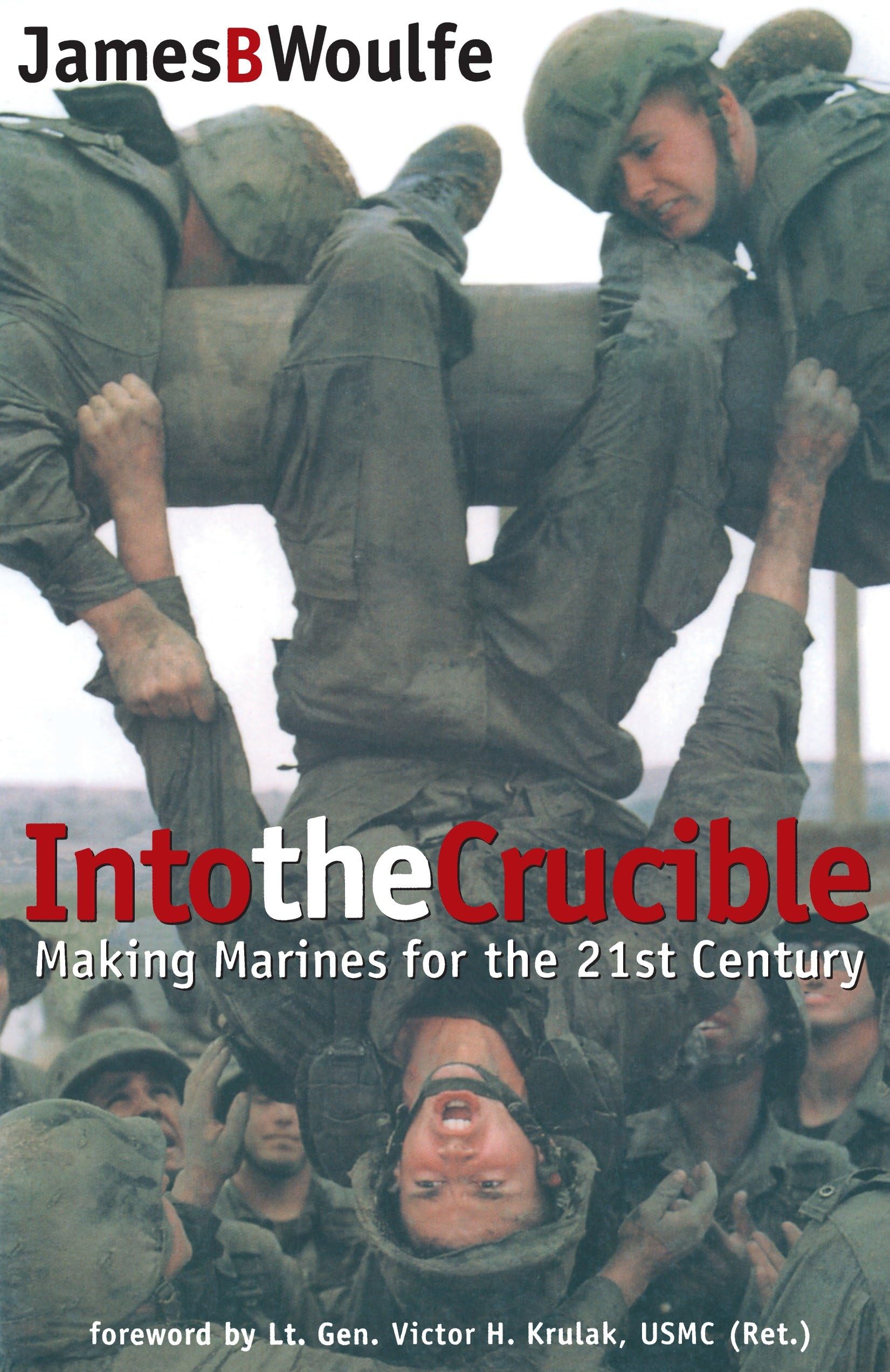



“This is a book for all Marines and future Marines. . . . [and] will also appeal to Marines of the ‘Old Corps’ since it shows we still ‘make ‘em like we used to.’”—Leo J. Daugherty III, Marine Corps Gazette “Something so tough, so powerful, that unless you join together, you can’t accomplish the defining moment. Your team will not make it unless you pull together.”—General Charles C. Krulak, Commandant, United States Marine Corps Welcome to the Crucible Event. This is the culmination of Marine Corps basic combat training, boot camp. The Crucible Event is the “defining moment” for young Marine recruits. Once inside the crucible, the recruits are faced with fifty-four gruelling hours with little sleep, little food, and a series of events that will tax them physically and mentally. The recuirt platoon will be profoundly tested as individuals. Even more important, they will discover that they are unable to pass through the crucible except as a team. Beyond the Crucible Event’s physical demands of endurance is the reinforcement of the core values of the United States Marines: honor, courage, and commitment. The crucible creates a change of mind, body, and spirit that will alst a lifetime, whether one wears the uniform for four years or forty—a constant reminder of the supreme responsibility that comes with the title “United States Marine.” Praise for Into the Crucible “Provides a wealth of factual information and insider insights. . . . [and] provides a fascinating first-hand look at the revolutionary training ‘event’ and shows why it has become so effective. Readers—whether Marines, civilians, or other members of other services will find Woulfe’s book a worthwile read.” — SeaPower Magazine “A powerful and inspiring book.” —Terry Mapes, Mansfield, Ohio, News Journal James B. Woulfe began his Marine Corps career in 1986 as an enlisted recruit. He was previously assistant director of the Drill Instructor (DI) School. Currently based at Camp Pendleton, California, Captain Woulfe is commanding officer of a Marine rifle company. Introduction In late 1775 the Second Continental Congress sat in Philadelphia and debated the need to establish a Continental Navy. Full-scale war with the British was a reality, and the Continental Army could not be victorious without support from the sea. The question of Marines was raised: If there was going to be a Navy, would not there then be the need for Marines? Half seaman and half soldier, Marines were basically infantrymen detailed to sea duty, but not expected to sail the ship. They assisted the captain in maintaining order and discipline aboard the vessel, but also turned their bayonets toward the enemy as boarding parties and landing forces when the need arose. The answer was obvious: Yes, there must be Marines! A committee was raised, a resolution offered, and on 10 November 1775, it was passed by the Congress: Resolved, that two Battalions of Marines be raised consisting of one Colonel, two Lieutenant Colonels, two Majors and Officers as usual in other regiments, that they consist of an equal number of privates with other battalions; that particular care be taken that no person be appointed to office or enlisted into said Battalions, but such as are good seamen, or so acquainted with maritime affairs as to be able to serve advantage by sea, when required. That they be enlisted and commissioned for and during the present war between Great Britain and the colonies, unless dismissed by order of Congress. That they be distinguished by the name of the first and second battalions of American Marines, and that they consider a part of the number, which the Continental Army before Boston is ordered to consist of. The president of the congress, John Hancock, signed a captain’s commission on 28 November, making Samuel Nicholas the first Marine officer. The challenge that lay before him continues today: to recruit qualified individuals to serve as Marines. Nicholas’s family owned a tavern, not the background expected for the leader of a maritime fighting force, but an important qualification for the new recruiting effort. An early poster said: TAKE COURAGE THEN, SEIZE THE FORTUNE THAT AWAITS YOU, REPAIR TO THE MARINE RENDEZVOUS, WHERE IN A FLOWING BOWL OF [rum] PUNCH, AND THREE TIMES THREE, YOU SHALL DRINK. By late December 1775, five detachments were raised consisting of a collection of semiskilled and unskilled laborers in their teens and midtwenties. One roster provides insight into the quality of the new recruits, with only eight of the forty-one being native-born Americans. Also, in complete disregard for the direction set forth in the Congressional resolution, none claimed any knowledge of life at sea or naval warfare. With these new recruits came another challenge that continues today—to make Marines. In the beginning there was no formal Marine Corps recruit training. New members learned their trade through the use of “rookie squads” and on-t