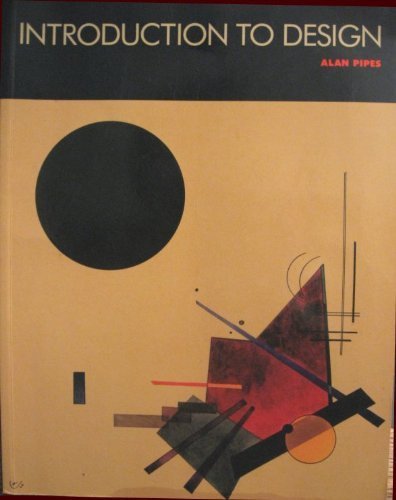



A comprehensive, well illustrated and easy to read introduction to the basic principles underlying all of the two-dimensional arts. Points and lines, shape, texture, depth, time and motion, value, color, design principles, proportion and scale. Artists and designers interested in learning about the fundamentals of two-dimensional art and design. From the author of Production for Graphic Designers 3e, this book provides an engaging introduction to the fundamentals of art and design. With a wide range of illustrations, Alan Pipes demonstrates in Part 1 (Elements) how an artist or designer fills a blank canvas, nothingness, with points, lines, shapes, textures, and colors in order to create a sense of space, time, and motion. Part 2 (Rules) reveals how to develop unity and harmony, balance, scale, and proportion, contrast and emphasis, and rhythmall in the quest for a satisfying illusion. In addition, the author demonstrates his formidable knowledge of computer-aided art and design, supplementing it with his own color or black-white diagrams. This book is ideal for students embarking on courses in graphic design, fine art, and illustrationas well as allied courses in interior design, fashion design, textile design, industrial design, product design, and printmaking. Alan Pipes is a freelance writer, illustrator, webmaster, and part-time publisher, specializing in applications of computer technology to graphic design, fine art, illustration, and product design. He is the former editor of CadCam International, and author of Drawing for 3-Dimensional Design and Production for Graphic Designers 3e. "Reason informed by emotion... expressed in beauty... elevated by earnestness... lightened by humor... that is the ideal that should guide all artists." CHARLES RENNIE MACKINTOSH What is art? Art is what artists do, Dadaist Marcel Duchamp might have said. Art is what you can get away with, you may be tempted to think when looking at contemporary artworks. The word art derives from Sanskrit and means "making" or "creating something". We can only guess why our earliest ancestors started to make art, drawing and carving on cave walls. Egyptian wall paintings and African art have a ritual dimension, but still manage to delight our eyes. The ancient Greeks and Romans surrounded their lives with culture: poetry, theater, sculptures-and paintings, few of which survive. They were probably the first artists who painted purely for pleasure and for the joy their art gave others. Whatever the reasons for creating, art enriches our lives, stimulates our senses, or simply makes us think. Artists have come to be revered for their gift of profound insight into the human condition. In Byzantine and Renaissance times, being an artist was just a job: painters had workshops full of assistants, and artisans making paint and preparing panels and canvases. They generally produced religious artworks for wealthy patrons. It was only in the late nineteenth century that "art for art's sake" began to emerge, art being seen as an expression of the artist's emotions. Since then Hollywood has depicted such artists as Vincent van Gogh and Henri de Toulouse-Lautrec as glamorous yet tortured visionaries who suffered for their art, locked away in solitary garrets. Abstract art followed, and today almost anything goes. What is design? Its roots are found in the Italian word disegnare, to create. In these days of designer jeans and kitchens, it is easy to think of design equating to stylish consumer goods or gadgets, made desirable by clever and knowing graphics (which draw ultimately on art for inspiration). We can forget that everything artificialgood or badhas been designed by someone. In its broadest sense, design is preparing for action: planning and organizing. We might have "designs" on someone, and plan how we can engineer a successful outcome. Architects design buildings, industrial designers design products, and artists design paintings and sculptures. This book looks at design in the easel-based arts, with references to the allied arts of photography and sculpture. By easel arts we mean drawing, painting, and printmaking, in the sense of making marks on paper or canvas, or the screen-based arts: video, computer, and installation-based works. The computer has blurred the boundaries between the traditional creative disciplines, but they all share a need for planning and visual organization. Design can also be considered as a form of problem-solving. But unlike math, in art there is never a single correct solution. This is why artists and designers are often called "creatives." Painters and sculptors often set their own tasks; designers and illustrators are given a brief with strictly defined parameters, and attempt a design based on those constraints. Even in abstract expressionism, where you might imagine that all the artist does is throw a pot of paint at the canvas and hope for the best, there are underlying proc