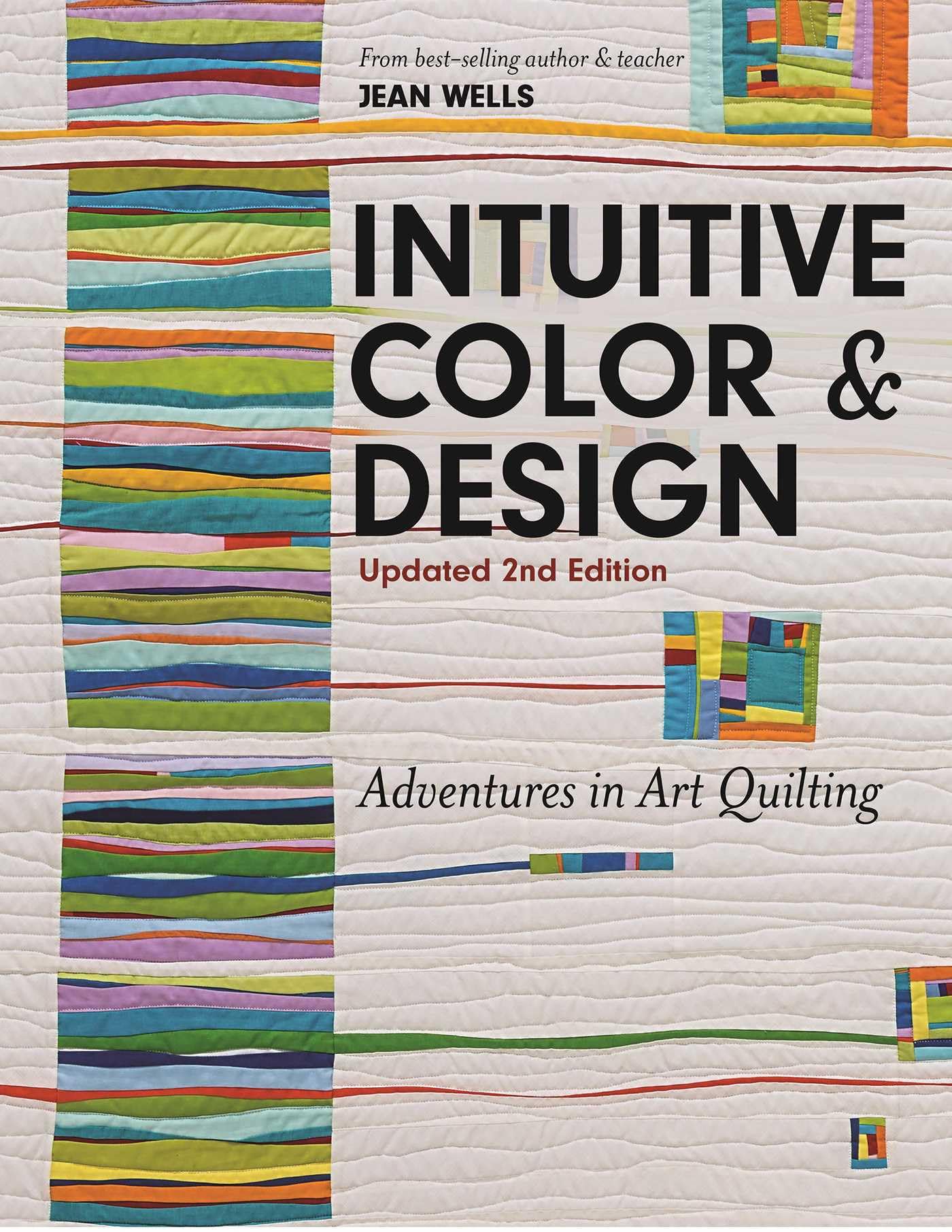
Intuitive Color & Design, Updated 2nd Edition: Adventures in Art Quilting
$22.74
by Jean Wells



Think outside the block and look what happens! Jean Wells gives you the assignment of your life: put away your ruler and use your inner vision to design and piece spectacular, free-form quilts you'd never have guessed you could create. In this updated edition of best-selling Intuitive Color & Design, Jean’s workshop assignments get your creative juices flowing, giving you challenges to expand your quilting horizons. Start by learning to see line and color; study the nuts and bolts of design; develop your color work and composition; and when you get stuck, there’s expert advice on problem solving. You will never see quiltmaking in the same way again. • Creative exercises take your use of color, line, design, and piecing in dramatic new directions • Use photographs and journals to find inspiration and develop your ideas with Jean’s updated, expert guidance • Learn innovative finishing techniques to show your quilts at their best • Classroom-proven techniques make the adventure easy for any quilter Creative quilting brought to you by one of the best quilt designers. This book gives you exercises to follow to design your own quilts by thinking outside the block. Taking quilting in a new direction, this book frees up your creativity. Find plenty of inspiration, guidance and ideas for the adventurous quilter. Full of examples and colour photos that will make you want to quilt and quilt again. This book covers design, piecing and finishing. If you already have the first edition though, I am not sure it is worth buying the second, it is mainly the photos that have been moved around more than new content. If you do not have the first edition, then you can do no better than buy this book. It is simply superb for the contemporary quilter and those who want to learn more about the design process. ― yarnsandfabrics.co.uk This is Jean Well's 30th book and as well as being an author, she owns the Stitchin' Post in Sisters, Oregon, which she opened in 1975 and now runs with her daughter Valeri. Over the years she's won numerous awards and became the 40th inductee into the Quilters Hall of Fame in 2010. One of her great joys is teaching workshops and through collaborating with other artists, she has liberated herself from the ruler and now counts her small digital camera as her best friend. With this she has taken hundreds of photos that provide her with design and colour inspiration. The academic side of Jean's approach comes across loud and clear in the way the book is laid out. Each chapter comes with assignments and she encourages her readers and students to try each one out several times. There's a whole chapter on piecing techniques with six assignments including Rulerless Cutting and Piecing and Straight-Line inserts, each fully explained and illustrated. In essence though, this is a book of two parts: Design and Tools and Techniques. Having the right repertoire of techniques makes the design part easier but she encourages her readers to switch between the two. Jean's great gift is that she is foremostly an artist who works primarily in cloth and stitches. Many of her techniques would easily be suitable for students of other creative disciplines. The quality of her work is magnificent and it's really interesting how she transposed shapes, pattern, colour and scale from her photos onto her quilts, showing her workings-out along the way. You'll refer to this book again and again. ― Popular Patchwork Quilters wishing to design their own art quilts will find this an invaluable resource. Jean provides a framework for learning and improving your use of journaling, abstraction, the elements and principles of design, and much more as you work to hone your artistic skills. Plenty of inspiration in the form of photographs and finished work, as well as a thorough chapter on alternative finishes for art quilts, round out this approachable guide. ― Machine Quilting Unlimited I really liked this book. The chapters are well considered and take the reader through the stages of design, stitch and completion in a sensible fashion.Jean's method of quilting reminds me so much of drawing. A great sense of colour and line translate her ideas into stitched and pieced compositions that convey a message to the senses.Although the book contains a lot of information it leads the reader lightly through the stages of inspiration and design to the nuts and bolts of construction. A final section with ideas for finishing techniques gives suggestions that all textile artists would find useful.In this context, the sections on abstraction and elements of design were particularly welcome. This is a book to keep handy. I have a feeling that I am going to be dipping into it rather a lot. ― Workshop on the Web Although primarily intended for quilters, the first section of this book is about stepping out of the box to look at design, using colour, line, scale, shape, harmony, pattern and texture, as well as discussing the principles of desi