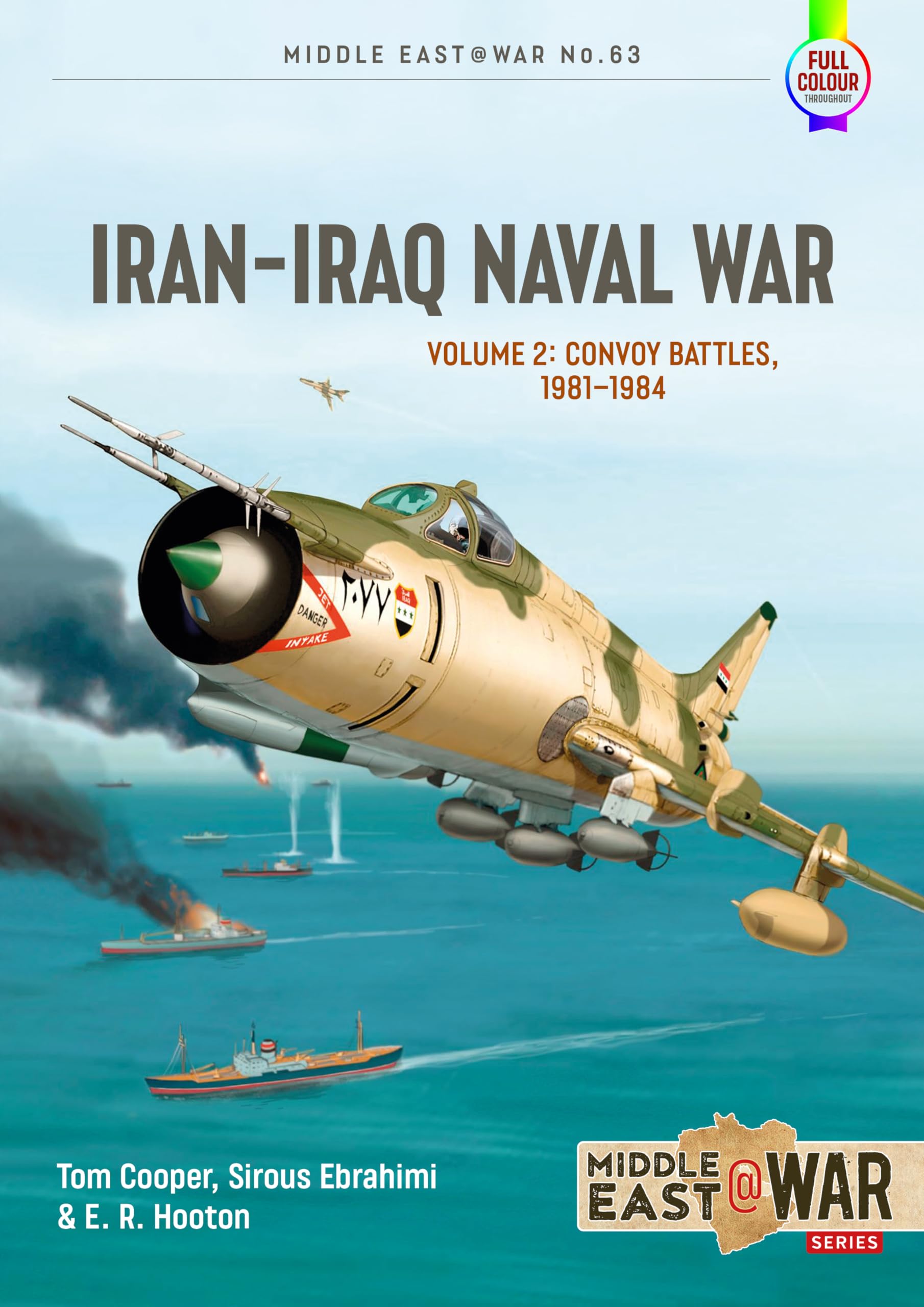
Iran-Iraq Naval War: Volume 2 - Convoy Battles, 1981-1984 (Middle East@War)
$22.03
by Tom Cooper



“… a significant contribution to this forgotten part of the Iran-Iraq War, the naval aspect of which only heretofore came to the attention of Westerners when their warships started to enter the Persian Gulf in large numbers in 1987. The quality of the writing is quite good, although understandably very detailed.” – National Maritime Historical Society Well away from the major battlefields on the ground in the Iran-Iraq War, and hidden from the gaze of the curious public, the navies and air forces of the two belligerents contested the waters of the Persian (or Arabian) Gulf. This naval aspect of the war still remains largely unknown and hugely underreported in the West other than in terms of the ‘Tanker War’ and the impact upon international shipping. Yet this was a war in which Iran and Iraq pitted the best technologies available to them – bought from the world’s leading arms manufacturers and exporters – against each other’s vital oil production and exports, and against vital maritime lifelines. Iran in particular relied upon ‘caravans’ of shipping to import raw materials, provide logistic support to the land war, and to export oil-based products. Iraq would make the first (and by far most extensive) combat use of the famous Exocet anti-ship missile long before its first claimed use by Argentina in the Falklands/Malvinas War and would make extensive use of French-sourced electronic warfare capabilities and Soviet anti-radiation missiles. Iran would make the first combat use of the F-14 Tomcat and its associated AIM-54 Phoenix air-to-air missile and would be the first to launch the RGM-84 Harpoon surface-to-surface missile in anger. Far from being a backwater, this was the testing ground for many cutting-edge technologies. Volume 2 of Iran-Iraq Naval War draws upon unique access to Iranian naval archives and examines in detail the naval war between 1981 and early 1984 as Iraq struggled to defeat Iran’s highly organized maritime ‘caravans,’ how each side experienced successes and failures in the employment of new technologies, and their efforts to counter these. This book is illustrated throughout with original photographs, many in color and never previously published in the West, and with specially commissioned color maps and the @War series’ signature color artworks showing the ships and aircraft employed in this war. “This book is highly recommended for anyone with an interest in air power and sea control.” The Journal of the Air Force Historical Foundation “The naval operations of the Iran-Iraq War are little known today; this book is part of a series revealing the actions of both combatants. It shows how both sides used weapons that were cutting-edge technology at the time. The book is well-illustrated and contains extensive detailed information on the conduct of the naval campaigns." Military Heritage Magazine “…adds a lot of information not readily available in English before. If this is your initial entry into this series, you will be quite pleased.” IPMS/USA “There is considerably more in the book on strategy and tactics by both sides… The authors have done an admirable job of research regarding this subject and it makes for a riveting read. … a book that you simply have to pick up and read.” ModelingMadness.Com “… a significant contribution to this forgotten part of the Iran-Iraq War, the naval aspect of which only heretofore came to the attention of Westerners when their warships started to enter the Persian Gulf in large numbers in 1987. The quality of the writing is quite good, although understandably very detailed.” National Maritime Historical Society “… a solid English-language resource for an often ignored or oversimplified aspect of the devastating Iran-Iraq War. The unprecedented access to Iranian documentation and the interviews of Iraqi sources conducted by the authors offers a level of detail and understanding not previously possible for Western academics, allowing for the work to function both as a primer on the subject and a valuable citable resource at the same time.” The Northern Mariner Tom Cooper is an Austrian aerial warfare analyst and historian. Following a career in worldwide transportation business – during which he established a network of contacts in the Middle East and Africa – he moved into narrow-focus analysis and writing on small, little-known air forces and conflicts, about which he has collected extensive archives. This has resulted in specialization in such Middle Eastern air forces as of those of Egypt, Iran, Iraq, and Syria, plus various African and Asian air forces. Except for authoring and co-authoring more than 30 books - including about a dozen of titles for Helion’s @War series - and over 1000 articles, Cooper is a regular correspondent for multiple defense-related publications. E. R. Hooton is a successful retired defense journalist, including acting as a Jane’s yearbook editor. He is the author of more than a dozen military history bo