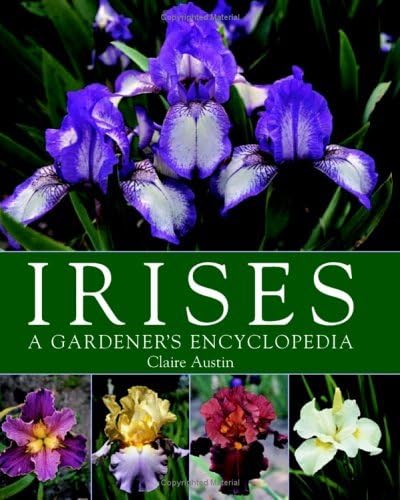



The most comprehensive and up-to-date encyclopedia of irises available. Irises are beloved by enthusiasts who garden in a wide variety of zones, including hot and dry, temperate, and even cold northern climates. Irises bloom in every imaginable color—revealed here in more than 1100 captivating photographs—from deepest purples, blues, and reds through strong pinks, yellows, and oranges to pastels in every shade. This wide-ranging collection illustrates the diversity of this beautiful genus and includes irises with striking foliage, reblooming capability, and scents. It features both historic and modern irises of all sizes from miniature and dwarf varieties to the stately tall beardeds. Also included is cultivation advice, information about the plants' breeding history, and ideas for combination plantings in rock gardens, containers, and perennials beds. An indispensable reference for iris fanciers everywhere as well as any gardener who appreciates their beauty and versatility. A gorgeous encyclopedia with bearded and beardless irises suitable for gardens through a wide variety of zones including hot and dry, temperate and even cold northern climates. Includes irises with particularly striking foliage, scent, patterned falls, and ruffled edges. 1000 color photographs throughout. Irises should be one of the staple plants in any garden. They are versatile, colourful, largely trouble free, easy to grow, and rabbit- and deer-resistant. Having grown irises only in the middle of England, I can only describe each season from an English point of view. I hope that gardeners who live in colder or hotter climates that are largely continental will forgive me for describing irises in the garden this way. For many gardeners, spring is the beginning of the gardening year. The days get lighter, the birds begin to court each other with song, and plants begin to stir. The first irises of the season emerge around late January. These are the Reticulata irises. Suddenly without warning they pop out of the soil. Reticulatas should be planted in groups of at least six near the front of a well-drained border, on a rockery, or in a scree garden, in a position where they can easily be seen. They associate perfectly with other low-growing, early flowering plants such as crocuses, snowdrops ( Galanthus ), and small narcissi such as 'Tête-à-Tête', and they look wonderful poking up through a carpet of Cyclamen coum . The earliest Reticulata to flower is Iris danfordiae . The last to flower, around mid-March, include I. 'Cantab' and I. 'Natasha'. By the time winter turns to spring, the leaves of the smallest bearded irises, the Miniature Dwarf Bearded irises, are beginning to shoot. These bloom around April. The very smallest cultivars are only really suitable for rockeries. In a border, larger plants can swamp them, and in general the soil in these locations is too rich for them to thrive. Reticulatas, the smallest, hardiest Juno irises, and Pacific Coast irises are also suitable for rockeries. All of these can be planted with other alpine plants such as Aubrieta and low-growing hardy geraniums. From midspring until the beginning of summer the choice of irises in flower begins to increase. Standard Dwarf Bearded irises are coming into bloom. These can be placed at the front of a border where they will not be overlooked and where there is less competition from other plants. They can be planted with other early flowering perennials, including lungworts ( Pulmonaria spp.) and narcissi. My current favourite lungwort, Pulmonaria 'Opal', and the late flowering, beautiful white Narcissus 'Thalia' look wonderful with soft blue Standard Dwarf Bearded irises. These irises can also be planted next to elephant's ears ( Bergenia spp.), which come in a wide choice of varieties. All have large handsome evergreen leaves and produce upright stems of large bell-shaped flowers. By midspring the Pacific Coast irises are beginning to bloom. In Britain these are not always hardy, but, given a humus-rich, acidic soil in a semi-shady, sheltered spot perhaps along the edge of woodland, Pacific Coast irises combine well with other late spring flowering plants such as bishop's mitre ( Epimedium spp.) and carpeting, low-growing phlox. In Australia, Pacific Coast irises they can be seen in the National Rhododendron Garden growing on a large rockery near the shade of pine trees. The Junos also begin to bloom in spring. Most of them are tender in Britain; those that will survive outside can be grown in a sheltered, very well drained spot such as on a rock garden or in borders that edge the sides of a house. Most Junos, like Dutch irises, die back and disappear entirely after they have flowered. Therefore, the gardener must either put up with an empty bed or choose carefully the partners that will produce a continuation of colour. Because Junos require a sunny, dry situation in Britain, the choice of companion plants is limited. Baby's breath