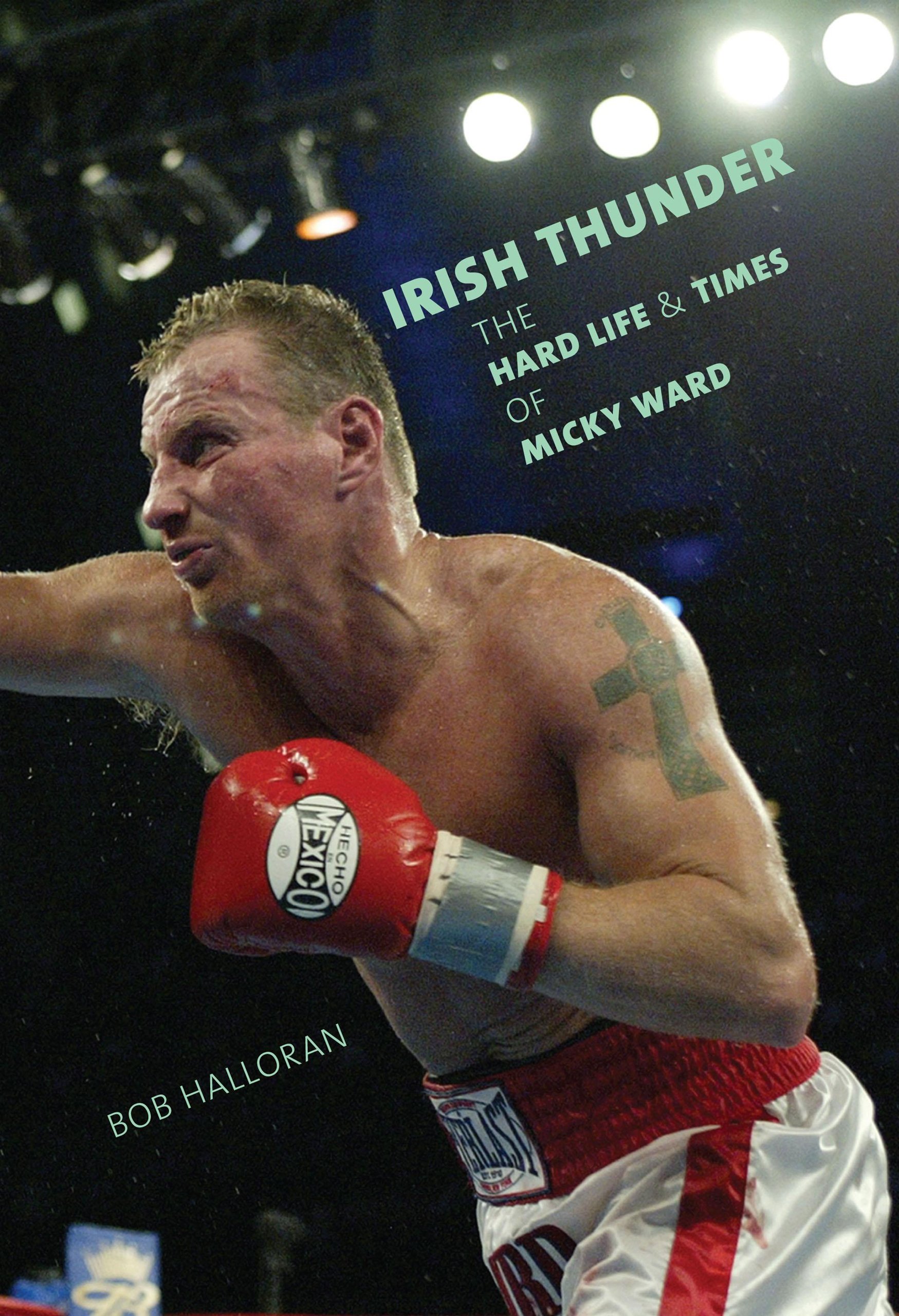



“Irish” Micky Ward was a Golden Gloves junior welterweight from Lowell, Massachusetts, always known as the underdog but with the ability to suddenly drop his opponent late in the fight. After 15 years, a string of defeats and even three years of retirement, Ward battled Arturo Gatti in 2002, and the battle was later named Fight of the Year by Ring magazine and “Fight of the Century” by boxing writers around the country. Ten rounds of brutal action ended with Ward winning by decision, and reviving enthusiasm for a sport that had been weighted down by years of showboating and corruption. ESPN and Boston television reporter Bob Halloran recounts Ward’s rise to hero status, his rivalry with his imprisoned brother, and the negotiations, betrayals and drugs that ultimately shaped a wild youth into a nationally respected boxer. “Irish” Micky Ward grew up in the 1970s and 80s as a tough kid from Lowell, Massachusetts—a town where boxers were once bred as a means of survival. A hard worker who overcame bad luck, bad management, and chronic pain in his hands, he avoided the pitfall of poverty and dead-end work that plagued Lowell to become a Golden Gloves junior welterweight. Ward participated in street fights from an early age and was forever known by his opponents and spectators as the underdog. But with his incredible ability to suddenly drop an opponent late in a fight with his trademark left hook, he kept proving everyone wrong. After fifteen years of boxing, a string of defeats, and three years of retirement, Micky battled Arturo Gatti in 2002 in the battle that was later named “Fight of the Year” by Ring magazine and dubbed “Fight of the Century” by boxing writers across the country. Ten rounds of brutal action ended with Micky winning by decision, and reviving enthusiasm for a sport that had been weighted down by years of showboating and corruption. ESPN and Boston television reporter Bob Halloran recounts Micky’s rise to hero status, his rivalry with his imprisoned brother, and the negotiations, betrayals, and drugs that ultimately shaped a wild youth into a nationally respected boxer. Welcome to Lowell, where anything can happen. Rocky Marciano fought at the Auditorium in 1947. Mike Tyson fought there in his Golden Glove days. Sugar Ray Leonard won there, so did Marvin Hagler. Each of them prepared for his battle downstairs in the boiler room, just like thousands of other kids whose greatest feeling in life would forever remain the night they landed a few good shots on the chin of some other twelve-, thirteen-, or fourteen-year-old. Fighters got dressed next to other fighters in the brightly lit makeup rooms for the theater productions. They had their hands taped and their gloves tied under the glow of several domed lights that outlined the large mirrors. Warm-ups, shadowboxing, meditation, and stretching were all done wherever a fighter could find the space. But there wasn’t any space. Each of the dozens of fighters brought a manager, a trainer, a family member, or all three. The bathrooms, makeup areas, and hallways filled up rather quickly. In their amateur days, their matches on any given night were made when organizers put numbered pills into a bottle and picked out two pills at a time. If a fighter was number seven, he learned at six o’clock that he was fighting number five at seven o’clock. “Good luck, kid. You’re on in an hour.” Bob Halloran is a well-known and well-respected television journalist in Boston. He is currently the weekend news and sports anchor at the number one rated news station in theBoston market, WCVB-TV,Channel 5. Prior to that, he gained a degree of national recognition as an ESPN anchor and columnist for espn.com for three years. He has been working as a news and sports anchor in New England for over 20-years, having made extended stopson Cape Cod, Rhode Island, and a combined seven years in Boston.