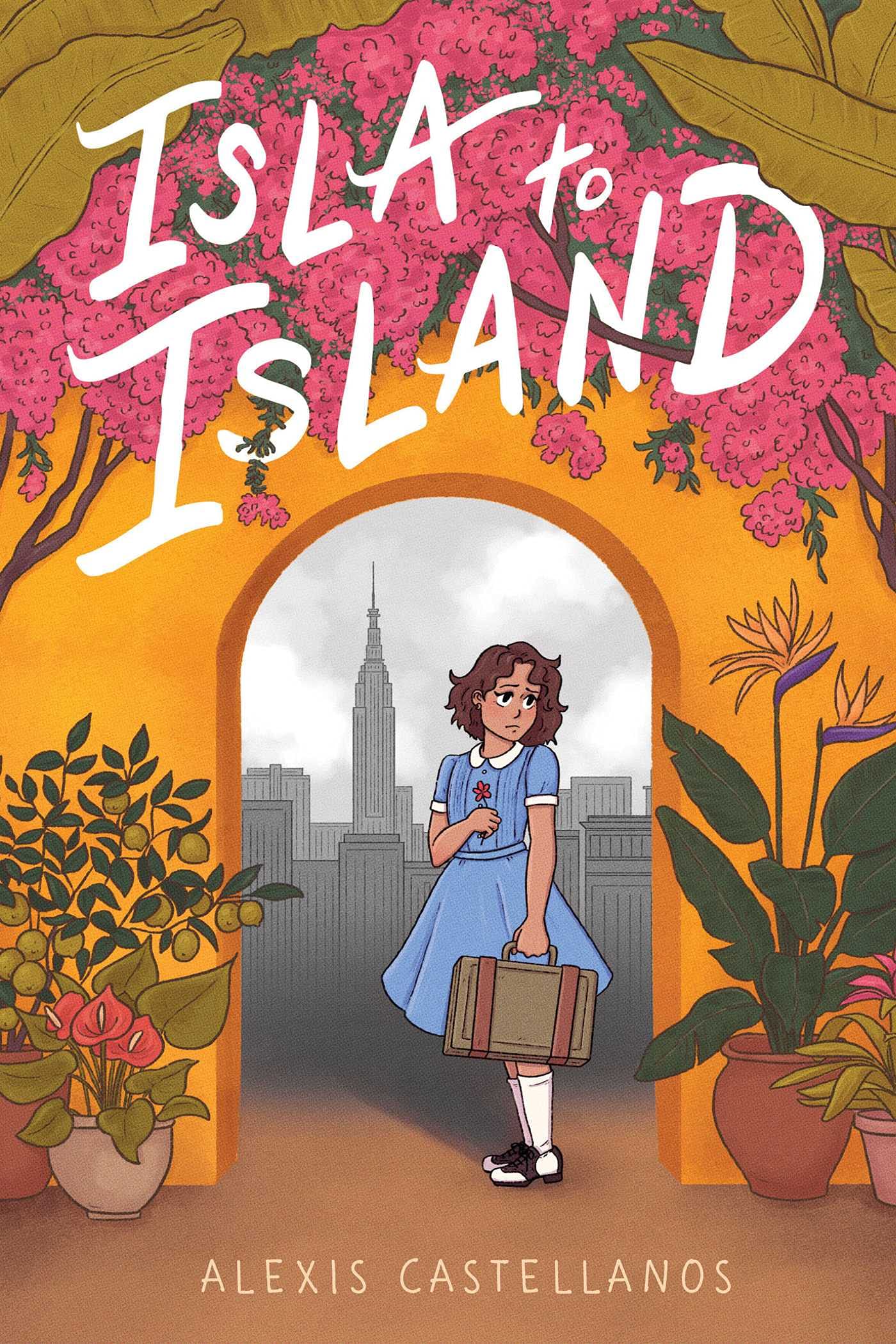



This stunning wordless graphic novel follows a young girl in the 1960s who immigrates from Cuba to the United States and must redefine what home means to her. Marisol loves her colorful island home. Cuba is vibrant with flowers and food and people…but things are changing. The home Marisol loves is no longer safe—and then it’s no longer her home at all. Her parents are sending her to the United States. Alone. Nothing about Marisol’s new life in cold, gray Brooklyn feels like home—not the language, school, or even her foster parents. But Marisol starts to realize that home isn’t always a place. And finding her way can be as simple as staying true to herself. Gr 5 Up-In 1961 Cuba, revolution and violence convince Marisol's parents to make the difficult decision to send their daughter to safety in the United States. Though this wordless graphic novel begins in full, tropical color, when Marisol lands in New York, the only color is in the red flower her father tucked behind her ear; the people and setting are in grayscale, and the speech bubbles are empty or filled with scribbles, representing the English that Marisol cannot yet understand. The two older adults who take Marisol in are kind, but she cannot communicate with them; the first comfort Marisol finds is in a school library book about trees. Her hosts take her to the Brooklyn Botanic Garden, where plants in the greenhouse are rendered in vibrant color. As winter thaws into spring, Marisol's life gains color through library books, plants, and food. Her hosts cook with her (from a Cuban cookbook from the school librarian), build her bookshelves, and buy plants for her room. When she enters seventh grade the following fall, Marisol's world is fully in color, and she has the courage to speak to her classmates in English. Family photos serve as an epilogue; back matter includes a recipe, a list of further reading, and a note about Operation Peter Pan, the 1960-62 exodus of young Cubans (when Fidel Castro took power, many parents, terrified that their children would be taken from them, sent their kids to the United States). Marisol and her family are Latinx; the older adults who take her in are white. VERDICT This historical graphic novel is an inspiring, empathy-building story, accessible to all readers.-Jenny Archα(c) Copyright 2011. Library Journals LLC, a wholly owned subsidiary of Media Source, Inc. No redistribution permitted. *"Powerfully depict[s] the disorienting experience of immigration in a way reminiscent of Shaun Tan’s The Arrival. " -- The Horn Book Magazine, starred review *"Beautiful and heartbreaking.... [Marisol's] story will resonate with Cuban children growing up on their abuelos’ stories and anyone who has had to leave their home and start over.... An important and authentic look at the Cuban refugee experience." -- Kirkus, starred review *"Employing spare text in the form of signs and radio chatter in Spanish and English, debut creator Castellanos effectively uses color as a vehicle to portray Marisol’s loving life with her family in Cuba, despair at their separation, and slow arc to a new life in which she honors her Cuban identity through food and music." -- Publishers Weekly, starred review *"An inspiring, empathy-building story." -- School Library Journal, starred review "A different kind of immigrant story uniquely told." -- Booklist Alexis Castellanos was born and raised in Florida where she enjoyed sunny days, dramatic thunderstorms, and delicious Cuban food. After graduating from college, she moved to New York City and worked as a scenic artist, bringing theatrical sets to life with a little bit of paint and a whole lot of ingenuity. She currently works as a graphic designer by day and spends her nights dreaming up stories. She lives in Seattle with her partner and her extremely photogenic cat, Belle. Isla to Island is her first graphic novel.