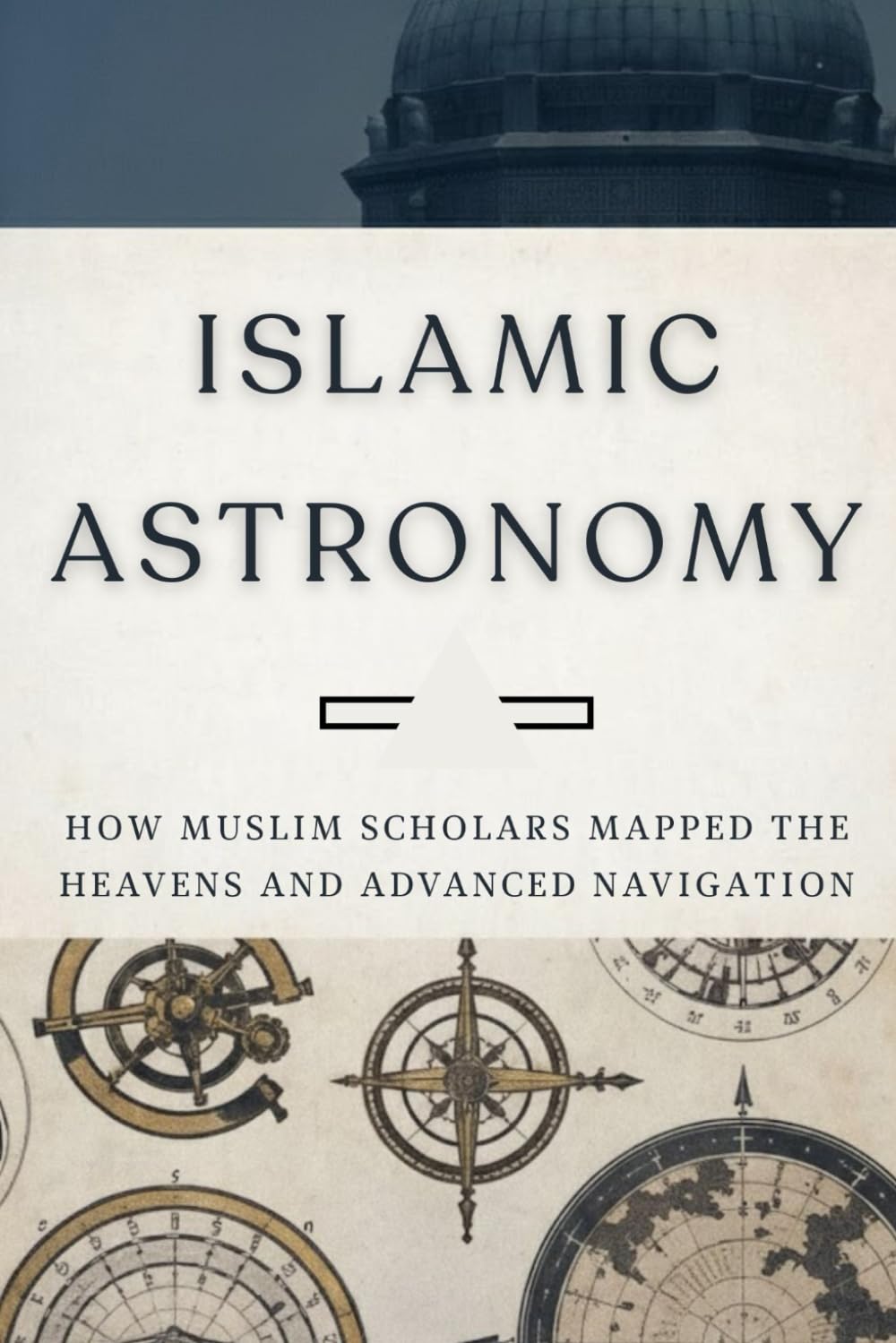
Islamic Astronomy: How Muslim Scholars Mapped the Heavens and Advanced Navigation (Early Islamic History Collection)
$11.99
by Zayd Al-Hijazi



From Baghdad to the Stars: How Islamic Astronomers Built Modern Science Between 750 and 1450 CE, Islamic civilization produced the most sophisticated astronomical research the world had ever seen. Muslim scholars didn't just preserve Greek knowledge—they corrected Ptolemy's errors, invented algebra, built massive observatories, and developed planetary models Copernicus would adopt centuries later. Discover how: Religious obligations—calculating prayer times and finding Mecca's direction—drove unprecedented precision in celestial observation Al-Khwarizmi's revolutionary 820 CE innovations gave us algebra, algorithms, and the decimal system The Maragha school solved thousand-year-old astronomical problems with groundbreaking geometry Ibn al-Shatir created fourteenth-century planetary models virtually identical to Copernicus's work 200 years later Arab navigators crossed oceans using stars while Europeans hugged coastlines Ulugh Beg's 1420s Samarkand observatory produced the most accurate pre-telescope star catalog The stars still bear their Arabic names: Aldebaran, Rigel, Betelgeuse, Vega, Altair Drawing on primary sources from Al-Biruni, Al-Sufi, Ibn Khaldun, and others, this comprehensive work reconstructs five centuries of achievement through twelve detailed chapters—from pre-Islamic Arabian astronomy to its transmission to Renaissance Europe. Extensively researched. Historically accurate. The forgotten story of how Islamic civilization changed science forever.