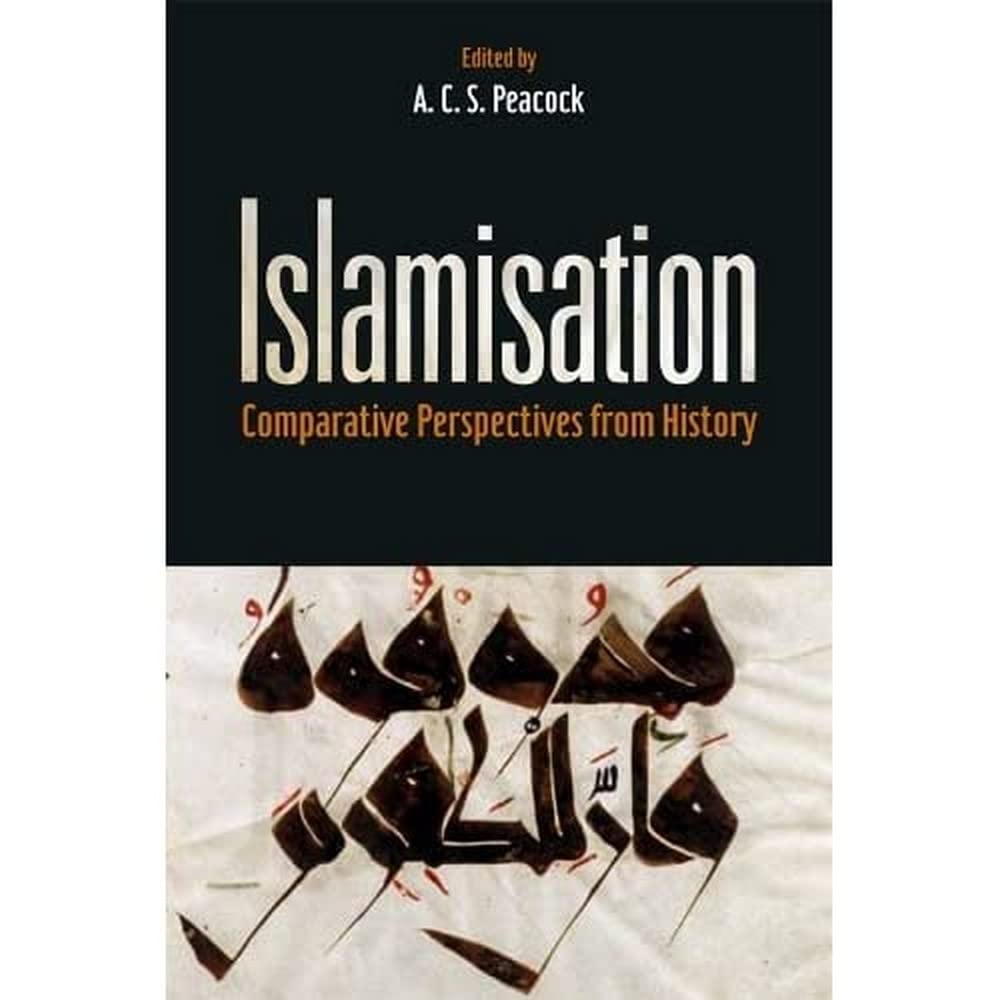



In 24 chapters, this volume explores the spread of Islam and the process of Islamisation over 11 centuries of its history: both conversion to Islam and the adoption of Muslim culture. Taking a broad, comparative perspective, the volume addresses key questions. What is meant by Islamisation? How far was the spread of Islam as a religion bound up with the spread of Muslim culture? To what extent are Islamisation and conversion parallel processes? How is Islamisation connected to Arabisation? What role do vernacular Muslim languages play in the promotion of Muslim culture? Discover both the historical trajectory of Islamisation and the methodological problems in its study, with coverage moving from Africa to China and from the 7th century to the start of the colonial period in 1800. 'An important landmark in the field, and one that should become a standard point of reference for Islamic studies scholarship for many years to come.' --R. Michael Feener, The Oxford Centre for Islamic Studies "Journal of Islamic Studies " Examines Islamisation as both a cultural and religious phenomenon Examines Islamisation as both a cultural and religious phenomenonThe spread of Islam and the process of Islamisation (meaning both conversion to Islam and the adoption of Muslim culture) is explored in the twenty-four chapters of this volume. Taking a comparative perspective, both the historical trajectory of Islamisation and the methodological problems in its study are addressed, with coverage moving from Africa to China and from the seventh century to the start of the colonial period in 1800.Key questions are addressed. What is meant by Islamisation? How far was the spread of Islam as a religion bound up with the spread of Muslim culture? To what extent are Islamisation and conversion parallel processes? How is Islamisation connected to Arabisation? What role do vernacular Muslim languages play in the promotion of Muslim culture?The broad, comparative perspective allows readers to develop a thorough understanding of the process of Islamisation over eleven centuries of its history.Key Features Divided into eight sections: Conversion and Islamisation: Theoretical Approaches; The Early Islamic and Medieval Middle East; The Muslim West; Sub-Saharan Africa; The Balkans; Central Asia; South Asia; Southeast Asia and the Far East Ambitious in scope, it offers a broad chronological and geographical range covering every significant region of the Muslim world Contributions illustrate the most innovative modern research from a variety of disciplines including art, archaeology, literature and history Includes fourteen maps and seventeen figuresA.C.S. Peacock is Professor of Middle Eastern and Islamic History at the University of St Andrew. He is author of The Great Seljuk Empire (Edinburgh University Press, 2015) and Early Seljuq History: A New Interpretation (2010) and co-editor (with Sara Nur Yildiz) of The Seljuks of Anatolia: Court and Society in the Medieval Middle East (2013).Cover image: individual sheet of the Qu ran, tenth century, written in Kufic writing © akg-images /Bildarchiv SteffensCover design:[EUP logo]edinburghuniversitypress.comISBN 978-1-4744-1712-9Barcode Examines Islamisation as both a cultural and religious phenomenonThe spread of Islam and the process of Islamisation (meaning both conversion to Islam and the adoption of Muslim culture) is explored in the twenty-four chapters of this volume. Taking a comparative perspective, both the historical trajectory of Islamisation and the methodological problems in its study are addressed, with coverage moving from Africa to China and from the seventh century to the start of the colonial period in 1800.Key questions are addressed. What is meant by Islamisation? How far was the spread of Islam as a religion bound up with the spread of Muslim culture? To what extent are Islamisation and conversion parallel processes? How is Islamisation connected to Arabisation? What role do vernacular Muslim languages play in the promotion of Muslim culture?The broad, comparative perspective allows readers to develop a thorough understanding of the process of Islamisation over eleven centuries of its history.Key Features•Divided into eight sections: Conversion and Islamisation: Theoretical Approaches; The Early Islamic and Medieval Middle East; The Muslim West; Sub-Saharan Africa; The Balkans; Central Asia; South Asia; Southeast Asia and the Far East•Ambitious in scope, it offers a broad chronological and geographical range covering every significant region of the Muslim world•Contributions illustrate the most innovative modern research from a variety of disciplines including art, archaeology, literature and history•Includes fourteen maps and seventeen figuresA.C.S. Peacock is Professor of Middle Eastern and Islamic History at the University of St Andrew. He is author of The Great Seljuk Empire (Edinburgh University Press, 2015) and Early Seljuq History: A New Interpretation (2010) and co-editor