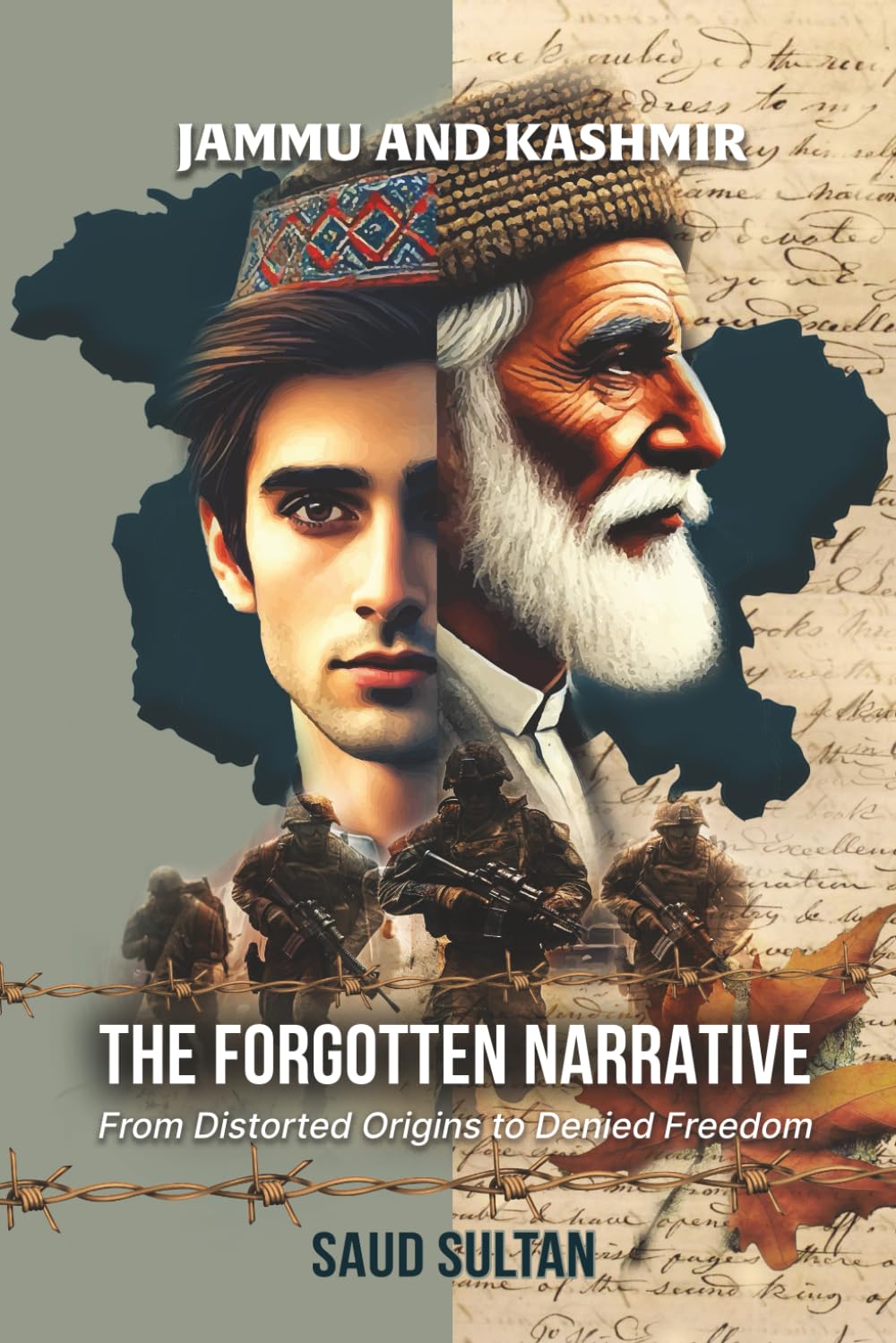
JAMMU AND KASHMIR - THE FORGOTTEN NARRATIVE: From Distorted Origins to Denied Freedom
$8.14
by Saud Sultan



Ever wondered who crafted the history you know; who they glorified and who they left out? As a Kashmiri and an academic from the University of Cambridge, Saud delivers a sharp rebuttal to the official Indian narrative that has dominated global understanding for decades. With his rigorous research, Saud displays a revolutionary contribution to Kashmir studies. Drawing on a range of archival material, he argues that Indian troops and militia — not Pashtun tribesmen — invaded Jammu and Kashmir first in 1947. By reframing India as the initial aggressor, he challenges and overturns decades of falsely accepted history, in which Pakistan is seen as the instigator. Saud exposes how the Indian narrative on the origins of the dispute was built through omission, manipulation, and concealment of pivotal events. In the second part of this thought-provoking book, he delves into the present situation of freedom in the disputed land. For the first time, an author conducts a systematic, evidence-based comparison of "freedom" on both sides of the Line of Control—Azad Jammu and Kashmir and Indian-administered Kashmir. Based on interviews from Kashmiris who have personally lived in both regions, the book examines key dimensions of freedom: religious, political participation and movement. The findings reveal stark disparities and illuminate how Kashmiris experience governance, control, and expression across the divide.