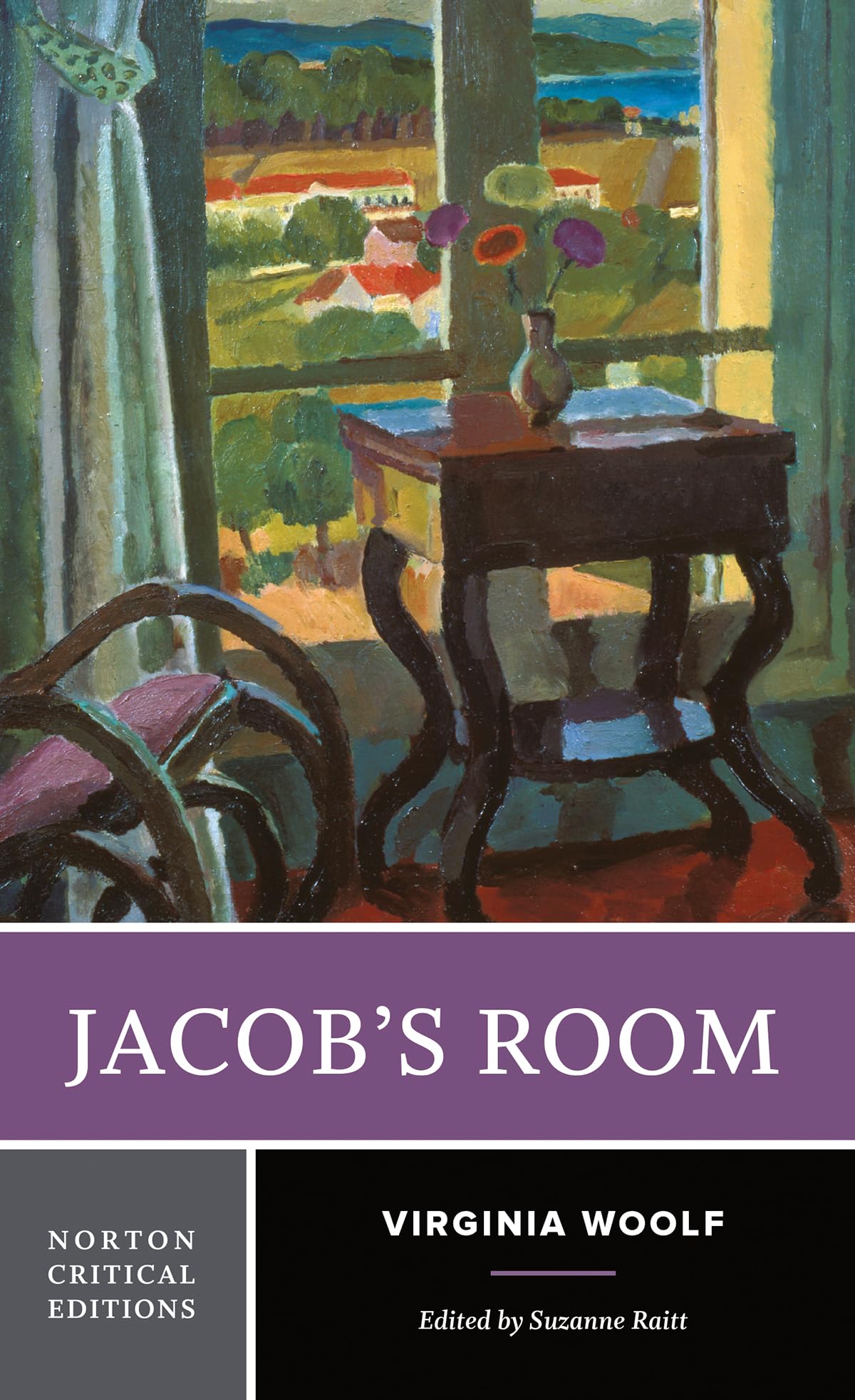



A generous “Contexts” section provides extracts from Woolf’s diaries and letters as well as comments on the novel from her fellow writers and friends, among them E. M. Forster and T. S. Eliot. Also included are the short stories “The Mark on the Wall,” “Kew Gardens,” and “An Unwritten Novel,” which Woolf viewed as early experiments with the innovative method used in Jacob’s Room. An additional short story, “A Woman’s College from Outside,” which Woolf originally intended to be Chapter 10 of Jacob’s Room, is also included. Finally, Woolf’s classic essay “Modern Novels,” written shortly before she began work on Jacob’s Room, provides insight into her aesthetic and technique.“Criticism” is divided into two sections: “Contemporary Reception and Reviews” contains personal responses to the novel, from Lytton Strachey and E. M. Forster, as well as eleven reviews from contemporary periodicals. “Critical Essays” offers insightful interpretations by Judy Little, Alex Zwerdling, Kate Flint, Kathleen Wall, and Edward L. Bishop.A Selected Bibliography is also included. Virginia Woolf (1882-1941) was the world-renowned author of Mrs. Dalloway , To the Lighthouse , and The Waves , among other works. Suzanne Raitt is the author of Virginia Woolf's "To the Lighthouse ," Vita and Virginia: The Work and Friendship of V. Sackville-West and Virginia Woolf , and May Sinclair: A Modern Victorian . She is professor of English at the College of William and Mary, where she teaches courses on Virginia Woolf, nineteenth-century fiction, psychoanalytic theory, and sexuality.