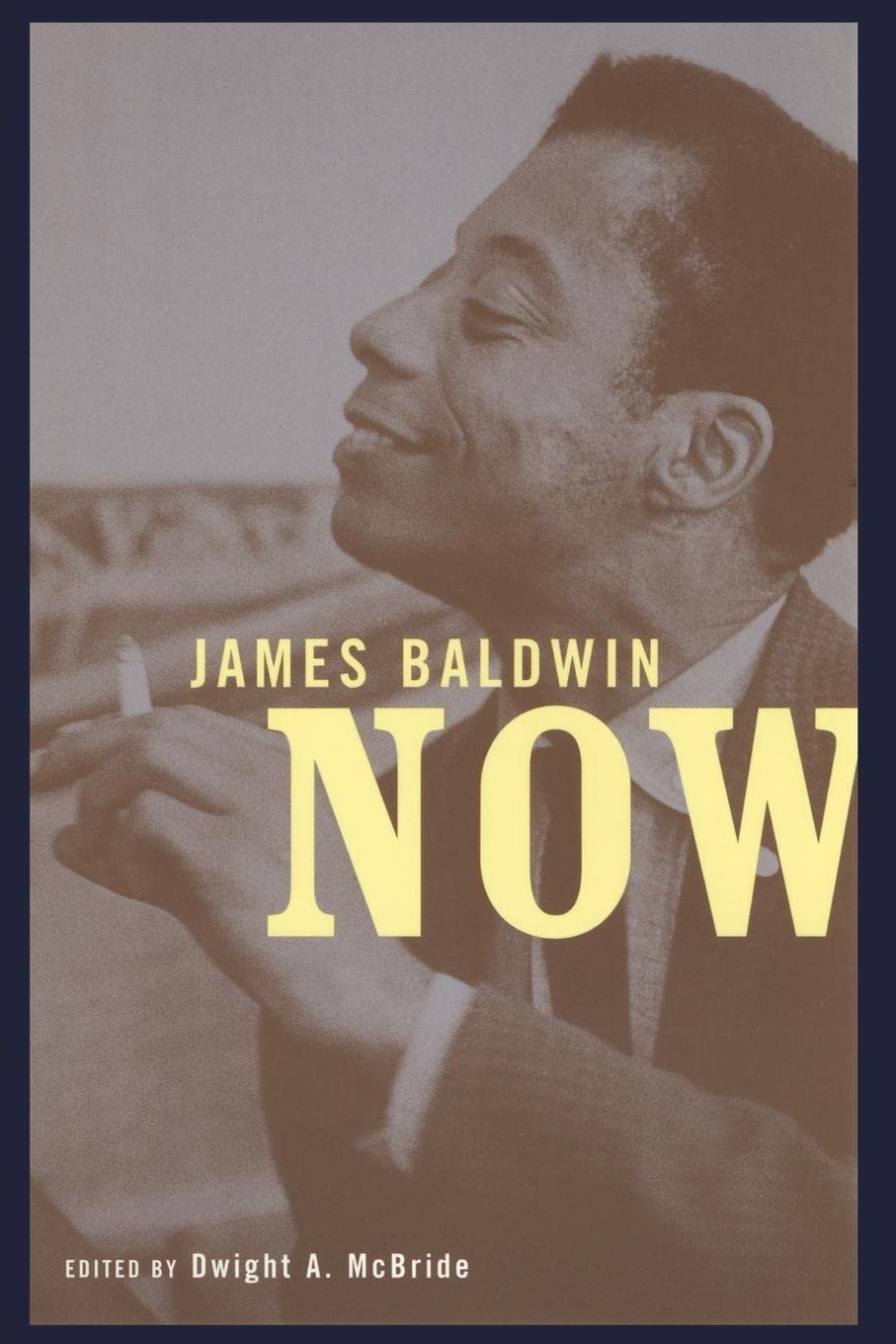



One of the most prolific and influential African American writers, James Baldwin was for many a harbinger of hope, a man who traversed the genres of art-writing novels, essays, and poetry. James Baldwin Now takes advantage of the latest interdisciplinary work to understand the complexity of Baldwin's vision and contributions without needing to name him as exclusively gay, expatriate, black, or activist. It was, in fact, Baldwin who said, "it is quite impossible to write a worthwhile novel about a Jew or a Gentile or a Homosexual, for people refuse . . . to function in so neat and one-dimensional a fashion." McBride has gathered a unique group of new scholars to interrogate Baldwin's life, his presence, and his political thought and work. James Baldwin Now finally addresses the man who spoke, and continues to speak, so eloquently to crucial issues of the twentieth century. Dwight McBride, the editor of this diverse and challenging new collection of James Baldwin scholarship, reports that at least 15 dissertations on Baldwin have appeared since 1990, suggesting that a revival may be taking place. That this should occur now, in the heyday of cultural studies, and among younger scholars, is especially promising for Baldwin, who has suffered since the publication of his first novel in 1953 ( Go Tell It on the Mountain ) by being relegated to one or another critical category. McBride notes, "It is finally possible to understand Baldwin's vision of and for humanity in its complexity, locating him not as exclusively gay, black, expatriate, activist, or the like but as an intricately negotiated amalgam of all of those things, which had to be constantly tailored to fit the circumstances in which he was compelled to articulate himself." Among the best essays here are the reception studies, William Spurlin's "Culture, Rhetoric, and Queer Identity: James Baldwin and the Identity Politics of Race and Sexuality," which focuses on Baldwin's position in the Black Power movement, including Eldridge Cleavor's famously homophobic reading of Baldwin, and Roderick A. Ferguson's elegantly readable "The Parvenu Baldwin and the Other Side of Redemption: Modernity, Race, Sexuality and the Cold War." --Regina Marler "This excellent volume conceives of Baldwin as a figure crucial to discussions of whiteness, sexuality, and globalization. The times are ripe for the valuable reconsideration of Baldwin that James Baldwin Now provides." -- Jennifer DeVere Brody,George Washington University Dwight A. McBride is President of The New School in New York City. Prior to his appointment at The New School, Dr. McBride was Provost and Executive Vice President for Academic Affairs at Emory University, where he also held the position of Asa Griggs Candler Professor of African American Studies, Distinguished Affiliated Professor of English, and Associated Faculty in Women’s, Gender, and Sexuality Studies. A leading scholar of race and literary studies, Dr. McBride's books include James Baldwin Now, Impossible Witnesses: Truth Abolitionism, and Slave Testimony, Black Like Us: A Century of Lesbian, Gay, and Bisexual African American Fiction, and A Melvin Dixon Critical Reader . His book Why I Hate Abercrombie and Fitch: Essays on Race and Sexuality won the Lambda Literary Award for LGBTQ Studies and was a finalist for the Hurston-Wright Legacy Award. Used Book in Good Condition