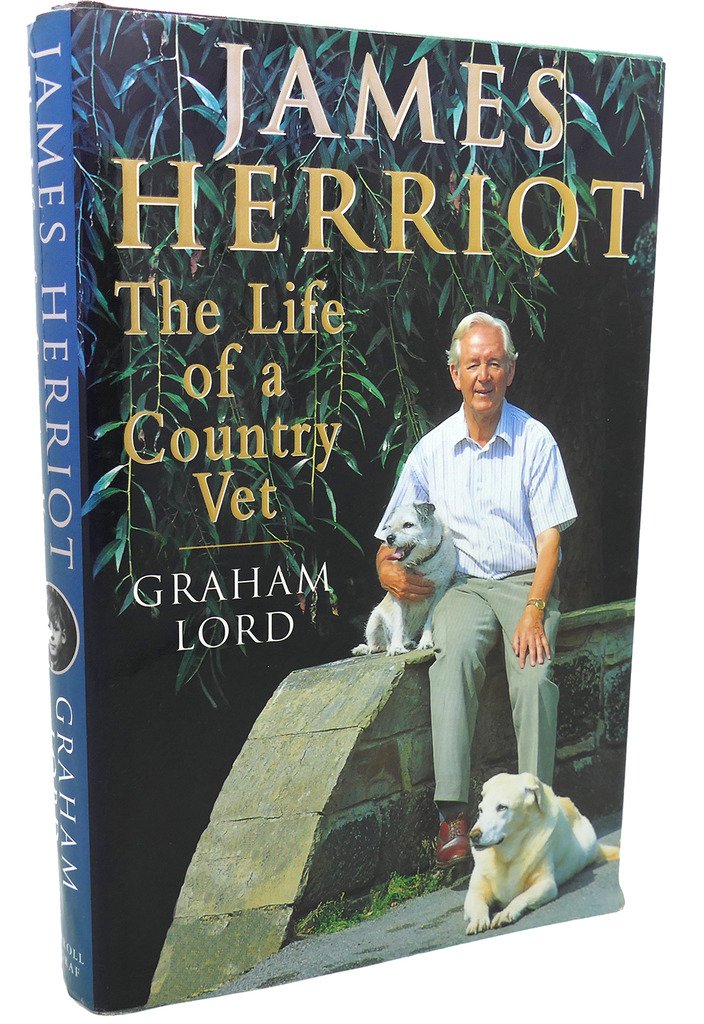



In this first full portrait of one of the world's most beloved animal writers, a noted biographer affectionately reveals the man behind the myth, exploring his tragedies and triumphs in intimate detail. 65,000 first printing. Lord, former literary editor and books columnist of the Sunday Express in the United Kingdom, offers a warm, candid portrait of one of the most beloved authors in recent times. James Herriot, born Alf Wight (1916-95), was able to attend veterinary college despite a poor childhood in Scotland. In 1940, he joined a practice in Yorkshire where, though underpaid, he remained for his entire career. After years of receiving rejections from publishers, the unassuming veterinarian finally had a book published in 1970?the autobiographical If Only They Could Talk (Book 1 of All Creatures Great and Small in the United States) under the name James Herriot. Herriot's gentle books on the life of a country vet were huge best sellers, largely because of Lord's early review, and later became films and a popular TV series. Lord's frequent musings on Herriot's embellishing details of his life for print weaken an otherwise strong narrative?after all, Lord shows us that Herriot was modest and self-effacing in the extreme. An entertaining and poignant remembrance; highly recommended.?Diane G. Premo, Rochester P.L., N.Y. Copyright 1997 Reed Business Information, Inc. A well-tempered, well-researched biography of the world's most famous veterinarian, from novelist Lord (God and All His Angels, 1997, etc.). After buying over 50 million copies of his books chronicling the gentle meanderings of a country vet, readers may feel they have a pretty good handle on the life of Alf Wight, a.k.a. James Herriot. Not so, claims Wight's good friend Lord, whose 1972 review of It Shouldn't Happen to a Vet in London's Sunday Express pushed Herriot to the forefront. According to Lord, the books are pretty much one part fact to two parts creative writing. As he details the life of Wight, from his boyhood in Glasgow to his death of prostate cancer in 1995, Lord never suggests that the vet was anything other than modest, self-effacing, and kind, or that the Yorkshire dales that Wight so magically evoked--``the sparkling streams, the birds calling in the huge silences, the wide-open spaces''--were anything less than cozy in the extreme. But he does want to set the record as straight as possible, fussing with dates, calling into suspicion various war stories spun by Wight, and unmasking the true personalities of Siegfried, Helen, Tristan, et al., none of whom shines under Lord's scrutiny. The author has unearthed plenty of nuggets, such as Wight's nervous breakdown, brought on by depression stemming from brucellosis (transmitted by infected pregnant cows), and the debt Wight owed to an ex-hairdresser from Pinner, and he also does a good job analyzing the simple, direct style Wight brought to his homey material, both in his own critique and in interviews with Wight's publishers and editors. Lord is a bit too bedazzled by the wealth Wight amassed and seems obsessed with the vet's denying that he kept a diary when he obviously did, but otherwise he sticks to the facts, and his ocassional conjectures feel plausable. Doubtless this biography will be a feast for the Herriot hordes. (photos) -- Copyright ©1997, Kirkus Associates, LP. All rights reserved. This is very much a British book, and some references may be obscure. It's a good story, though, and Wight is good company. -- The New York Times Book Review, Milton Garrison