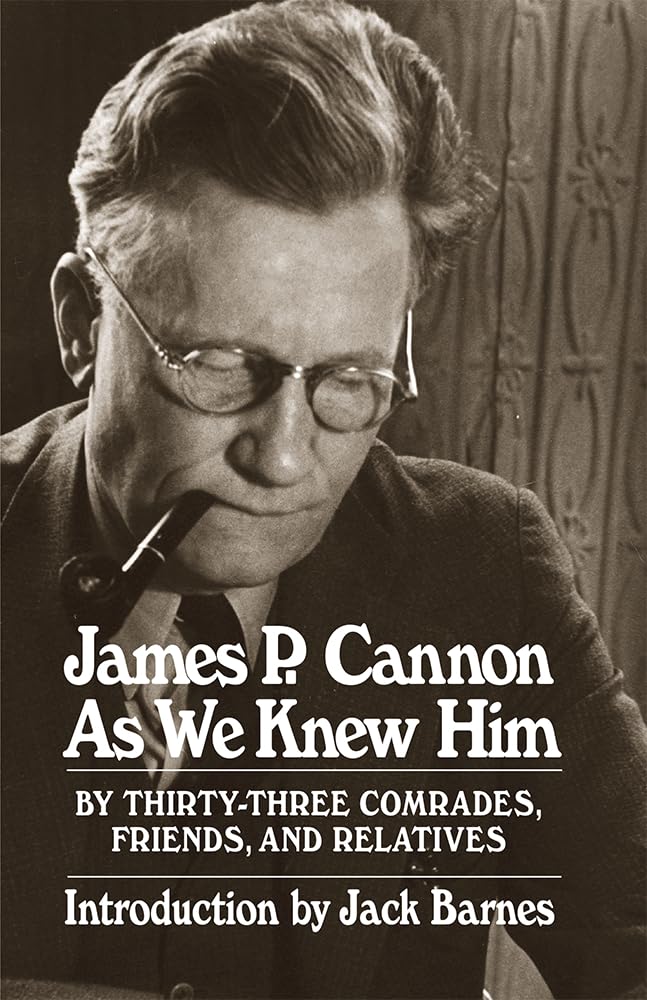



A unique personal account of a lifelong rebel by people who knew and worked with him. “This book...should appeal to those with an interest in American politics and has a relevance broader than merely for those with Trotskyist sympathies.” —Irish Labour History Society Farrell Dobbs (1907–1983) was national secretary of the Socialist Workers Party from 1953 to 1972 and the SWP presidential candidate four times. In 1934 he emerged from the ranks of the Teamsters as a central leader of battles that transformed the union movement during the Great Depression. He was a leader of the strikes that year that made Minneapolis a union town and later of the organizing drives that brought a quarter million over-the-road truck drivers into the Teamsters union across the Midwest and Mid-South. During World War II, Dobbs and other central SWP leaders organizing labor opposition to Washington’s war aims were railroaded to federal prison by the US imperialist rulers. He is the author of the series on the Teamster battles of the 1930s (four-volumes, 1972–77) and Revolutionary Continuity: Marxist Leadership in the U.S. (two volumes, 1980–83). Other works include: Tribunes of the People and the Trade Unions (2019, coauthor) 50 Years of Covert Operations in the US: Washington’s Political Police and the American Working Class (2014, coauthor) Selected Articles on the Labor Movement (1983) Counter-Mobilization: A Strategy to Fight Racist and Fascist Attacks (1976) The Structure and Organizational Principles of the Socialist Workers Party (1971) George Novak (1905–1992) joined the communist movement in the United States in 1933 and remained a member and leader of the Socialist Workers Party until his death. As national secretary of the American Committee for the Defense of Leon Trotsky, Novack helped organize the 1937 International Commission of Inquiry that investigated the charges fabricated by Stalin’s Moscow trials. In the 1940s Novack was national secretary of the Civil Rights Defense Committee, which gathered support for leaders of the SWP and the Midwest Teamsters’ strikes and organizing drive who were framed up and jailed under the witch-hunting Smith Act. He played a prominent role in numerous other civil liberties and civil rights battles over subsequent decades, including the landmark lawsuit against FBI spying and disruption won by the Socialist Workers Party in 1986. He was also active in defense of the Cuban Revolution and against the war in Vietnam. His works include: An Introduction to the Logic of Marxism Genocide against the Indians The Origins of Materialism Existentialism versus Marxism Empiricism and Its Evolution The Marxist Theory of Alienation; Democracy and Revolution Understanding History Humanism and Socialism Pragmatism versus Marxism America’s Revolutionary Heritage Polemics in Marxist Philosophy. Jean Tussey (1918-2010) is the author of “Tom Paine—Revolutionist” in America’s Revolutionary Heritage (1976); a contributor to James P. Cannon as We Knew Him: By Thirty-Three Comrades, Friends, and Relatives (1976); and editor of Eugene V. Debs Speaks (1970). Harry Frankel was the pen name of Harry Braverman (1921–1976), a member of the National Committee of the Socialist Workers Party from 1940 to 1946. He is the author of four articles in America’s Revolutionary Heritage (1976) and a contributor to James P. Cannon as We Knew Him: By Thirty-Three Comrades, Friends, and Relatives (1976).