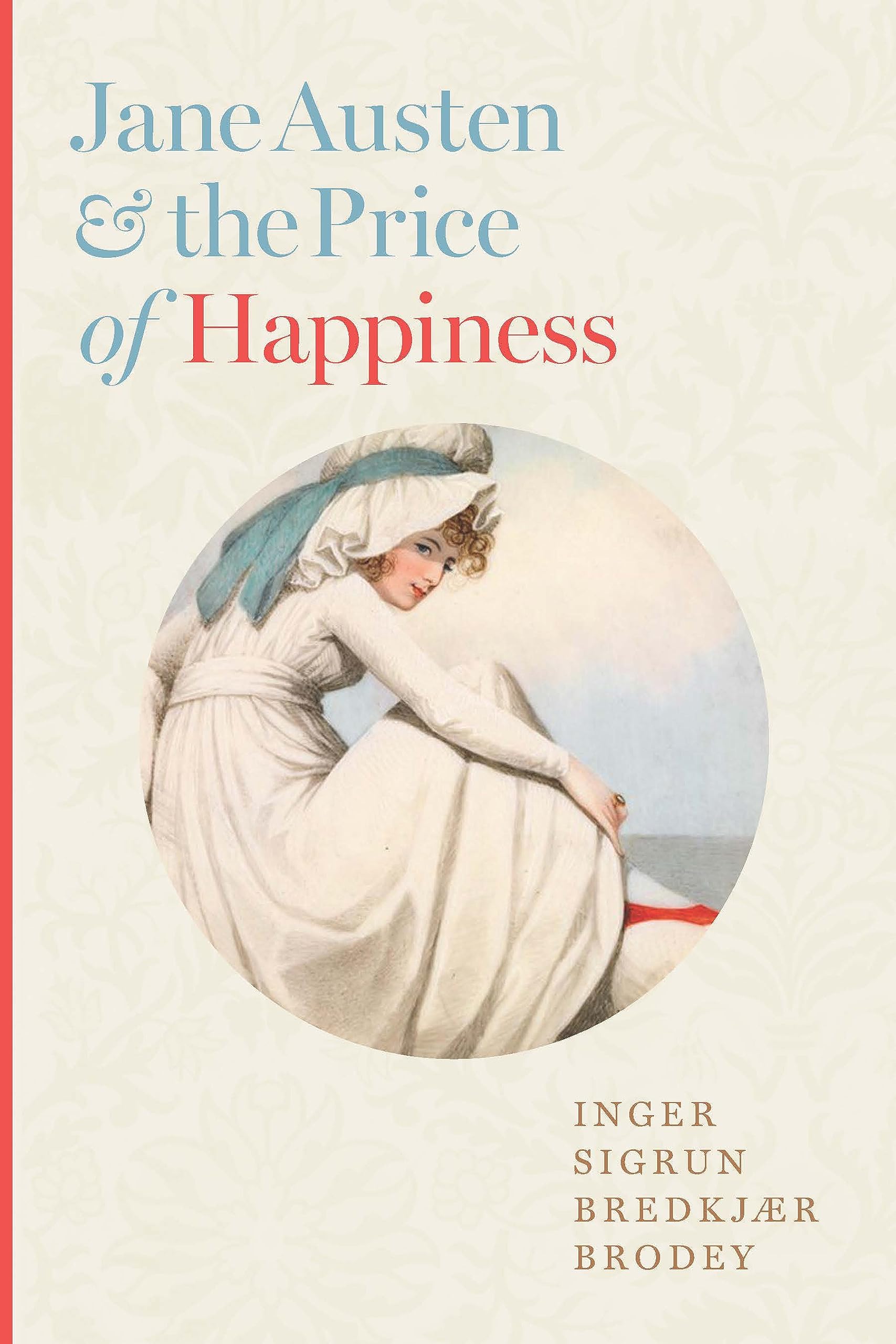



Do Jane Austen novels truly celebrate―or undermine―romance and happy endings? How did Jane Austen become a cultural icon for fairy-tale endings when her own books end in ways that are rushed, ironic, and reluctant to satisfy readers' thirst for romance? In Jane Austen and the Price of Happiness , Austen scholar Inger Sigrun Bredkjær Brodey journeys through the iconic novelist's books in the first full-length study of Austen's endings. Through a careful exploration of Austen's own writings and those of the authors she read during her lifetime―as well as recent cultural reception and adaptations of her novels―Brodey examines the contradictions that surround this queen of romance. Brodey argues that Austen's surprising choices in her endings are an essential aspect of the writer's own sense of the novel and its purpose. Austen's fiercely independent and deeply humanistic ideals led her to develop a style of ending all her own. Writing in a culture that set a monetary value on success in marriage and equated matrimony with happiness, Austen questions these cultural norms and makes her readers work for their comic conclusions, carefully anticipating and shaping her readers' emotional involvement in her novels. Providing innovative and engaging readings of Austen's novels, Jane Austen and the Price of Happiness traces her development as an author and her convictions about authorship, novels, and the purpose of domestic fiction. In a review of modern film adaptions of Austen's work, the book also offers new interpretations while illustrating how contemporary ideas of marriage and happiness have shaped Austen's popular currency in the Anglophone world and beyond. Brodey's interpretations of Austen's writings are subtle and penetrating, and discussions of popular Austen film adaptations shed light on how Hollywood tramples over the novels' ambivalence. Austenites will want to take a look. ― Publishers Weekly That Austen might be pushing her readers to separate the ideas of happiness and marriage in favor of introspection and self-actualization is a bold idea, but Ms. Brodey defends it with aplomb in this beautifully argued and original book. ―Elizabeth Lowry, The Wall Street Journal Jane Austen and the Price of Happiness is not a book for hopeless romantics... Deploying tough love, Brodey reminds us that our desires are the consequence of getting confused between the countless screen adaptations of Austen and the original texts. ―Kathryn Hughes, The Sunday Times [Brodey] deepens our appreciation of Austen's abiding genius. ―Rachel Mann, Church Times Brodey has written one of the most stimulating commentaries on Austen's narrative methods that I've read in a long time. ―Maggie Lane, Jane Austen Society News Letter Jane Austen and the Price of Happiness examines the ambivalence embedded in Jane Austen's 'happy endings,' arguing that the novelist was resisting platitudes about marriage and favoring a more discerning, individualized understanding of happiness. Brodey writes with verve and clarity and draws judiciously on Austen criticism. Her book is savvy and insightful. ―Paula Marantz Cohen, author of Talking Cure: An Essay on the Civilizing Power of Conversation This accessible and lively book quizzes the seemingly tidy happily-ever-afters of Jane Austen's stories. Brodey's smart observations slide effortlessly back and forth between Austen's era and our own. Recommended for newly enlisted Janeites as well as perennial re-readers! ―Janine Barchas, author of The Lost Books of Jane Austen In this thoughtful and lively exploration of Austen's novels and their afterlives, Brodey is the first to investigate how the books' dismissive endings are self-conscious innovations―both artful and instructive. Brodey's nuanced readings illuminate the Janeite universe, teaching us to see a more complex (if imperfect) felicity. ―Susan Allen Ford, editor of Persuasions and Persuasions On-Line From closely reading Jane Austen's marriage plots and their conclusions, Brodey radiates outward to consider literary antecedents, biographical contexts, and present-day adaptations. Never before have the social significances, emotional resonances, moral meanings, and philosophical underpinnings of Austen's notoriously problematic endings been so incisively explored and so convincingly explained. ―Peter W. Graham, author of Jane Austen & Charles Darwin: Naturalists and Novelists Jane Austen and the Price of Happiness explores how her enduring novels offer both characters and readers alike far more than clichéd happy endings in marriage. By putting Austen's original plots and today's film adaptations in sparkling conversation, Brodey has given us a learned, allusive, provocative, and delightfully readable book. ―Devoney Looser, author of The Making of Jane Austen Brodey shows that Jane Austen was that rare writer: a romantic novelist without romantic illusions. This is a subtle vindication of Austen's happy