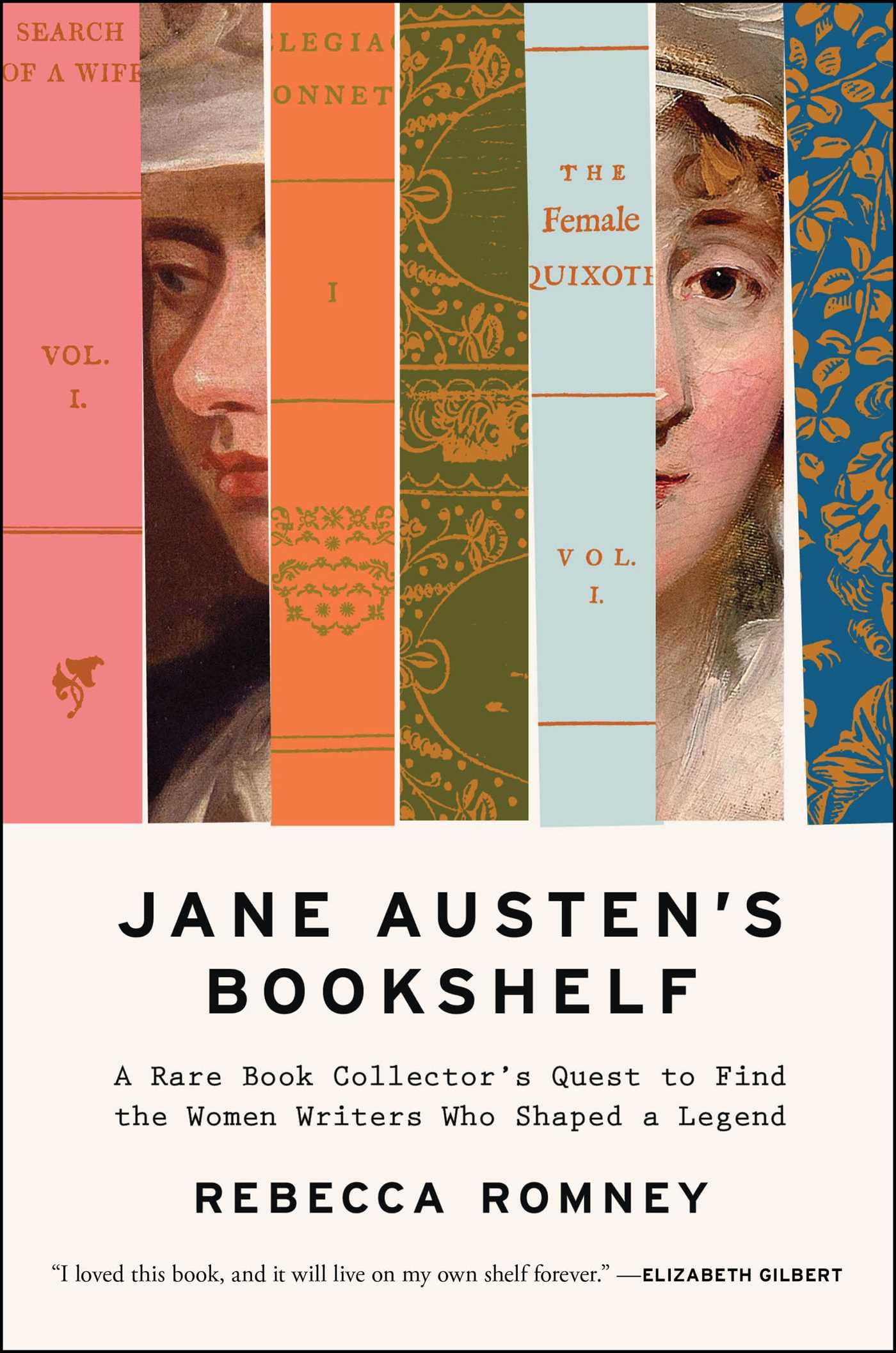
Jane Austen's Bookshelf: A Rare Book Collector's Quest to Find the Women Writers Who Shaped a Legend
$25.21
by Rebecca Romney



From rare book dealer and guest star of the hit show Pawn Stars , a page-turning literary adventure featuring “your favorite author’s favorite authors” ( Today )—the women who inspired Jane Austen—that’s “a meditation on reading and writing, on honesty and self-discovery—and on what books can teach us, if we let them” ( The Washington Post ). Long before she was a rare book dealer, Rebecca Romney was a devoted reader of Jane Austen. She loved that Austen’s books took the lives of women seriously, explored relationships with wit and confidence, and always, allowed for the possibility of a happy ending. She read and reread them, often wishing Austen wrote just one more. But Austen wasn’t a lone genius. She wrote at a time of great experimentation for women writers—and clues about those women, and the exceptional books they wrote, are sprinkled like breadcrumbs throughout Austen’s work. Every character in Northanger Abbey who isn’t a boor sings the praises of Ann Radcliffe. The play that causes such a stir in Mansfield Park is a real one by the playwright Elizabeth Inchbald. In fact, the phrase “pride and prejudice” came from Frances Burney’s second novel Cecilia . The women that populated Jane Austen’s bookshelf profoundly influenced her work; Austen looked up to them, passionately discussed their books with her friends, and used an appreciation of their books as a litmus test for whether someone had good taste. So where had these women gone? Why hadn’t Romney—despite her training—ever read them? Or, in some cases, even heard of them? And why were they no longer embraced as part of the wider literary canon? Jane Austen’s Bookshelf investigates the disappearance of Austen’s heroes—women writers who were erased from the Western canon—to reveal who they were, what they meant to Austen, and how they were forgotten. Each chapter profiles a different writer including Frances Burney, Ann Radcliffe, Charlotte Lennox, Charlotte Smith, Hannah More, Elizabeth Inchbald, Hester Lynch Thrale Piozzi, and Maria Edgeworth—and recounts Romney’s experience reading them, finding rare copies of their works, and drawing on connections between their words and Austen’s. Romney collects the once-famed works of these forgotten writers, physically recreating Austen’s bookshelf and making a convincing case for why these books should be placed back on the to-be-read pile of all book lovers today. Jane Austen’s Bookshelf will encourage you to look beyond assigned reading lists, question who decides what belongs there, and build your very own collection of favorite novels. “[A] gem of passionate criticism.… Jane Austen’s Bookshelf stirred some emotions of my own. My penciled exhortations in the margins, some of excitement or communion, others of irritation, are in a way a response to Romney’s invitation to join in her intellectual tussling. It may be how new canons are formed; it’s certainly how enthusiasms are shared.” — New York Times Book Review “A thrilling journey of adventure and self-discovery… On the one hand, Jane Austen’s Bookshelf is about the women who influenced Austen. But it is much more than that. It is a meditation on reading and writing, on honesty and self-discovery — and on what books can teach us, if we let them.” — The Washington Post “[Romney] brings to the works the distinctive insights of a rare-book dealer and finds clues to her mysteries in the physical books themselves… an excellent introduction to Austen’s favorite novelists.” — The Wall Street Journal "A spirited and scholarly rebuke to centuries of literary bias." — The Economist “As much a literary altar as it is a book.” —NPR's "Morning Edition" "Your favorite author’s favorite authors! This is a perfect read for Women's History Month, because there are so many women authors whose stories have been lost.” —Emma Straub, The TODAY Show “A powerful, page-turning journey… More than a literary excavation, this book is a feminist manifesto on who gets to shape our canon [and] a revelation for anyone who’s ever wondered who’s missing from the traditional literary landscape. This book practically demands that we rethink our shelves, ask who got left behind, and make space for voices that dared to speak up in a world that preferred them silent.” —BUST Magazine “Romney has chosen the perfect project to showcase her curatorial and research prowess, as well as her specialty in illuminating how the study of bookshelves can greatly inform our knowledge of historical figures or events. And who better to turn this perspective towards than Jane Austen, the architect of much of our modern literary culture? It’s a perfect project, a perfect book." — LitHub "A can't miss for Austen fans and literary lovers alike.” — T own & Country "What a wonderful book! JANE AUSTEN'S BOOKSHELF has everything a reader could desire: wit, passion, mystery, brilliant detective work, a love of rare books, a deep dive into literary history — and, best