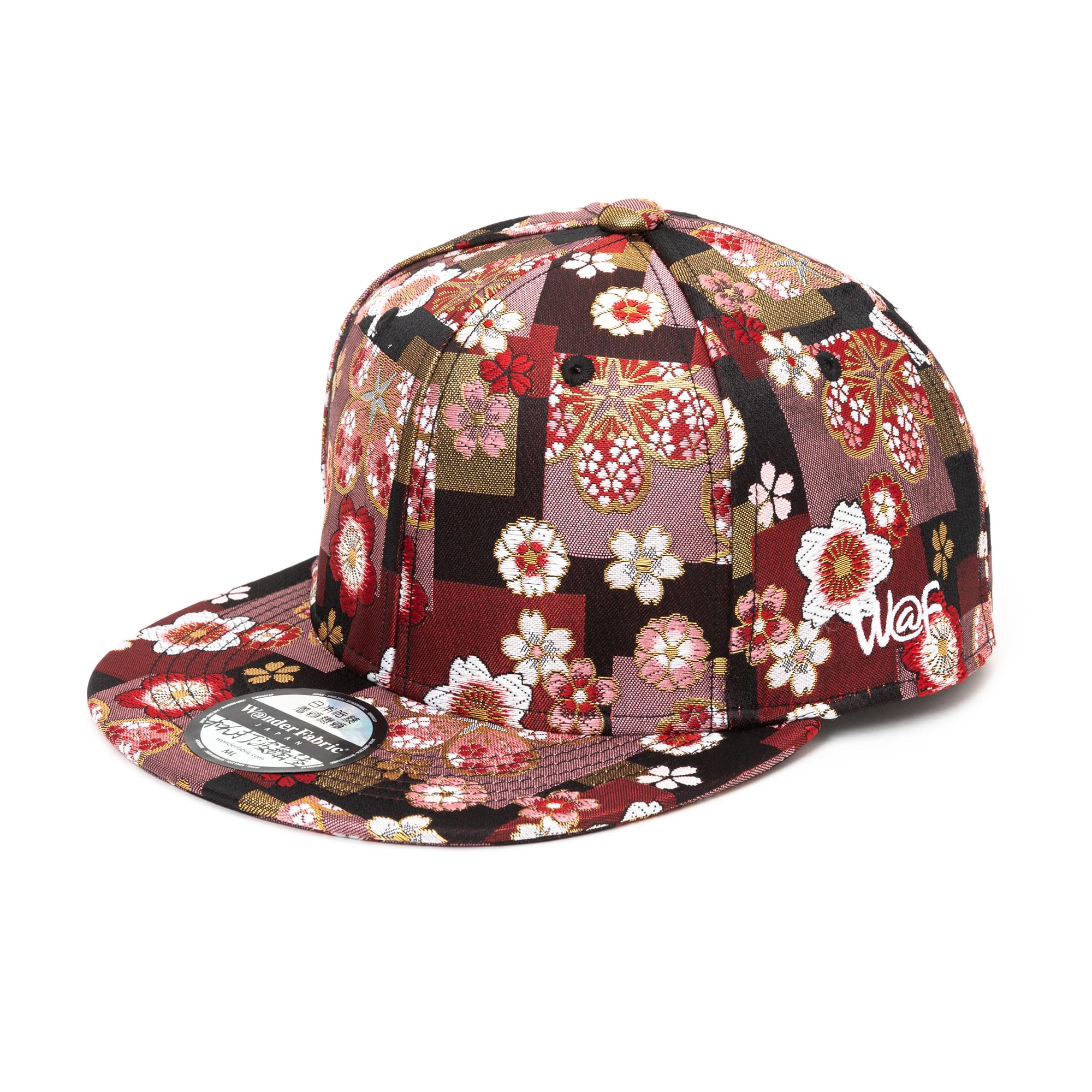
Japanese Pattern Cap Baseball Cap with Traditional Japanese Embroidery Nishijin and Kiryu Weaving Design Men's Snapback Hat
$95.00
by W@nderFabric



[Timeless Elegance]: Discover the exquisite beauty of traditional Japanese textiles with W@nderFabricR, where each piece reflects the rich cultural heritage of Japan. [Global Fashion Fusion]: Our collections blend age-old traditions with contemporary fashion, ensuring that the legacy of Japanese textiles is both preserved and innovatively transformed for the modern world. [Craftsmanship and Heritage]: Sourced from historic towns, our textiles are meticulously crafted by skilled artisans, embodying the sacred beauty and spirit of the Japanese people, often used in high-class kimonos and Shinto rituals. ["F-Made" Collaboration]: In collaboration with expert weavers and partner factories, we have developed "F-Made (Factory Made)”. Their delicate beauty is a sacred textile that contains the spirit of the Japanese people. [Nishijin Brocade Excellence]: Our use of Nishijin brocade, a renowned yarn-dyed fabric from Kyoto, showcases sophisticated designs with exceptional durability and wrinkle resistance, a testament to centuries of weaving expertise that has been accumulated since the Heian period. After the Onin War (1467-1477), which split Japan in two, weavers who had been dispersed to various parts of Japan returned to Kyoto and resumed weaving in the area where the Western Army led by Yamana Munezaki was stationed at the time of the war. It was around this time that the area in northwestern Kyoto, which had prospered as a textile town even before the war, came to be called "Nishijin," because it was the site of the Western army camp. Textile production began in Kyoto in the 5th century, before Emperor Kammu built the Heian-kyo capital. The government office called "Oribe no Tsukasa," which managed the textiles of the court, was established with the transfer of the capital to Heian-kyo, and the craftsmen who lived around today's Kuromon Kamichoja-machi, Kamigyo-ku were encouraged to make high-grade fabrics such as twill and brocade, and this is said to have led to the development of the industry. After the mid-Heian period, these government-run textile workshops began to decline, and artisans began to gather in the Oshatoneri-cho area to the east of Oribe-ji and began to make textiles freely, away from the court's control. They began to produce fabrics known as "Ootoneri no twill" and "Omiya no silks," among others. They also studied the twill weaving technique introduced by the Sung dynasty (960-1279) and developed their own unique karayagi (Chinese twill). It was valued as a dignified fabric suitable for decoration of shrines and temples.