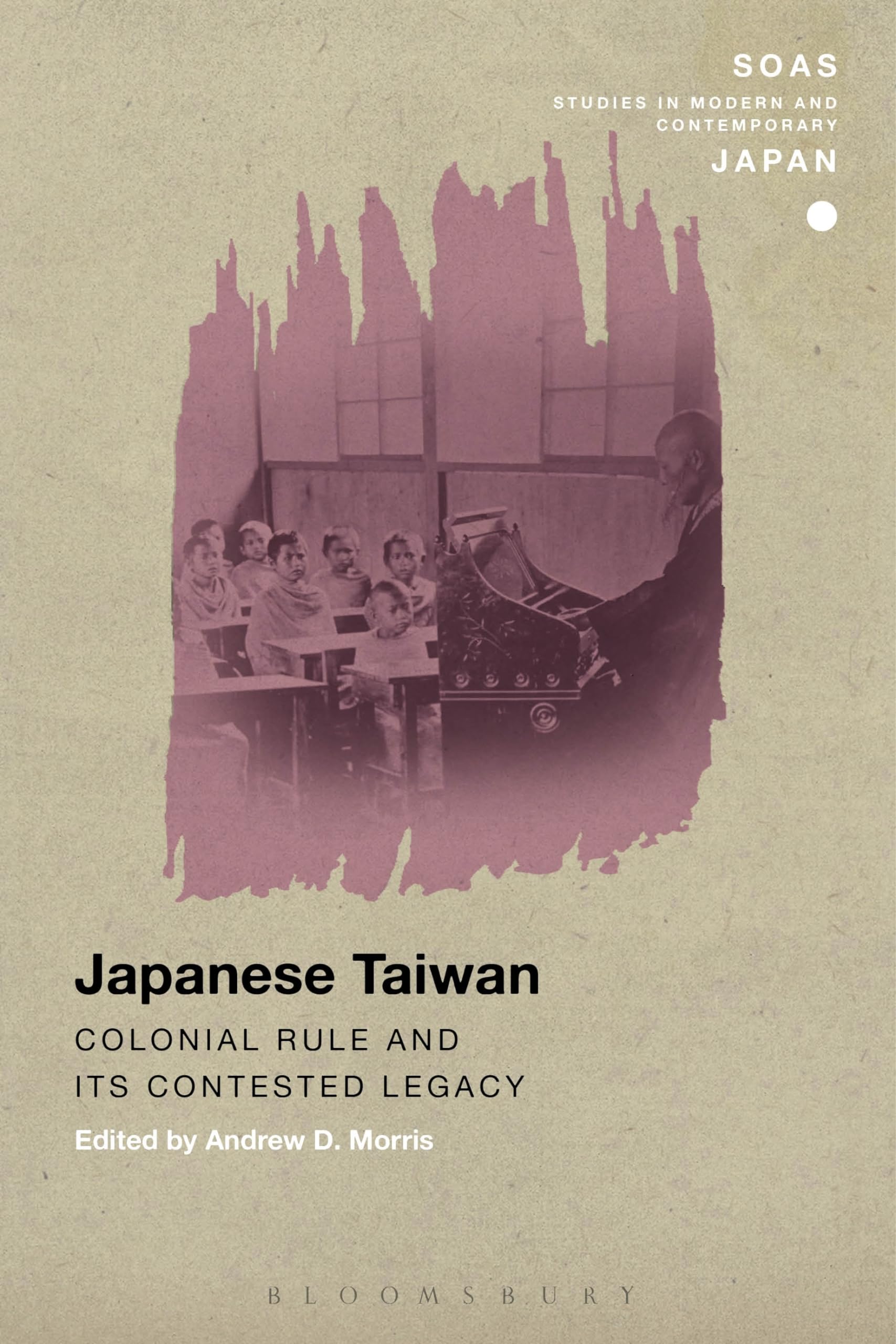
Japanese Taiwan: Colonial Rule and its Contested Legacy (SOAS Studies in Modern and Contemporary Japan)
$52.95
by Andrew D. Morris



Colonial agents worked for fifty years to make a Japanese Taiwan, using technology, culture, statistics, trade, and modern ideologies to remake their new territory according to evolving ideas of Japanese empire. Since the end of the Pacific War, this project has been remembered, imagined, nostalgized, erased, commodified, manipulated, idealized and condemned by different sectors of Taiwan's population. The volume covers a range of topics, including colonial-era photography, exploration, postwar deportation, sport, film, media, economic planning, contemporary Japanese influences on Taiwanese popular culture, and recent nostalgia for and misunderstandings about the colonial era. Japanese Taiwan provides an interdisciplinary perspective on these related processes of colonization and decolonization, explaining how the memories, scars and traumas of the colonial era have been utilized during the postwar period. It provides a unique critique of the 'Japaneseness' of the erstwhile Chinese Taiwan, thus bringing new scholarship to bear on problems in contemporary East Asian politics. “This is a sophisticated and groundbreaking collection of essays that positions Taiwan in the context of colonial and postcolonial studies. Anyone with an interest in modern East Asian politics and history will benefit from it.” ― Jordan Sand, Professor of Japanese History, Georgetown University, USA Andrew D. Morris is Professor of History at California Polytechnic State University, USA. He is author of Colonial Project, National Game: A History of Baseball in Taiwan (2010) and Marrow of the Nation: A History of Sport and Physical Culture in Republican China (2004). Christopher Gerteis is an historian of Modern and Contemporary Japan at SOAS University of London, UK and The University of Tokyo, Japan. His first book, Gender Struggles: Wage-earning Women and Male-Dominated Unions in Postwar Japan (2009), is an interdisciplinary study of the forgotten history of wage-earning Japanese women who during the 1950s militantly contested the socialist labor movement's revival of many prewar notions of normative gender roles. His second book, Mobilizing Japanese Youth: The Cold War and the Making of the Sixties Generation (forthcoming), examines the forces that shaped the political consciousness of Japanese youth who engaged in political violence during the 1960s and 1970s. It unpacks how notions of class and gender shaped the discourses produced by, and for, young men and women of the 'Sixties Generation'. Dr Gerteis is co-editor of the Bloomsbury book Japan since 1945: from Postwar to Post-Bubble (2012) and is Founding Series Editor of the Bloomsbury series SOAS Studies in Modern and Contemporary . He also served as Chief Editor of the interdisciplinary academic journal Japan Forum from 2014 through 2019.