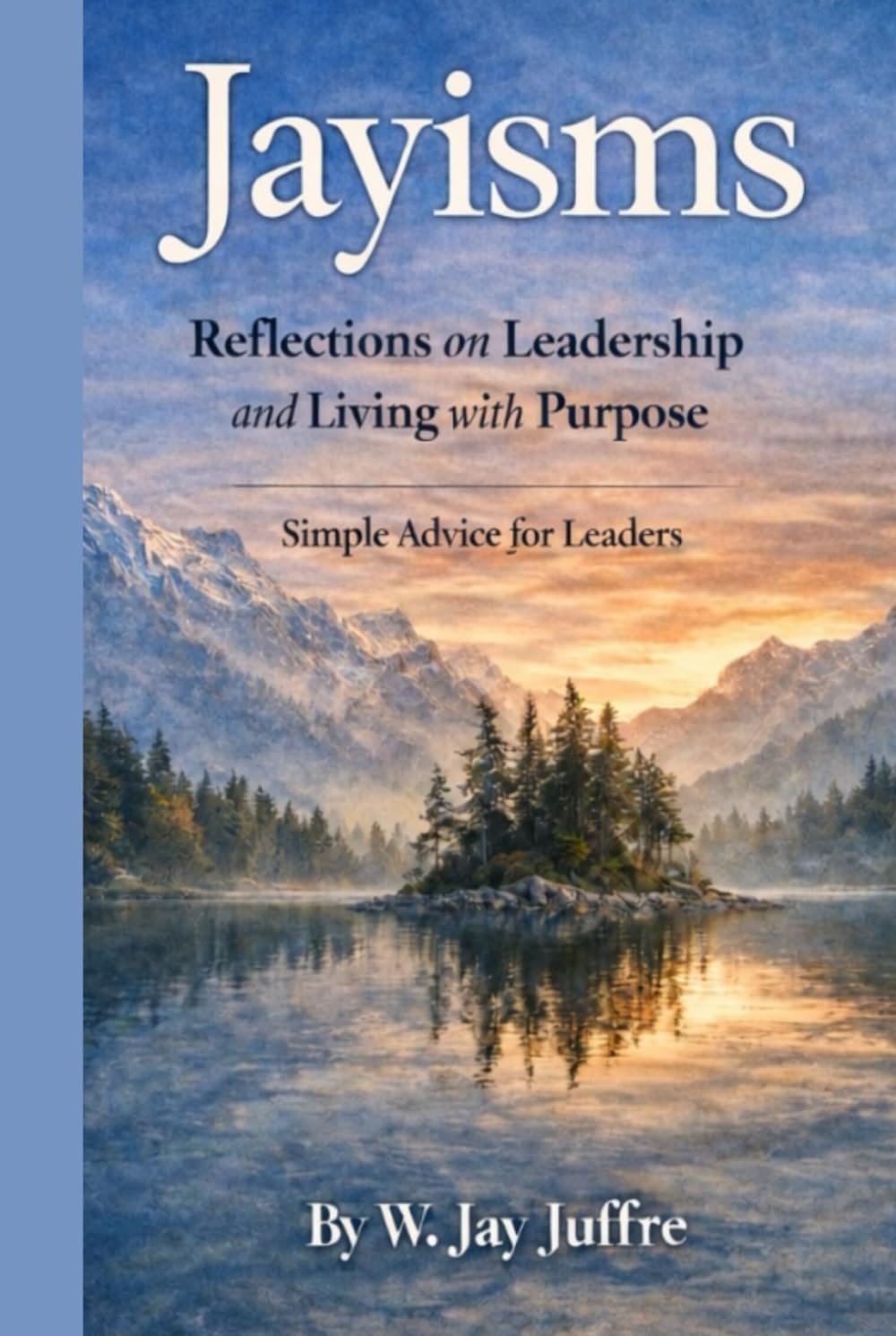
Jayisms: Reflections on Leadership and Living with Purpose.: Simple Advice for Leaders
$23.99
by W. Jay Juffre



Jayisms is a collection of lived insights—short, direct statements born from real leadership moments and shaped by experience, accountability, and reflection. At its core, the book advances a simple but demanding idea: the quality of your life and leadership is determined by how intentionally you choose to show up. Through concise quotes followed by thoughtful exploration, Jayisms challenges readers to examine how they think, lead, communicate, grow, and impact others. This is not a theory book, a management manual, or motivational noise. It is a practical philosophy grounded in responsibility. A central theme throughout the book is personal accountability. Meaningful growth begins internally. Rather than blaming circumstances, teams, or external conditions, readers are encouraged to look inward first. Inertia—positive or negative—starts with the individual. Leadership is not a title; it is behavior. The book invites readers to ask harder questions: What assumptions am I making? How am I contributing to this outcome? Am I holding myself to the same standard I expect from others? Self-awareness becomes the foundation for progress. Leadership in Jayisms is portrayed as a daily practice rather than a position of authority. Leadership is experienced by others, not claimed by the individual. Clarity matters more than charisma, consistency more than intensity, and trust more than control. Calm environments prove little; pressure reveals character. Readers are encouraged to consider not how they see themselves as leaders, but how others experience them during moments of uncertainty and stress. Standards and discipline are also central. Excellence is not dramatic; it is incremental and intentional. Growth does not require perfection, only honest effort repeated consistently. The gap between ambition and preparation is addressed with a clear reminder: hope is not a strategy. At the same time, the book rejects burnout as a badge of honor. Sustainable excellence—not self-destruction—is the goal. True performance is disciplined yet balanced, driven yet self-aware. Teamwork and trust receive significant attention. Results are downstream of understanding. Strong teams first learn to understand one another. Trust builds slowly and erodes quietly, requiring deliberate care. Talent alone does not create great teams—reliability, accountability, and character do. If you want better teams, become a better teammate. Culture is not announced; it is embodied. The book also reframes stress as a signal of uncertainty rather than simply workload. When priorities are unclear and direction is undefined, pressure intensifies. Preparation and competence calm the mind. Readers are encouraged to seek clarity: What is unclear? What decision have I avoided? What would simplify this situation? Stress becomes a prompt to reorient, not a permanent condition to endure. The tone distinguishes the book from traditional leadership titles. The reflections are direct but not harsh, philosophical yet practical. They are rooted in experience rather than theory. The voice feels like a seasoned leader speaking candidly—not preaching, but sharing lessons learned through responsibility and reflection. Jayisms is written for leaders who want to grow without posturing, professionals who value accountability, and individuals seeking clarity and purpose in both work and life. At its heart, the book makes one enduring argument: your life—personal and professional—is shaped by how intentionally you choose to think, act, and serve. Leadership begins internally, impact flows outward, and a meaningful life is built not through grand gestures, but through consistent character.