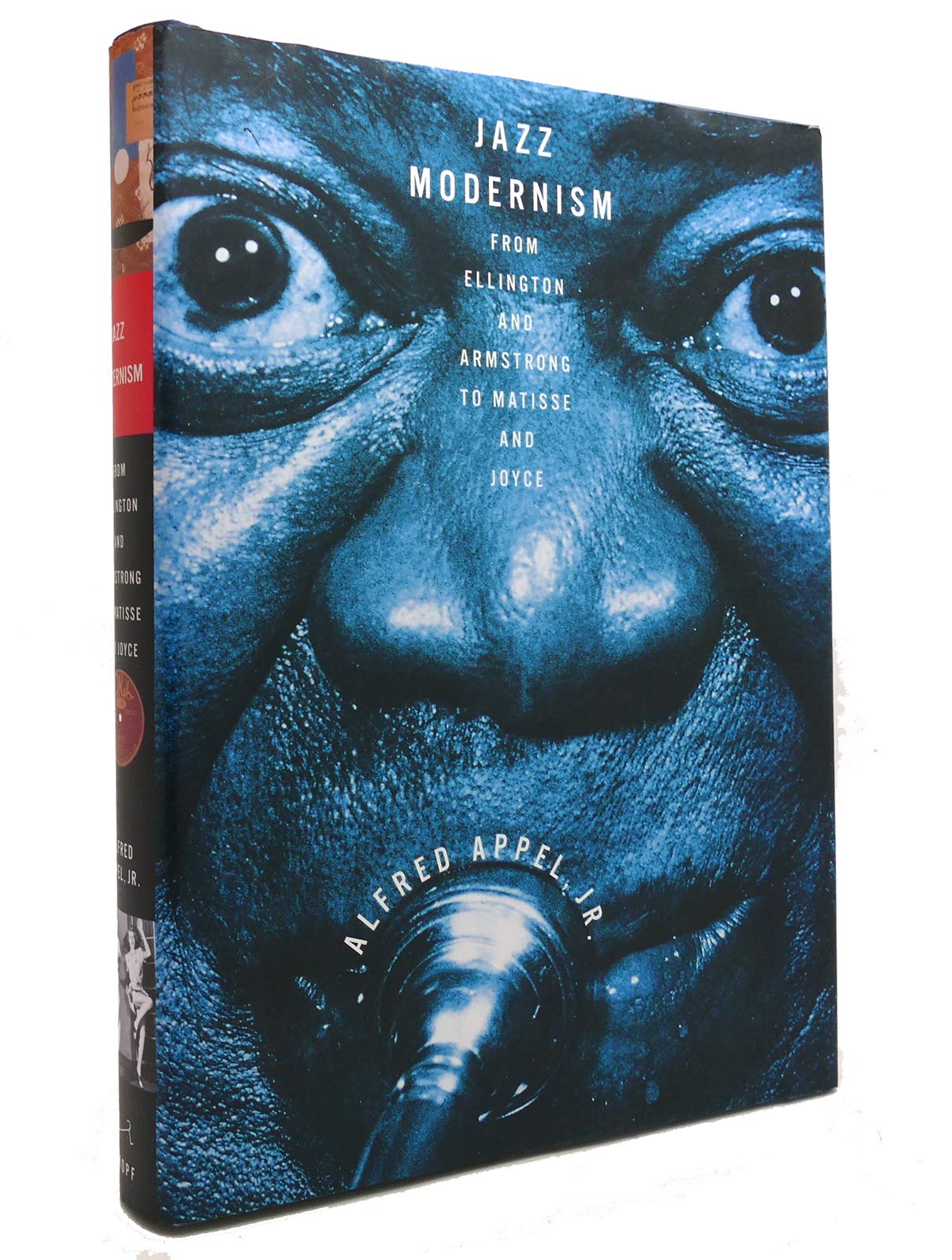
Jazz Modernism: From Ellington and Armstrong to Matisse and Joyce
$46.40
by Alfred Appel Jr



How does the jazz of Louis Armstrong, Duke Ellington, Fats Waller, Billie Holiday, and Charlie Parker fit into the great tradition of the modern arts between 1920 and 1950? In Jazz Modernism, one of our finest cultural historians provides the answer. Alfred Appel, author of The Annotated Lolita ("superb . . . full of vigor, gems, and stratagems"--Vladimir Nabokov), compares the layering of sex, vitality, and the vernacular in jazz with the paper collages of Picasso, and the vital mix of high and low culture found in Joyce. He shows how the musical construct of jazz was pared down by the masters as sculpture was in Calder's hands or prose in Hemingway's. He makes clear how Armstrong and Waller tore apart and rebuilt Tin Pan Alley material in the way that modernists in the visual arts arrived at wood assemblage and scrap-metal sculpture. He enables us to see that Ellington's "jungle" style was as un-primitive as Brancusi's self-conscious Africanesque sculpture. And along the way, he "recalls" live jazz perform-ances during the 1950s by Armstrong and John Coltrane, among others, and the night Charlie Parker played to a visibly thrilled Igor Stravinsky at Birdland. Making connections as illuminating as they are unexpected, Alfred Appel gives us a brilliant new way of understanding jazz. Appel (English, emeritus, Northwestern Univ.) takes the reader on a dizzying spin through the music of Fats Waller, Louis Armstrong, and (not quite enough of) Duke Ellington, along with a few others. His thoughts alternately flow and then snap off abruptly in new, unexpected directions sort of a jazz-based, interdisciplinary course on the aesthetics of modernism on speed. While the occasional puns and sudden shifts in imagery might teeter on the edge of favoring style over in-depth analysis, there is enough musical meat to satisfy casual jazz fans and jazz fanatics alike. Appel's near-improvisatory writing will not be every reader's cup of "Tea for Two," but the chapter on Waller's modernistic approach as a singer particularly in his send-ups of inane pop tunes is dead on. The uncharacteristically straight-to-the-point comparisons of boogie woogie with the later paintings of Piet Mondrian and Appel's tasty deconstruction of Louis Armstrong's vocal stylings also pull the listener into hearing (and seeing and appreciating) in new ways. Highly recommended for academic libraries having a strong focus on music and/or aesthetics, this would also make a nice, although perhaps not essential, addition to public libraries. James E. Perone, Mount Union Coll., Alliance, OH Copyright 2002 Cahners Business Information, Inc. Appel's mission in this scintillating synthesis is "to establish the place of classic jazz (1920-50) . . . in the great modernist tradition of the arts." Playful, punning, and brimming with admiration, Appel nimbly makes fresh, resonant connections across artistic disciplines and racial divides, celebrating the musicians, artists, and writers he believes exemplify "jazz modernism," a revolutionary, multicultural movement defined by accessibility, vitality, humor, "a capacity for joy," and expression of "the goals and ideal of racial integration." Fascinated by how black musicians riffed on the work of white songwriters and composers, from Gershwin and Rodgers to Chopin and Stravinsky, Appel parses the genius of Louis Armstrong, Fats Waller, Billie Holiday, and Duke Ellington with keen discernment and witty lyricism, and then reveals symbiotic viewpoints and aesthetics in Matisse's cut-out series called, aptly enough, Jazz ; Picasso's found-object collages and sculptures (the fruits of his "ragpicker" approach, a parallel to jazz's remaking of existing tunes); the ebullient work of Alexander Calder; and Joyce's Ulysses . Terrific illustrations syncopate neatly with Appel's invigorating and anecdotal observations and jazzed interpretations. Donna Seaman Copyright © American Library Association. All rights reserved How does the jazz of Louis Armstrong, Duke Ellington, Fats Waller, Billie Holiday, and Charlie Parker fit into the great tradition of the modern arts between 1920 and 1950? In Jazz Modernism, one of our finest cultural historians provides the answer. Alfred Appel, author of The Annotated Lolita ("superb . . . full of vigor, gems, and stratagems"--Vladimir Nabokov), compares the layering of sex, vitality, and the vernacular in jazz with the paper collages of Picasso, and the vital mix of high and low culture found in Joyce. He shows how the musical construct of jazz was pared down by the masters as sculpture was in Calder's hands or prose in Hemingway's. He makes clear how Armstrong and Waller tore apart and rebuilt Tin Pan Alley material in the way that modernists in the visual arts arrived at wood assemblage and scrap-metal sculpture. He enables us to see that Ellington's "jungle" style was as un-primitive as Brancusi's self-conscious Africanesque sculpture. And along the way, he "recalls" live jazz pe