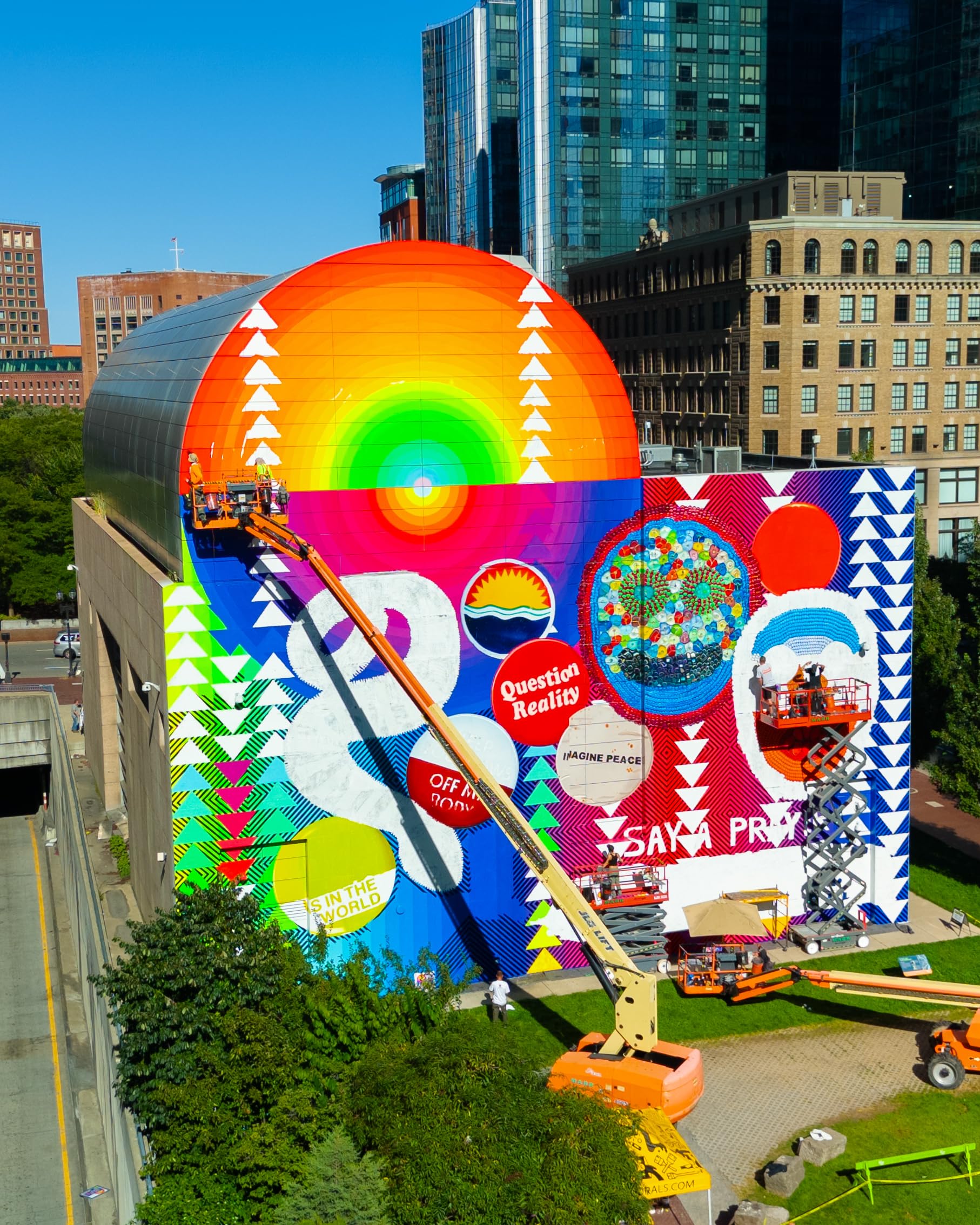



Jeffrey Gibson’s POWER FULL BECAUSE WE’RE DIFFERENT is a companion publication to an installation of the same name commissioned by MASS MoCA, the co-publishers of this volume. The project takes root in two historic moments: a 1988 Leigh Bowery performance and a 1990 reintroduction of the term Two-Spirit. For years, Gibson has led the fight for visibility, yet more recently (following his historic role as the first Indigenous artist to represent the United States in a solo exhibition at the Venice Biennale), he looks both to his ancestors and historic artists as much as the next generation. POWER FULL BECAUSE WE’RE DIFFERENT is an unapologetic shout that is needed in this moment. The publication brings together over forty contributors that Gibson invited to be part of the project, through live events, talks, and a rotating resource room that delved into themes such as Two-Spirit, music, and futurism. In this, the publication becomes its own resource guide and its own image of what Indigenous creativity and community can look like. Additional contributors include exhibition curator Denise Markonish; MASS MoCA Curator Evan Garza; NYC scholar Lou Cornum; LGBTQ advocate Albert McLeod; resource room curator Antonia Oliver; and Jeffrey Gibson, who writes on the importance of community. Jeffrey Gibson is a multidisciplinary artist, he is a citizen of the Mississippi Band of Choctaw Indians and half Cherokee, whose practice includes sculpture, painting, printmaking, video, and performance. His work is in the permanent collections of the Denver Art Museum; Museum of Fine Arts, Boston; Smithsonian Institution’s National Museum of the American Indian; National Gallery of Canada; Crystal Bridges Museum of American Art; the Museum of Modern Art; and the Whitney Museum of American Art. Gibson is a past TED Foundation Fellow and a Joan Mitchell Grant recipient. He is also a recipient of the 2019 MacArthur Foundation Fellowship. He is currently an artist-in-residence at Bard College and lives and works near Hudson, New York. In 2024, Gibson represented the United States at the 60th edition of La Biennale di Venezia as the first Indigenous artist to represent the United States with a solo presentation in the national pavilion.