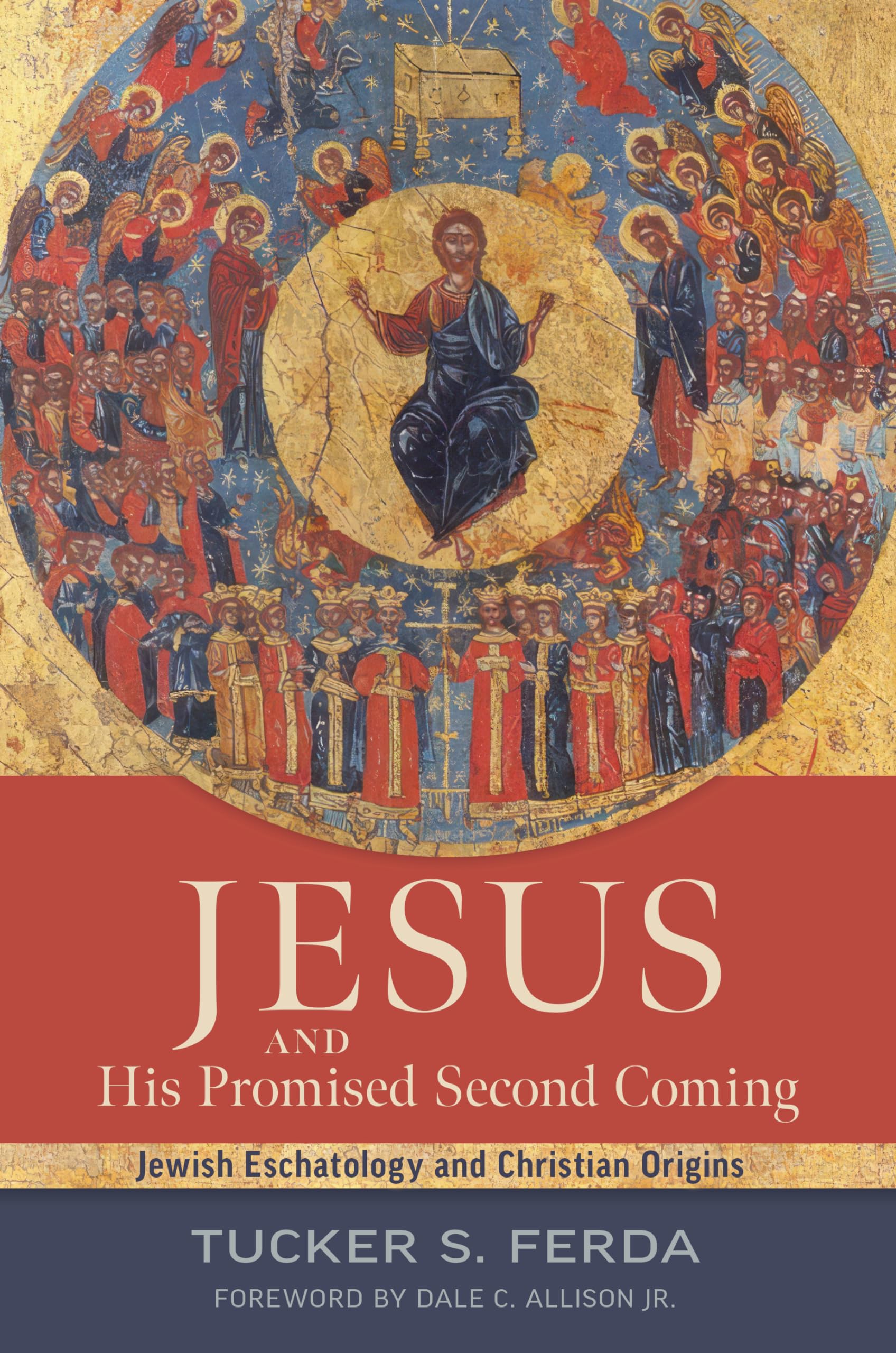
Jesus and His Promised Second Coming: Jewish Eschatology and Christian Origins
$40.99
by Tucker S. Ferda



In this pioneering study of Scripture and reception history, Tucker S. Ferda shows that the hope for Jesus’s second coming originated in his own message about the coming of the kingdom after a time of distress. Most historical Jesus scholars take for granted that Jesus’s second coming was invented by his zealous early followers. In Jesus and His Promised Second Coming , Tucker S. Ferda challenges this critical consensus. Using innovative methodology, Ferda works backward through reception history to Paul and the Gospels to argue that the hope for the second coming originated in Jesus’s own grappling with the prospect of death and his conviction that the kingdom was near; he expected a return that would coincide with the final judgment and the end of the age within the space of a generation. Ferda also makes a major contribution to the reception history of the Bible, shedding light on how Christians distinguished their faith from Judaism by deriding “Jewish messianism” as earthly minded and militaristic. In the early modern period, critics found an expedient way to distance Jesus from this caricature of “Jewish messianism”: they pinned the expectation for the second coming on Jesus’s early followers. A new appreciation for the diversity of Judaism and messianism in the Second Temple period makes possible a fresh reconstruction of Jesus. Bold and historically astute, Jesus and His Promised Second Coming breathes new life into a long-stagnant conversation. It also offers readers fresh insight into the history of Jewish-Christian relations. Students and scholars of the New Testament will need to read and engage with Ferda’s provocative argument. “Tucker Ferda’s work makes a crucial contribution to the place of eschatology in historical Jesus research and early Christian studies. His challenge to entrenched scholarly assumptions illuminates complex and problematic processes of intellectual history while modelling rigorous, perceptive analysis in both exegesis and reception. Ferda successfully demonstrates that the expectation of Jesus’s return deserves renewed scholarly attention as an authentic element of his teaching rather than a post-Easter counsel of apologetic convenience.” ― Scottish Journal of Theology “ An excellent and thought-provoking work, whose exegetical erudition is matched by sensitive historical imagination, critical analysis, and immersion in the history of interpretation. Readers studying this book carefully will learn a great deal about the history of NT scholarship, the eschatological perspectives of NT texts, and how to reason judiciously about historical matters. . . . Scholars interested in Second Temple Jewish and early Christianity eschatology cannot ignore this book, and anyone interested in Jesus will be greatly challenged by it.” ― Religious Studies Review “Ferda’s arguments are more complex than this review can summarize. . . I find his work both admirably researched and persuasive. This book also aligns with my own far less well-considered inclinations.” ―J. Gordon McConville in Interpretation “This volume is a brilliant model of what the critical study of Jesus should involve―careful exegesis, methodological savvy, provocative suggestions, sober judgment, historical imagination, mastery of the secondary literature, plus knowledge of the history of the discipline and its place within larger cultural developments. Jesus and His Promised Second Coming is, without question, one of the best and most important books on Jesus in the last quarter century.” ―from the foreword by Dale C. Allison Jr. “This work is sure to set the cat among the pigeons about a long-time consensus among students of the historical Jesus: Jesus did not expect his Second Coming; that expectation was, rather, an invention of the early church. Ferda argues to the contrary that an expectation of end-time return is in line with the rest of Jesus’s eschatology and that scholarly skepticism about it reflects post-Enlightenment prejudice rather than sound historical method. He makes his case well, both in analyzing scholars’ presuppositions and arguments and in mining ancient Jewish and Christian sources. Whether or not they end up agreeing, subsequent historians will not be able to ignore this challenging counter-thesis.” ―Joel Marcus, professor emeritus of New Testament and Christian origins, Duke Divinity School “The New Testament and its early readers expected Jesus to return from heaven and attributed this expectation to Jesus himself. Historians of Jesus, however―even before the supposed eighteenth-century beginnings of Jesus historiography―are largely unable or unwilling to discuss this expectation as an aspect of Jesus’s self-understanding. Ferda charts an intrepid course through this tension that leads the way to understanding not just Christian origins and eschatology but also the man from Nazareth and his receptions. I needed to read this book.” ―Rafael Rodríguez, professo