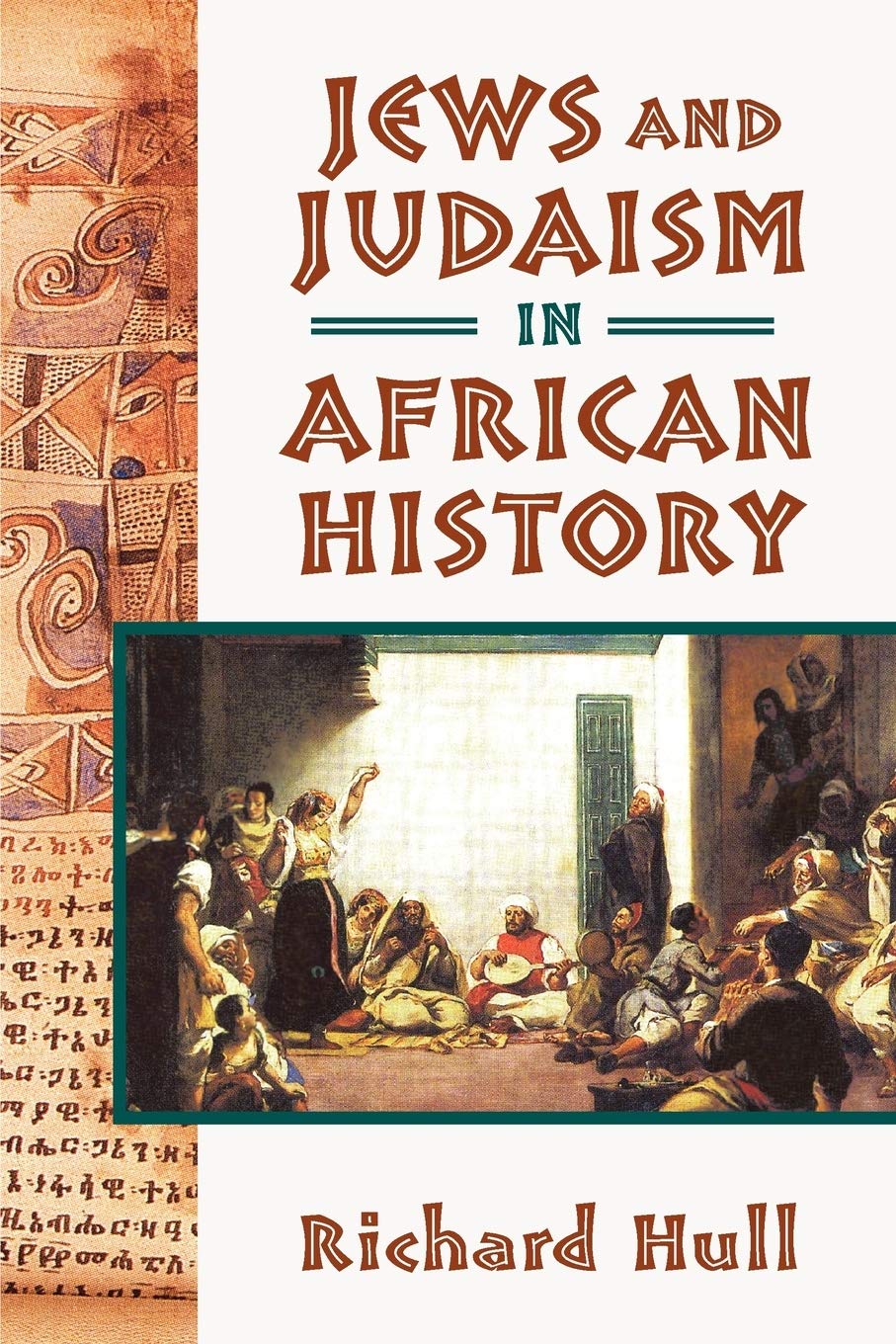



This timely book is the first to cover the history of Jews from the times of Alexander the Great and Caesar to Idi Amin and Nelson Mandela. Jews have often been a marginalized minority, yet they have played a role in the history of the continent hugely disproportionate to their numbers. They have enriched Africa culturally and economically, serving as innovators and middlemen, government servants and educators. Along the way, they have been victims and victimizers, mercenaries and proxies for others, as well as adjuvants in long-distance trade and sustainable development. While some have converted to other religions and been assimilated into indigenous society, most have retained their Jewish identity in various forms. Jews and Judaism have practically disappeared from Africa today, but the legacy of both endures. This book covers topics such as Jews in Ptolemaic and Roman Egypt; Jews in the western Mediterranean throughout the Inquisition; "New Christians" and the making of the Atlantic world, including the early phases of the modern sugar economy and the slave trade; Jews in Ethiopia from antiquity to the 20th century; Jewish communities in the Muslim world, including Morocco and West Africa; Sudanic civilizations from the 11th to the 21st century; Jews in the making of modern South Africa; and the relationship between modern Israel and Africa. "Judaism to this day still holds a very strong presence in African culture. "Jews and Judaism in African History" discusses Judaism and its impact on the African continent - an influence which many people commonly ignore despite its prominence. For thousands of years Judaism has had a strong showing on Africa, and to this day a good portion of Judaism's followers still reside there, breaking the stereotype that all Jews are white. "Jews and Judaism in African History" brings to light an important aspect of African history."--Midwest Book Review --Midwest Book Review This book fills a gap in the broad history of Jews in Africa. Hull (NYU) teaches courses on the topic, about which he marshals an impressive body of literature in succinct prose with balanced judgments, providing an eminently readable summary of key themes. Six chapters cover the chief areas of Jewish presence: classical antiquity; North Africa from Arab conquest to 1600 and then 1600-present; Jews and converts in the West/Central African slave trade; South Africa; and Central/Eastern Africa. Important themes include traders in North Africa, Jewish involvement in slave trades, the contrast of South African Jews fighting or accommodating apartheid, and intriguing histories of Ethiopian Falasha and Southern African Lemba....This will be useful for students of all levels and as a text for teaching...Recommended."---Choice Magazine --Choice Magazine Hull has provided a tremendously useful and long- overdue compendium of information about Jews in Africa. Historians of Judaism will learn much about a long-neglected locus of activities in Africa, while historians of Africa will learn much about a long-neglected group long active in Africa. Bringing both sets of scholars into conversation with one another would be a welcome gift resulting from this volume more generally. "Beyond engaging scholars, the book should make a provocative text in undergraduate-level courses in the History of Africa as well as the History of Comparative Judaisms. It may well both presage and inspire a new round of scholarship dedicated to further filling in the details of the broad outlines Hull has sketched in this overview. --International Journal of Historical African Studies "This book fills a gap in the broad history of Jews in Africa. Hull (NYU) teaches courses on the topic, about which he marshals an impressive body of literature in succinct prose with balanced judgments, providing an eminently readable summary of key themes. Six chapters cover the chief areas of Jewish presence: classical antiquity; North Africa from Arab conquest to 1600 and then 1600-present; Jews and converts in the West/Central African slave trade; South Africa; and Central/Eastern Africa. Important themes include traders in North Africa, Jewish involvement in slave trades, the contrast of South African Jews fighting or accommodating apartheid, and intriguing histories of Ethiopian Falasha and Southern African Lemba...This will be useful for students of all levels and as a text for teaching...Highly recommended." --Choice Hull writes in short, clear senteneces, with nary a footnote. (His comprehensive referencing is in MLA style - perhaps as a model for students to adopt in their papers?) His approach - as befits a classical historian - is basically chronological. Launching his account from classical antiquity (Elephantine, Ptolemic, and Alexandrian Egypt), Hull takes us up until the seventeenth century in North Africa, relating how Jews fared under successive Muslim regimes (Fatimid, Mamluk, Almoravid, Ottoman, etc.). He then deviates slightly from h