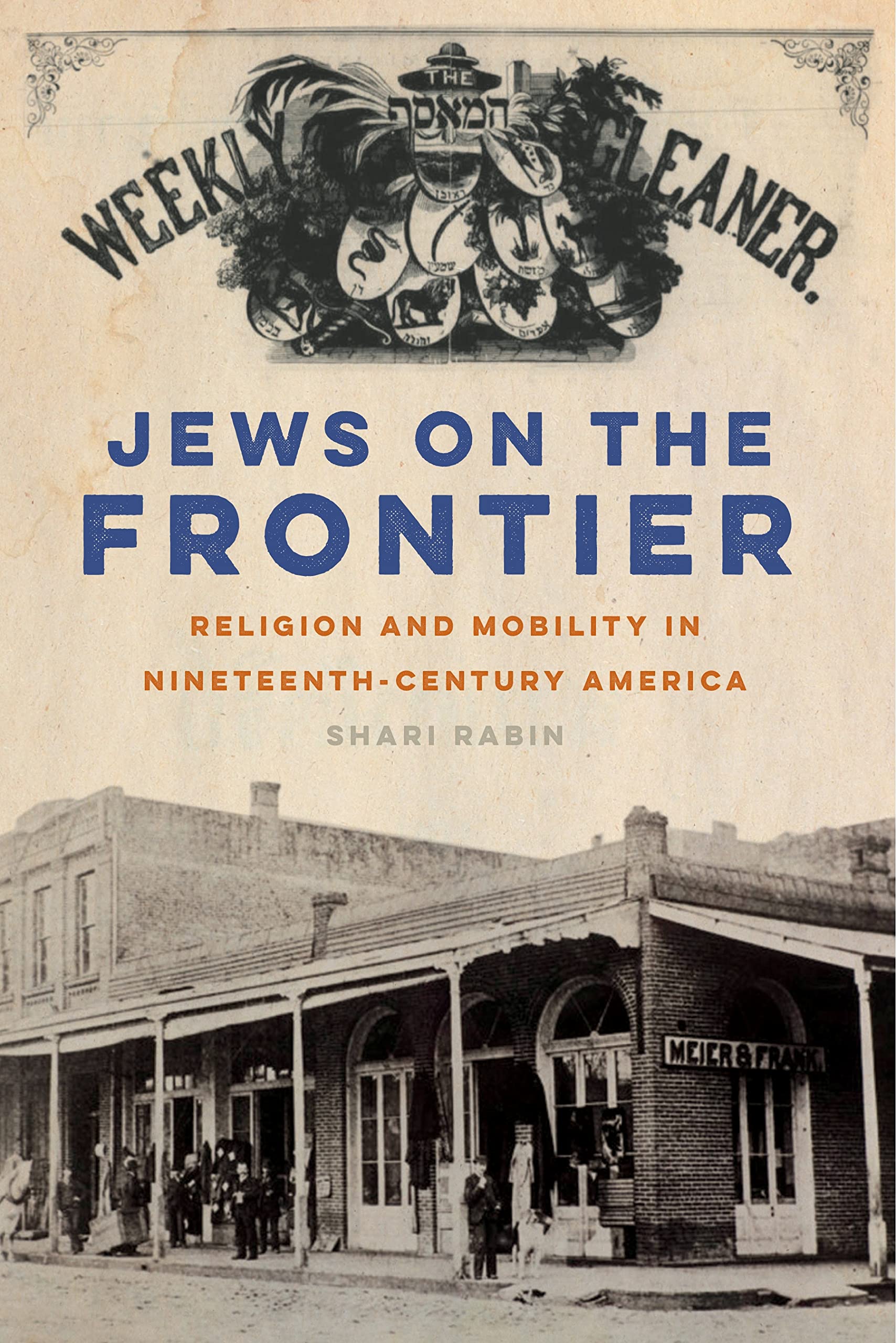
Jews on the Frontier: Religion and Mobility in Nineteenth-Century America (North American Religions)
$89.00
by Shari Rabin



Winner, 2017 National Jewish Book Award in American Jewish Studies presented by the Jewish Book Council Finalist, 2017 Sami Rohr Prize for Jewish Literature, presented by the Jewish Book Council An engaging history of how Jews forged their own religious culture on the American frontier Jews on the Frontier offers a religious history that begins in an unexpected place: on the road. Shari Rabin recounts the journey of Jewish people as they left Eastern cities and ventured into the American West and South during the nineteenth century. It brings to life the successes and obstacles of these travels, from the unprecedented economic opportunities to the anonymity and loneliness that complicated the many legal obligations of traditional Jewish life. Without government-supported communities or reliable authorities, where could one procure kosher meat? Alone in the American wilderness, how could one find nine co-religionists for a minyan (prayer quorum)? Without identity documents, how could one really know that someone was Jewish? Rabin argues that Jewish mobility during this time was pivotal to the development of American Judaism. In the absence of key institutions like synagogues or charitable organizations which had played such a pivotal role in assimilating East Coast immigrants, ordinary Jews on the frontier created religious life from scratch, expanding and transforming Jewish thought and practice. Jews on the Frontier vividly recounts the story of a neglected era in American Jewish history, offering a new interpretation of American religions, rooted not in congregations or denominations, but in the politics and experiences of being on the move. This book shows that by focusing on everyday people, we gain a more complete view of how American religion has taken shape. This book follows a group of dynamic and diverse individuals as they searched for resources for stability, certainty, and identity in a nation where there was little to be found. "Rabin makes a compelling case here that the full arc of American Jewish history cannot ignore the young Jewish men who pursued their livelihoods by heading for the frontier. Their religious inconsistencies, creativities, and sense of empowerment as ordinary Jews may actually serve as a better template for thinking about how Judaism developed in America." ― Annals of Iowa "Rabins clarion call to reimagine the labels we use to describe ourselves, to embrace diasporism, and to resist centralized practices speaks to a generation that actively deconstructs patriarchal and heteronormative structures, thinks more globally, and operates outside the institutional framework. . . . Jews on the Frontieris a valuable read not only for scholars of American Jewish and American religious history, but change-minded activists and citizens as well." ― Marginalia Review of Books "Jews on the Frontier stands as a significant historiographical intervention in de-centering established institutions and denominations and the Protestant secular from the narratives of minority religions and religious communities." ― Reading Religion "Rabin convincingly describes frontier mobility as the motive force behind one of the most creative and constructive eras in American Judaism." ― The Journal of Southern Religion "In [an] enlightening study largely focusing on the preCivil War South and West, Rabinexamines the intertwining of Jews and mobility in the 19th-century US...Impressively documented, this intriguing exploration is appropriate for general libraries." ― Choice "Jews on the Frontier is a compelling account of the cultural and spiritual changes experienced by American Jews outside the main coastal cities and their large congregations before the large East-European emigration waves of the late Nineteenth-Century." ― Civil War Book Review ""Scholars of immigration have toiled for years on the question of how mobility affects nationalities and group identities alike. In Jews on the Frontier, Shari Rabin gives this framework an interesting twist by investigating mobility’s influence on religion. By relying on personal letters, published articles, and other first-hand testimonies, Rabin argues that the expanding United States created a uniquely American religion." ― American Jewish Archives Journal "Generating as many questions about the nineteenth century American Jewish experience as answers, Rabins study enables us to take its measure, to see Jewish life on its own terms: as a full-throttled, complex, lively culture all its own rather than a backdrop to the sea changes of the late nineteenth and early twentieth centuries." ― American Historical Review "For far too long, historians of American Jews have glossed over most of the nineteenth century, as preamble for the truer or more interesting histories of twentieth-century American Jewry. Rabin offers a deeply researched, beautifully rendered case for the centrality of the nineteenth century to how we understa