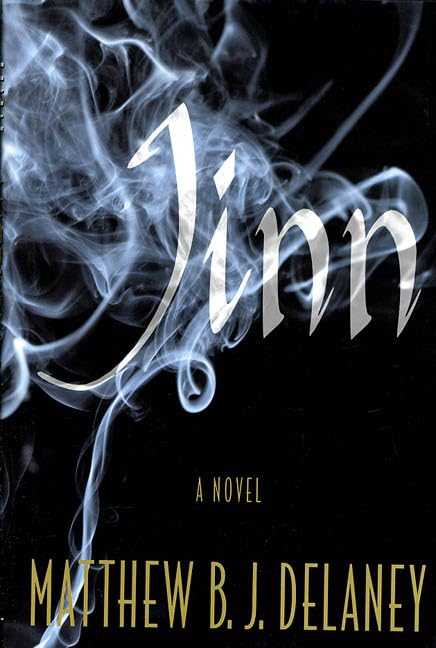



It is May 1943. On the remote island of Bougainville, in the South Pacific, a squad of United States Marines beats their way through the thick jungle. They’ve landed to do battle with the Japanese soldiers on the island, but in short order, they begin to realize that the forbidding battleground holds an ancient secret a hundred times more terrifying than any enemy army---especially when they start finding the bodies. Flash-forward to July 2008. In the slums---and the skyscrapers---of Boston, a new kind of depraved serial killer is stalking human prey and terrifying the city. The bodies have been found posed and mutilated in bizarre ways that the two police officers in charge of the case have never seen before---and never want to see again. Are the two scenarios connected? Detectives Jefferson and Brogan have no idea that to solve the biggest case of their careers, their investigation must take them around the world and through time and history---from a mysterious salvaged submarine with a shocking secret, to an inhumane prison where the inmates are even more scared than usual of “the Pit,”and finally back to the beginning: the sinister island in the South Seas where something inhuman has been biding its time Someone--or something--is terrorizing Boston, leaving a trail of horribly mutilated bodies and cryptic epigrams in its wake. The first victim is the scion of Joseph Lyerman, an eccentric philanthropist who is strangely unmoved by his son's brutal death. Detectives Jefferson and Brogan are at first stymied by the gruesome murder spree, but as the body count rises, so do some pressing questions. Why is Lyerman so obsessed with excavating a sunken World War II submarine? What is his connection with the notorious Blade Prison? And why have Jefferson and Brogan started having flashbacks to their military service in Bosnia? Delaney's pace is breathless. If there are a few holes--would the Boston Police Department really send a detective to Russia as part of a homicide investigation? Shouldn't Brogan and Jefferson occasionally report to headquarters?--they don't amount to much when the story is this engrossing. Macabre touches and canny plot twists will gratify horror fans, and the whodunit element will attract mystery readers as well. Movie rights sold to Touchstone. Meredith Parets Copyright © American Library Association. All rights reserved Matthew B. J. Delaney is a recent graduate of Dartmouth College. He lives in Somerville, Massachusetts. This is his first novel. BOUGAINVILLE, NORTHERN SOLOMON ISLANDS PACIFIC THEATER 11 NOVEMBER 1943, DAWN The eight landing craft formed a jagged line of gray ship's metal across the tumbling Pacific Ocean. The small boats rose and dove through the rough waters, the ocean's shimmering green phosphorescence pounding against the ship's straight metal sides before misting over the helmeted heads of F Company. Private Eric Davis stood corralled between Marines, their helmets dripping salt water, their fatigues dark and wet. He hunched his shoulders as the landing craft caught the crest of another wave, diving through it in a nauseating roll, more water spraying onto the men. Two months earlier he had been home in Boston. Then there was the draft. A month of training in Mississippi, his station in the Pacific, and the rest was a blur of sleepless nights aboard rolling ships, lying on canvas bunks, one on top of the other, listening to the occasional air raid warnings as Japanese Zeros buzzed above, circling like hungry vultures over their prey. The landing craft hit another sickening drop, forcing Eric to spread his legs wider to hold his balance as more water sheeted down on him. They had been circling the island for ten minutes, the warm sun baking their helmets, drying the salt tightly against their skin. Over the metal sides of the landing craft, the men turned their heads, watching the Navy's shells slam into the thick vegetation across the beach. Turning suddenly, the LCM slanted toward the shore. A Marine Air Group torpedo bomber roared overhead, its single prop cutting the air as it blasted by, making one last pass at the beachhead. Men around him began to vomit. Some leaned their heads over the sides of the landing craft, others covered their mouths with the little paper bags they had been given before boarding. Davis watched the man next to him, bent at the waist, the egg-colored vomit spilling out around his fingers as he made a vain attempt to cover his mouth. That morning the soldiers had been woken at 3 a.m. The mess boys of the USS Pennsylvania were wearing pressed white jackets and serving up plates of eggs and bacon, while jazz thrummed through the intercom speakers. Eric felt sick when he saw the food. When the military allowed a good meal, it usually meant the men had it coming heavy from the Japs that day. His shipmate Alabama used to say that a decent one was close to a last one, like granting the condemned prisoner his final dinner before th