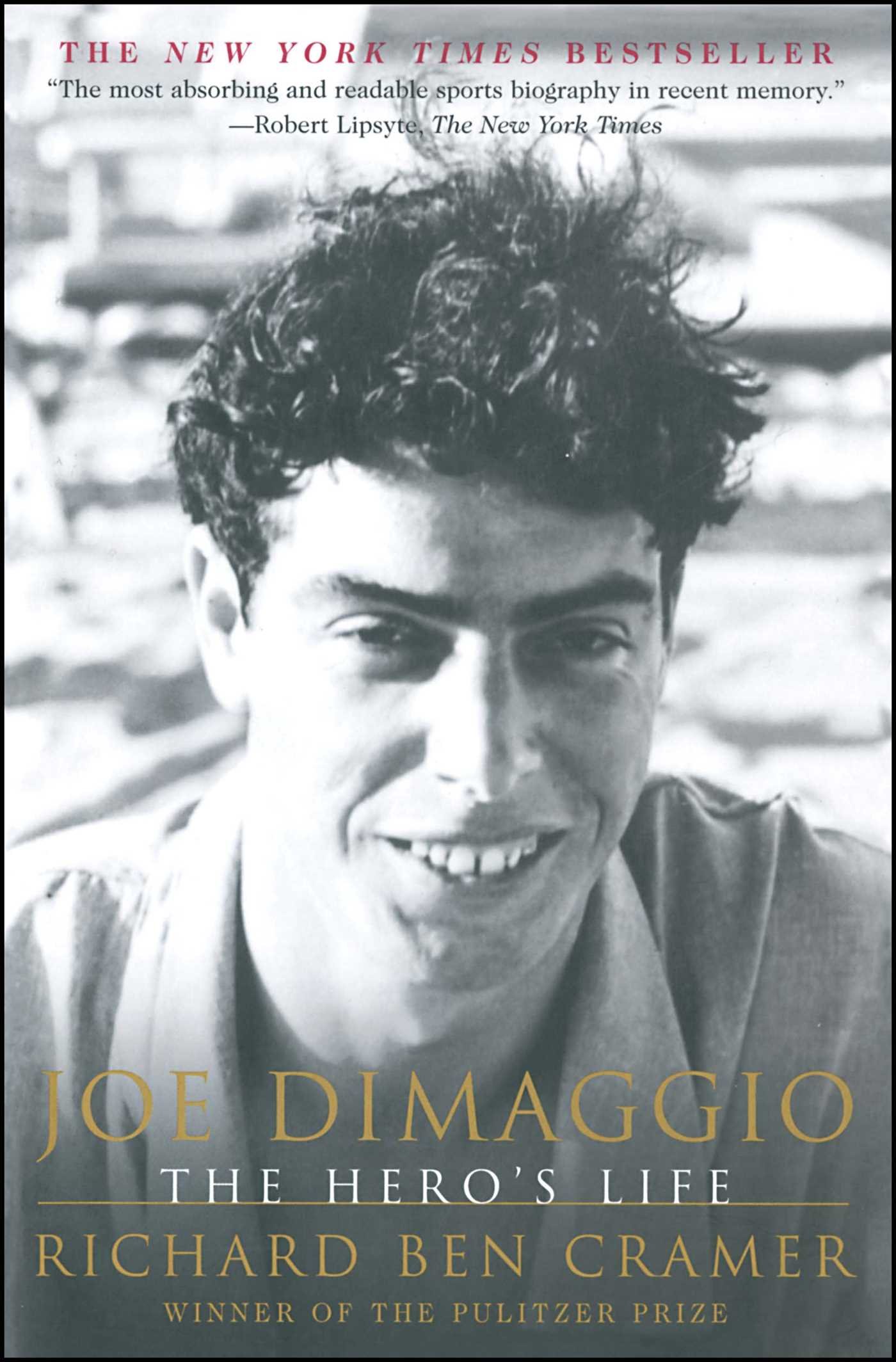



Joe DiMaggio was, at every turn, one man we could look at who made us feel good. In the hard-knuckled thirties, he was the immigrant boy who made it big—and spurred the New York Yankees to a new era of dynasty. He was Broadway Joe, the icon of elegance, the man who wooed and won Marilyn Monroe—the most beautiful girl America could dream up. Joe DiMaggio was a mirror of our best self. And he was also the loneliest hero we ever had. In this groundbreaking biography, Pulitzer Prize-winning journalist Richard Ben Cramer presents a shocking portrait of a complicated, enigmatic life. The story that DiMaggio never wanted told, tells of his grace—and greed; his dignity, pride—and hidden shame. It is a story that sweeps through the twentieth century, bringing to light not just America's national game, but the birth (and the price) of modern national celebrity. Larry King USA Today An extraordinary biography...This work will go down as one of the most definitive stories of a life and its times, sports or otherwise....You will not be disappointed. Daniel Okrent Time Absolutely persuasive...Cramer is an all-star reporter....DiMaggio is rendered so vividly you almost want to look away. Ken Garcia San Francisco Chronicle An often brilliant and deeply disturbing look into the rise of one of the country's modern-day giants. Robert Lipsyte The New York Times The most absorbing and readable sports biography in recent memory. Richard Ben Cramer (1950–2013) won the Pulitzer Prize for Middle East reporting in 1979. His journalism has appeared in Time , Newsweek , The New York Times Magazine , Esquire , and Rolling Stone . He was the author of How Israel Lost: The Four Questions and the classic of modern American politics What It Takes: The Way to the White House . Chapter 1 Joe DiMaggio sat on the tar of the playground, with his back against the wall on the Powell Street side, his legs cocked in front of him like a couple of pickets. At fifteen, Joe was mostly legs -- leg-bones, more like it -- and a head taller than his friends. It was Niggy Fo who gave him his nickname, Coscilunghi -- that meant "Long-legs" in Sicilian. All the boys on the North Beach playground had names -- that meant you were in, you belonged there. There was Shabby Minafo and his brother, Bat (he only wanted to bat), and Hungry Geraldi (he could really eat); Friggles Tomei had those fancy feet at second base; Lodigiani they called Dempsey, because he once decked a guy in a fight; and Niggy, of course, got his name for his dark skin. They were always on the playground or on the street. Who had room at home? On this spring afternoon, in 1930, they were playing Piggy on a Bounce -- one guy with a bat, everyone else in the field, and one guy would hit till someone caught the ball, or caught it on one bounce, and then the batter had to take the field. Joe was at the playground most days, too...but like today -- not exactly with them. He'd come out of his house, down the hill from Taylor Street -- but he'd sit apart, watching in silence, arms draped across his knees in a pose of solitary sufficiency. Or maybe it wasn't all pose. Joe was different from the other guys. They always wanted to play ball. They were desperate to play ball -- even if they could barely play. Joe could play. But you had to get him to play. Bat Minafo and Frank Venezia always picked the teams. They were little guys, but pretty good players. They'd flip a coin, and whoever won would pick Joe. Guys would actually say, "Oh, you got Joe, you're gonna win." It wasn't just the way Joe could hit. (Even those mushy city-issue softballs, Joe could hammer them the length of the playground, a block and a half, into the swimming pool.)...But more than that, it was the way he was in a game. He had to win. That was the reason he'd play -- he wanted to win something. Sometimes, Bat and Frank would make everybody throw in a nickel or a dime, and they'd play winner-take-all. Then Joe would play, for sure. But playing just to play...well, mostly he'd sit. In the long fingers of his right hand, he'd dangle a smoke in front of his shins -- if no one was looking. There were rules about smoking, but not for Joe. The playground assistant was a guy named Rizzo. He only had one arm, but he played a mean game of tennis. He'd throw that ball up, whip his racket around with the same hand, and bang -- the guy could murder the ball. No one but Joe could return his serve. So Rizzo let Joe smoke -- sort of a tip of the cap. Still, Joe was furtive, so no one would mooch. If he had a pack, he'd keep it in his sock. If anybody saw it, that pack was a goner. Mostly he'd roll his own. A pouch of Bull Durham cost the same five cents, but he could roll a hundred smokes. A nickel was something to hold on to in Joe's world. At that Powell Street playground wall, he was at the center of everything he knew. There, arrayed in front of him, chasing that city softball, laughing at each other, tearing