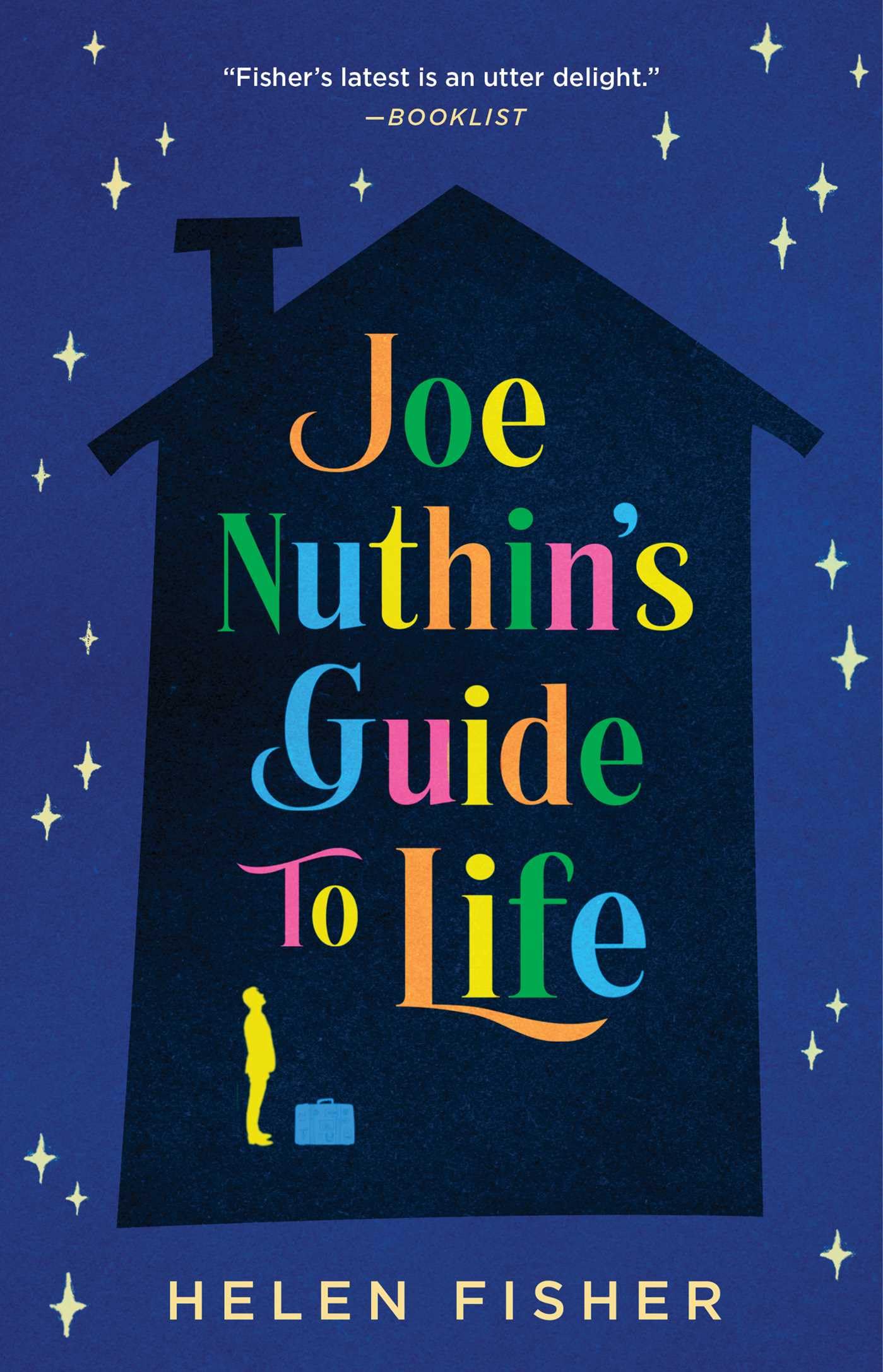



A thoroughly uplifting novel about a neurodivergent young man who unexpectedly builds a community and saves a friend in need by following—in a way only he can—his mother’s words of wisdom. Joe-Nathan likes the two parts of his name separate, just like dinner and dessert. Mean Charlie at work sometimes calls him Joe-Nuthin. But Joe is far from nothing. Joe is a good friend, good at his job, good at making things and at following rules, and he is learning how to do lots of things by himself. Joe’s mother knows there are a million things he isn’t yet prepared for. While she helps to guide him every day, she is also writing notebooks of advice for Joe, of all the things she hasn’t yet told him about life and things he might forget. By following her advice, Joe’s life is about to be more of a surprise than he expects. Because he’s about to learn that remarkable things can happen when you leave your comfort zone, and that you can do even the hardest things with a little help from your friends. “Fisher portrays Joe with tenderness and grace, highlighting his genuine challenges, frustrations, and sparks of joy… Fisher’s latest is an utter delight.” ― Booklist A moving tale of a life led differently which, while full of gentle understanding, doesn’t shy away from tragedy and violence. ― Daily Mail ‘Prepare to have your cockles warmed by this adorable book about 23-year-old Joe, who unexpectedly finds himself out of his comfort zone... His unique, charming voice makes this a joy to read’ ― Good Housekeeping ‘Sensitive, wise and funny, this beautiful book is filled with heart and delivered in a unique and incredibly endearing voice. I laughed, I cried and I fell completely in love with the absolute treasure of Joe Nuthin ’ -- Julietta Henderson, author of The Funny Thing about Norman Foreman ‘A gorgeous, big-hearted story about friendship, resilience and learning to value others for who they really are’ -- Caroline Day, author of Hope Nicely's Lessons for Life 'An entertaining and life-affirming story with a charm all of its own. Told in a clear, authentic voice and woven with gems of wisdom, it pulls you in and has you rooting for the characters throughout. A real joy to read.' -- Hazel Prior, author of Away with the Penguins 'Extraordinary. Melted my heart’' -- Heidi Swain, bestselling author of The Winter Garden ‘You can do anything with a little help from friends…’ ― Take a Break ‘The perfect wholesome read to snuggle up with a cup of tea and a plate of biscuits - you’ll feel warm right through.’ ― Chat ‘Fisher writes with a clarity that makes the empathy, compassion and humour of this novel unputdownable.' ― My Weekly Helen Fisher spent her early life in America but grew up mainly in Suffolk, England, where she now lives with her two children. She studied psychology at the University of Westminster and ergonomics at University College London and worked as a senior evaluator in research at the Royal National Institute of Blind People. She is the author of Faye, Faraway . Chapter 1: A Man of No Mean Bones 1 A man of no mean bones Joe-Nathan’s mum, Janet, always told him he didn’t have a mean bone in his body, and he was thinking this as he wheeled a trolley of go-backs round the store: returning items that had been picked up by customers in one aisle and put down in another. He was certain that candles—for example—felt lost and lonely when they were abandoned among jars of peanut butter or the towels, certain that they were relieved to be reunited with their own candle-kind. Joe liked to think that if he were displaced, someone would do the same for him. Joe worked hard to prove his mother right and to try to make other people feel the same way about him. To be considered a man of no mean bones was his raison d’être . “There’s a spill on aisle five,” said Hugo, putting one hand on Joe’s trolley and tilting his head as though he felt bad asking him to clean it up. “You okay to do it?” Joe saluted. “Yes, sir, what color is it? Is it red?” “It’s just milk, and please don’t call me sir. I may be old enough to be your father, but only just! If you call me ‘sir,’ you’ll make me feel really old.” He whispered the next sentence as though it were a secret. “I’ve always felt a little uncomfortable being the boss. Just call me Hugo.” “Hugo Boss,” said Joe without humor (because none was intended) and saluted again. He tried not to look at Hugo’s short fuzz of closely shaved hair, which covered his head from the apex to the nape of his neck. He always felt the urge to polish it clean so it was nice and shiny like his dad’s head used to be. Hugo smiled. “Okay, Joe. So, aisle five?” “Sir!” “No, don’t call me ‘sir,’?” Hugo said again. “Remember, I’m old but not that old.” And suddenly he was a whole aisle away, shaking his head and looking at his clipboard. As soon as the milk had been mopped, Joe returned to his go-backs. He was a good mopper and cleaned the mop meticulou