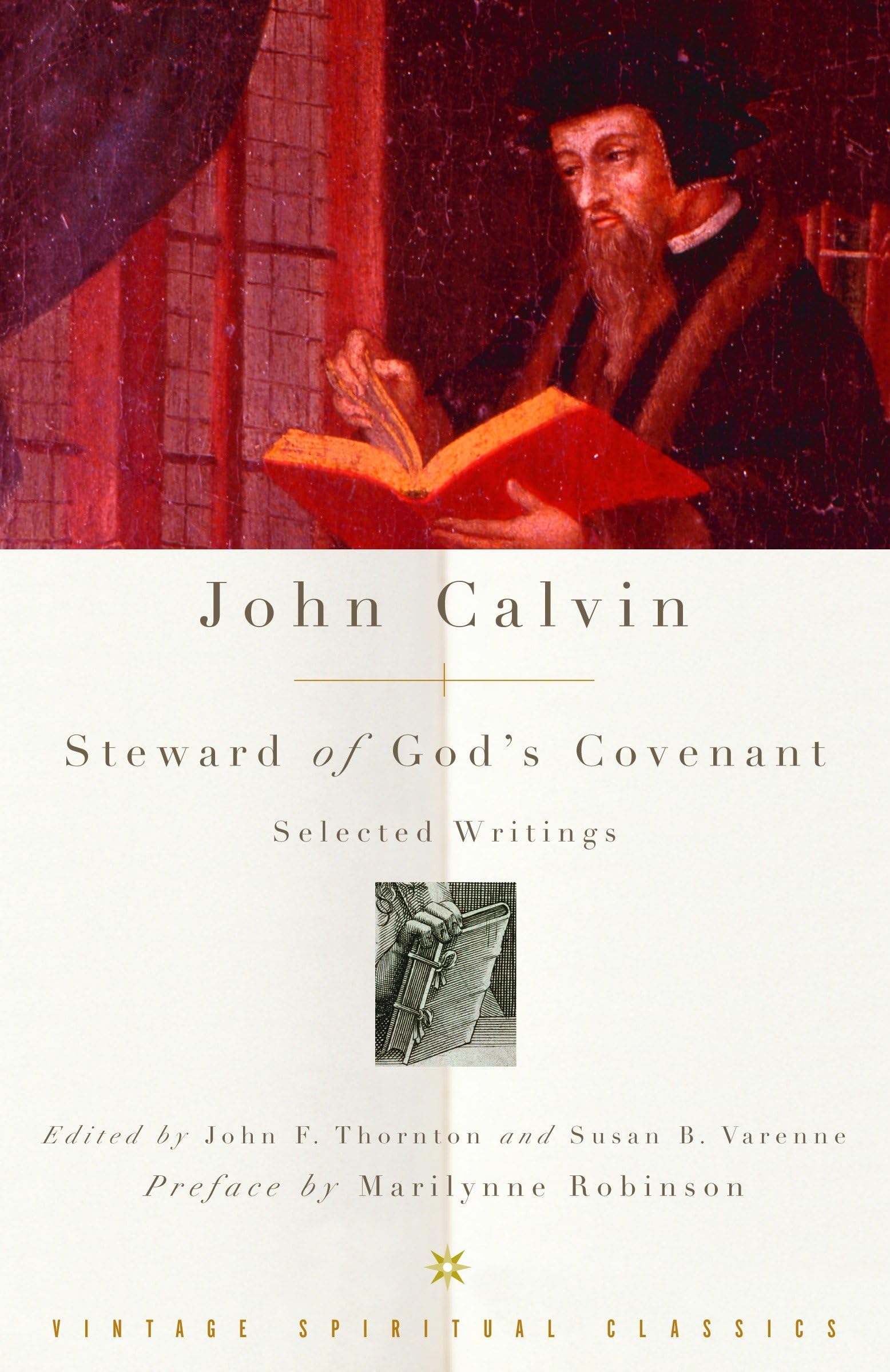



This selection of the writings of John Calvin (1509—1564) is the first for general readers to appear in many years. It showcases his powerful legacy, which has had far-reaching consequences for the development of religion and culture in Western Europe and in the shaping of American identity. Calvin was a prodigious preacher and writer, and his sermons, Bible commentaries, tracts, and letters fill dozens of volumes. The works chosen for John Calvin: Steward of God’s Covenant highlight ideas central to the Reformation but also to his influence on modern life, e.g., the importance of a work ethic and the notion of being “called” to action in the world; his belief in universal education for boys and girls; and his belief in the sanctity and freedom of individual conscience. Calvin’s theology of the “elect” of God motivated the English and Dutch Calvinists who settled the Atlantic seaboard, their Promised Land. The traditions of their communities and churches and laws produced the widespread present-day American belief in a divinely favored national destiny. In her brilliant preface to this edition, Pulitzer Prize—winning novelist Marilynne Robinson makes the clearest connection between John Calvin’s own biblical and patristic heritage and the heritage he in turn left the modern world. John Calvin, born in 1509 and designated for the Catholic priesthood by his father, became the great French Protestant reformer famous for his doctrine of predestination and his theocratic view of the state. When he died in Geneva in 1564, he left both a city and a world transformed by the impact of his ideas and beliefs. Marilynne Robinson is the author of the Pulitzer Prize-winning novel, Gilead. Her previous novel, Housekeeping, was nominated for the Pulitzer and has made numerous lists of the best novels of the twentieth century. She is also the author of a collection of essays, The Death of Adam: Essays on Modern Thought, which deals with Calvin's legacy. John F. Thornton is a literary agent, former book editor, and the coeditor of Dumbing Down: The Strip-Mining of American Culture and Tongues of Angels, Tongues of Men: A Book of Sermons. He lives in New York City. Susan B. Varenne is a New York City high school teacher with a strong avocational interest in and wide experience of spiritual literature. She holds an M.A. from the University of Chicago Divinity School and a Ph.D. from Columbia University. THE NECESSITY OF REFORMING THE CHURCH A Humble Exhortation to the most invincible Emperor Charles V and the most illustrious Princes and other Orders, now holding a Diet of the Empire at Spires that they seriously undertake the task of restoring the Church presented in the name of all those who wish Christ to reign By Dr. John Calvin August Emperor, This Diet is summoned by you in order at last to deliberate and decide, along with the Most Illustrious Princes and other Orders of the Empire, upon the means of ameliorating the present condition of the Church, which we all see to be very miserable and almost desperate. Now, therefore, while you sit for this consultation, I humbly beg and implore, first of your Imperial Majesty, and at the same time of you also, Most Illustrious Princes and distinguished gentlemen, that you will not decline to read and diligently consider what I have to lay before you. The magnitude and weight of the cause may well incite you to an eagerness to listen. I shall set the matter so plainly in front of you that you can have no difficulty in determining what part you must play. Whoever I am, I here profess to plead in defense both of sound doctrine and of the Church. In this character I seem at all events entitled to expect that you will not deny me audience, until such time as it may appear whether I falsely usurp the character, or whether I faithfully perform its duties and make good what I profess. But though I feel that I am by no means equal to so great a task, yet I am not at all afraid that, after you have heard the nature of my office, I shall be accused either of folly or presumption in having ventured thus to bring this matter before you. There are two things by which men are wont to recommend, or at least to justify, their conduct. If a thing is done honestly and from pious zeal, we deem it worthy of praise; if it is done under the pressure of public necessity, we at least deem it not unworthy of excuse. Since both of these apply here, I am confident, such is your equity, that I shall easily approve my design in your eyes. For where can I exert myself to better purpose or more honestly, where, too, in a matter at this time more necessary, than in attempting, according to my ability, to aid the Church of Christ, whose claims it is lawful in no instance to deny, and which is now in grievous distress and in extreme danger? But there is no occasion for a long preface concerning myself. Receive what I say as if it were the united voice of all who either have already taken care to