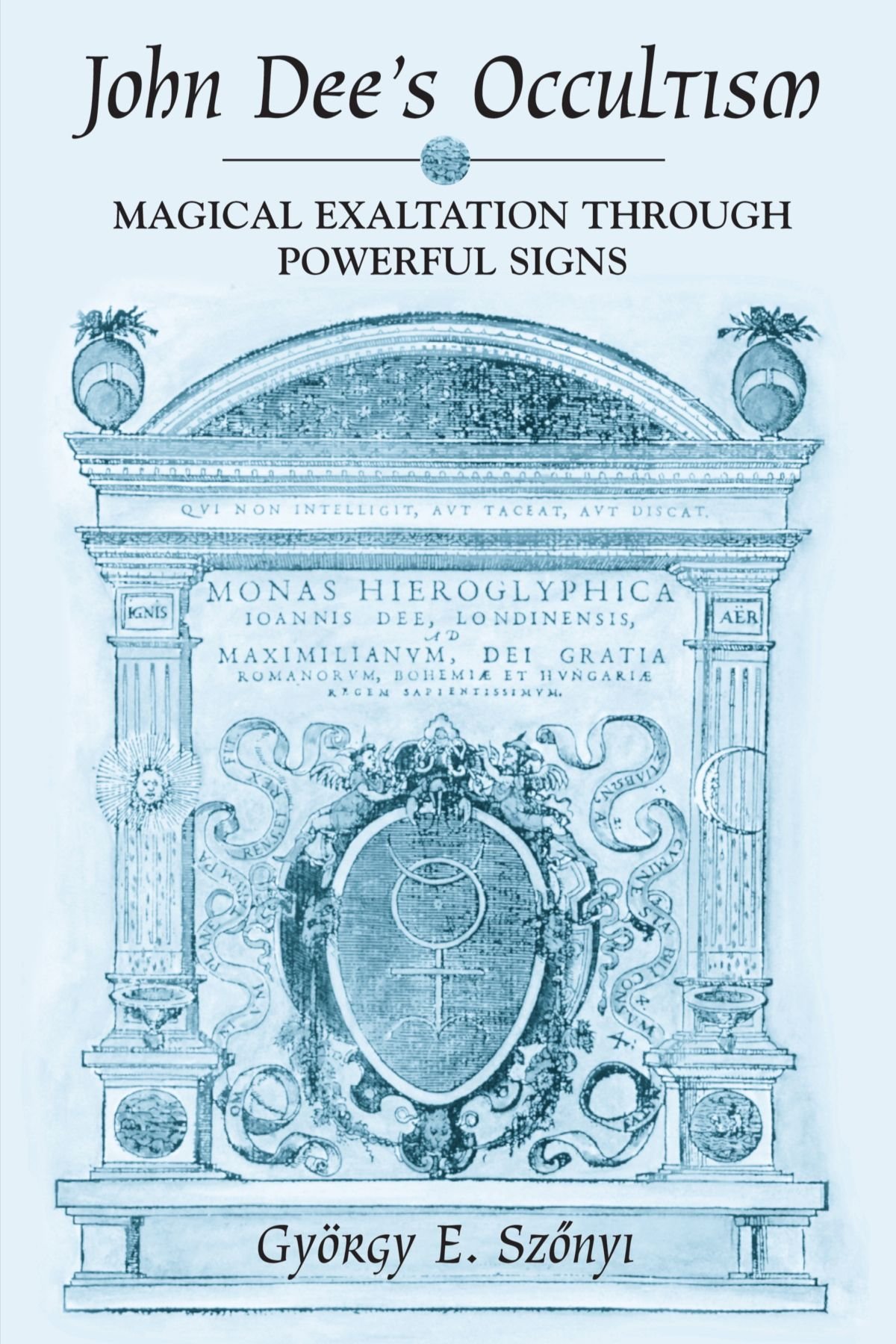
John Dee's Occultism: Magical Exaltation through Powerful Signs (Western Esoteric Traditions)
$36.95
by György E. Szönyi



A comprehensive look at the life and work of one of the towering figures of Renaissance mysticism. Delving into the life and work of John Dee, Renaissance mathematician and "conjurer to Queen Elizabeth," György E. Szőnyi presents an analysis of Renaissance occultism and its place in the chronology of European cultural history. Culling examples of "magical thinking" from classical, medieval, and Renaissance philosophers, Szönyi revisits the body of Dee's own scientific and spiritual writings as reflective sources of traditional mysticism. Exploring the intellectual foundations of magic, Szőnyi focuses on the ideology of exaltatio, the glorification or deification of man. He argues that it was the desire for exaltatio that framed and tied together the otherwise varied thoughts and activities of John Dee as well. "...Szőnyi offers a helpful and informative sketch of several key versions of exaltatio from the Corpus hermeticum, from Plotinus, Porphyry, Iamblichus, and Proclus, from medieval ceremonial magic, and from the key Renaissance texts of Ficino, Giovanni Pico della Mirandola, Trithemius, Agrippa, Paracelsus, and Postel." -- Magic, Ritual, and Witchcraft "...the scholar at whatever level interested in understanding the range and scope of occult philosophy in the early modern period, will find Szőnyi's one of the best first books to read." -- Renaissance Quarterly "György E. Szőnyi writes with intelligence and clarity. This work is a useful complement to past scholarly works on John Dee and is a must for any specialized library." --Antoine Faivre, author of Theosophy, Imagination, Tradition: Studies in Western Esotericism "Szőnyi has much of value to say about John Dee. He makes a significant contribution to the field of Dee studies and to the understanding of Renaissance/early modern European esotericism, especially from the perspective of Eastern Europe." --Arthur Versluis, author of Restoring Paradise: Western Esotericism, Literature, Art, and Consciousness Delving into the life and work of John Dee, Renaissance mathematician and "conjurer to Queen Elizabeth," György E Szőnyi presents an analysis of Renaissance occultism and its place in the chronology of European cultural history. Culling examples of "magical thinking" from classical, medieval, and Renaissance philosophers, Szőnyi revisits the body of Dee's own scientific and spiritual writings as reflective sources of traditional mysticism. Exploring the intellectual foundations of magic, Szőnyi focuses on the ideology of exaltatio , the glorification or deification of man. He argues that it was the desire for exaltatio that framed and tied together the otherwise varied thoughts and activities of John Dee as well. György E. Szőnyi is Professor of English at the University of Szeged and of Intellectual History at the Central European University, Budapest. He is the author of two other books on John Dee.