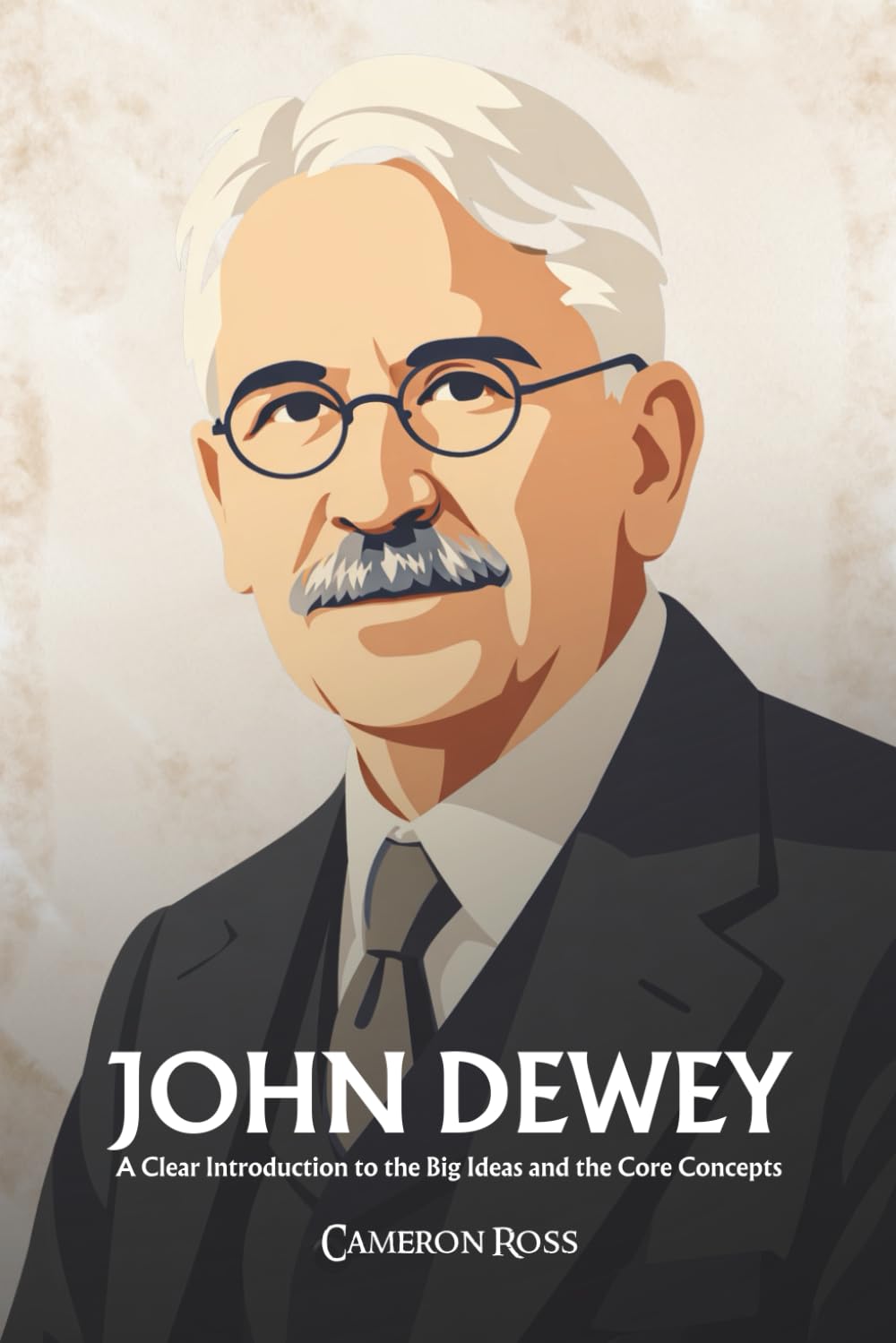
John Dewey: A Clear Introduction to the Big Ideas and the Core Concepts
$14.90
by Cameron Ross



John Dewey refuses the separation of philosophy from lived experience. Against traditions that seek certainty through abstraction, he begins where life becomes problematic, where habits fail and intelligence must respond. Thought is not contemplation but action guided by inquiry. Knowledge, in Dewey’s account, is provisional and experimental. Ideas are tools, tested by their consequences rather than their correspondence to timeless truths. This orientation reshapes philosophy, education, ethics, and politics alike. Democracy becomes not merely an institutional system but a way of life sustained through communication and shared problem-solving. Dewey’s naturalism rejects rigid dualisms between mind and world, fact and value, theory and practice. Growth replaces finality as the measure of success. His legacy lies in this reorientation: philosophy returns to the midst of life, where thinking matters because it transforms how experience is organized and shared. What you will find in this book: Pragmatism as inquiry rooted in experience This book explains Dewey’s pragmatism as a philosophy of inquiry grounded in lived experience. You will understand how knowledge emerges from problem-solving, experimentation, and reflection, rather than from fixed principles detached from practice. - Education as growth and democratic practice You will explore Dewey’s revolutionary ideas on education, where learning is an active, social process. The book clarifies why education should cultivate critical thinking, cooperation, and adaptability, preparing individuals to participate meaningfully in democratic life. - Democracy as a way of life, not just a system This section presents Dewey’s view of democracy as an ethical and cultural practice. You will discover how communication, participation, and shared inquiry sustain democratic societies beyond formal institutions and laws. - Experience, art, and human creativity The book shows how Dewey connects aesthetics to everyday experience. You will learn why art is not separate from life, but an intensified form of experience that reveals meaning, continuity, and human creativity in ordinary activities. - Philosophy as social criticism and reconstruction This book explains Dewey’s vision of philosophy as an instrument for diagnosing social problems and guiding intelligent reform. You will see why philosophy must remain flexible, experimental, and responsive to changing conditions. Add this book to your cart now to understand how John Dewey reshaped education, democracy, and the role of philosophy in modern society.