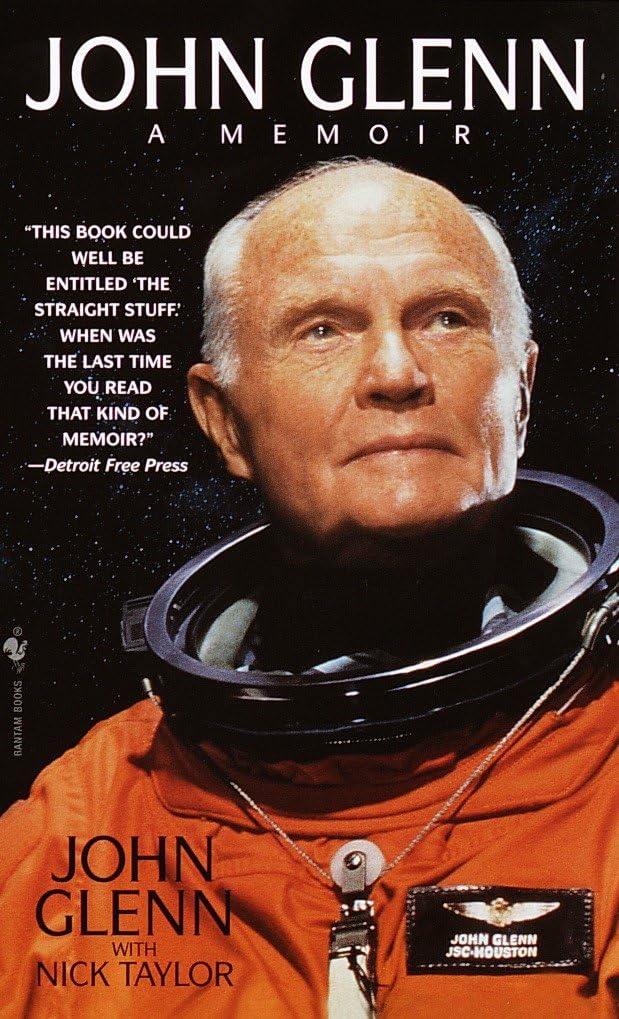



He was the first astronaut to orbit the Earth. Nearly four decades later, as the world's oldest astronaut, his courage reveted a nation. But these two historical events only bracketed a life that covers the sweep of an extraordinary century. John Glenn's autobiography spans the seminal events of the twentieth century. It is a story that begins with his childhood in Ohio where he learned the importance of family, community, and patriotism. He took these values with him as a marine fighter pilot during World War II and into the skies over Korea, for which he would be decorated. Always a gifted flier, it was during the war that he contemplated the unlimited possibilities of aviation and its frontiers. We see the early days of NASA, where he first served as a backup pilot for astronauts Alan Shepard and Gus Grissom. In 1962 Glenn piloted the Mercury-Atlas 6 Friendship 7 spacecraft on the first manned orbital mission of the United States. Then came several years in international business, followed by a twenty-four year career as a U.S. Senator-and in 1998 a return to space for his remarkable Discover mission at the age of seventy-seven. irst astronaut to orbit the Earth. Nearly four decades later, as the world's oldest astronaut, his courage reveted a nation. But these two historical events only bracketed a life that covers the sweep of an extraordinary century. John Glenn's autobiography spans the seminal events of the twentieth century. It is a story that begins with his childhood in Ohio where he learned the importance of family, community, and patriotism. He took these values with him as a marine fighter pilot during World War II and into the skies over Korea, for which he would be decorated. Always a gifted flier, it was during the war that he contemplated the unlimited possibilities of aviation and its frontiers. We see the early days of NASA, where he first served as a backup pilot for astronauts Alan Shepard and Gus Grissom. In 1962 Glenn piloted the Mercury-Atlas 6 Friendship 7 spacecraft on the first manned orbital mission of the United States. Then came several years in international business, fol He was the first astronaut to orbit the Earth. Nearly four decades later, as the world's oldest astronaut, his courage reveted a nation. But these two historical events only bracketed a life that covers the sweep of an extraordinary century. John Glenn's autobiography spans the seminal events of the twentieth century. It is a story that begins with his childhood in Ohio where he learned the importance of family, community, and patriotism. He took these values with him as a marine fighter pilot during World War II and into the skies over Korea, for which he would be decorated. Always a gifted flier, it was during the war that he contemplated the unlimited possibilities of aviation and its frontiers. We see the early days of NASA, where he first served as a backup pilot for astronauts Alan Shepard and Gus Grissom. In 1962 Glenn piloted the Mercury-Atlas 6 Friendship 7 spacecraft on the first manned orbital mission of the United States. Then came several years in international business, followed by a twenty-four year career as a U.S. Senator-and in 1998 a return to space for his remarkable Discover mission at the age of seventy-seven. John Glenn spent most of his life in public service, as a distinguished U.S. senator and a veteran of twenty-three years in the Marine Corps, during which time he was awarded numerous medals for his achievements. He was as well awarded the NASA Distinguished Service Medal and the Congressional Space Medal of Honor. He died in 2016. Nick Taylor is the author of six nonfiction books, among them the highly praised A Necessary End, a memoir of his parents' final years, and most recently Healing Lessons, with Sidney Winawer, M.D. He lives in New York City. Patriotism filled the air of New Concord, the small eastern Ohio town where I grew up. Memorial Day, the Fourth of July, and Armistice Day were flag-waving holidays of parades and salutes to the United States and to the soldiers, living and dead, who had fought for freedom and democracy. My father was one of those soldiers. He served in France during World War I, delivering artillery shells to the front on trucks and horse-drawn caissons, and he came home partially deaf from a cannon blast but otherwise unharmed. He also was a bugler. He blew the bugle for reveille and taps, for mail call and mess call, and when the flag was raised. At home, on those patriotic days that I remember, Dad was again called upon to play the bugle. He marched in the parade formations when the local veterans from the Thirty-seventh Ohio Division marched down Main Street on Armistice Day, and played the colors when they raised the flag at the American Legion hall at the end of the parade. But the bugling I remember best was the taps he played on Memorial Day. It was still called Decoration Day then, and families dressed in their Sunday best w