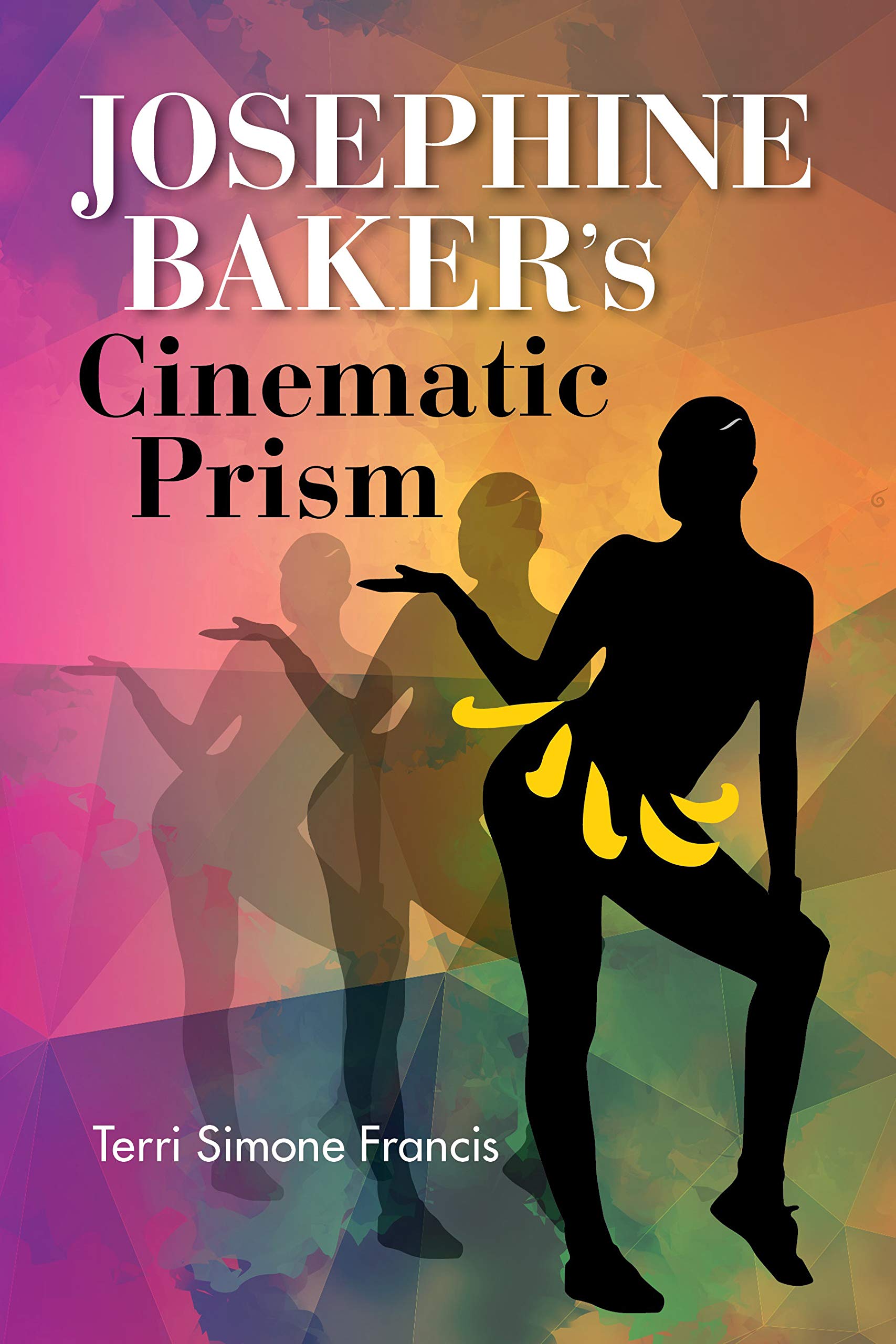



Josephine Baker, the first Black woman to star in a major motion picture, was both liberated and delightfully undignified, playfully vacillating between allure and colonialist stereotyping. Nicknamed the "Black Venus," "Black Pearl," and "Creole Goddess," Baker blended the sensual and the comedic when taking 1920s Europe by storm. Back home in the United States, Baker's film career brought hope to the Black press that a new cinema centered on Black glamour would come to fruition. In Josephine Baker's Cinematic Prism , Terri Simone Francis examines how Baker fashioned her celebrity through cinematic reflexivity, an authorial strategy in which she placed herself, her persona, and her character into visual dialogue. Francis contends that though Baker was an African American actress who lived and worked in France exclusively with a white film company, white costars, white writers, and white directors, she holds monumental significance for African American cinema as the first truly global Black woman film star. Francis also examines the double-talk between Baker and her characters in Le Pompier de Folies Bergère , La Sirène des Tropiques , Zou Zou , Princesse Tam Tam , and The French Way, whose narratives seem to undermine the very stardom they offered. In doing so, Francis artfully illuminates the most resonant links between emergent African American cinephilia, the diverse opinions of Baker in the popular press, and African Americans' broader aspirations for progress toward racial equality. Examining an unexplored aspect of Baker's career, Josephine Baker's Cinematic Prism deepens the ongoing conversation about race, gender, and performance in the African diaspora. "With Josephine Baker's Cinematic Prism Terri Francis has given us a Baker like we have not seen – or appreciated – her before. Approached with keen insight and enormous empathy, Francis's Baker comes into focus as a fascinating collection of moving parts, no cipher for the modern world but constitutive of it. Francis has captured and eloquently theorized Baker's ambivalent being – fragmented and composite, powerful and vulnerable, connected to the Black performing women who came before her and yet entirely, dazzlingly original unto herself."―Kaiama L. Glover, Professor of French and Africana Studies, Columbia University " Josephine Baker's Cinematic Prism deftly grapples with the difficult task of writing a history of Josephine Baker, one of the most important and enigmatic performers of the twentieth century. Terri Francis's prismatic approach demands that we recognize Baker's creative agency and autonomy, on the one hand, and her evasive play with shadows, disappearances, and opacity, on the other. This book makes a crucial contribution not only to the study of Josephine Baker and cinematic stardom, but also to any understanding of the historical task of writing the lives of others."―Katherine Groo, author of Bad Film Histories: Ethnography and the Early Archive, author of Bad Film Histories: Ethnography and the Early Archive " Josephine Baker's Cinematic Prism explores Baker's films with unprecedented attention to details of production, reception, and Baker's performances and screen aspirations. Terri Francis does not choose sides, or situate Baker in an irresolvable tension between exploited exotic and self-determined artist. Instead, Francis reads Baker's cinematic work as the most significant, dynamic expression of her multifaceted aesthetic, in which she continually refracted imaginaries of race and gender, colonialism and Black success, through her screen labor and image."―Jacqueline Stewart, author of Migrating to the Movies: Cinema and Black Urban Modernity "Francis does a masterful job reconciling all the threads of Josephine Baker's public role as we've known it thus far―the amusing, the carnal, the first Black woman to star in a major motion picture―and takes us deeper into a lush exploration of how race, gender, and entertainment play out in the African diaspora. A hugely important contribution to the world of Film and Performance Studies, as well as World Black History and Gender Studies."―Nina Collins, Founder of The Woolfer and author of What Would Virginia Woof Do " Josephine Baker's Cinematic Prism explores Baker's celebrity and ability to have such a hold in the Black film industry even while working almost exclusively with white directors, actors and crew in white―specifically European―spaces. Francis examines the dialogue between Baker and the characters she portrayed, particularly those whose narratives seemed to undermine the stardom they offered. Expertly crafted, Josephine Baker's Cinematic Prism illustrates the most prominent links between Black cinema, conflicting opinions of Baker in the popular press and the broader aspirations for progress towards racial equality."― The Root "New Josephine Baker biography chronicles her 'labor on screen' as the first 'global' black woman film star. . .