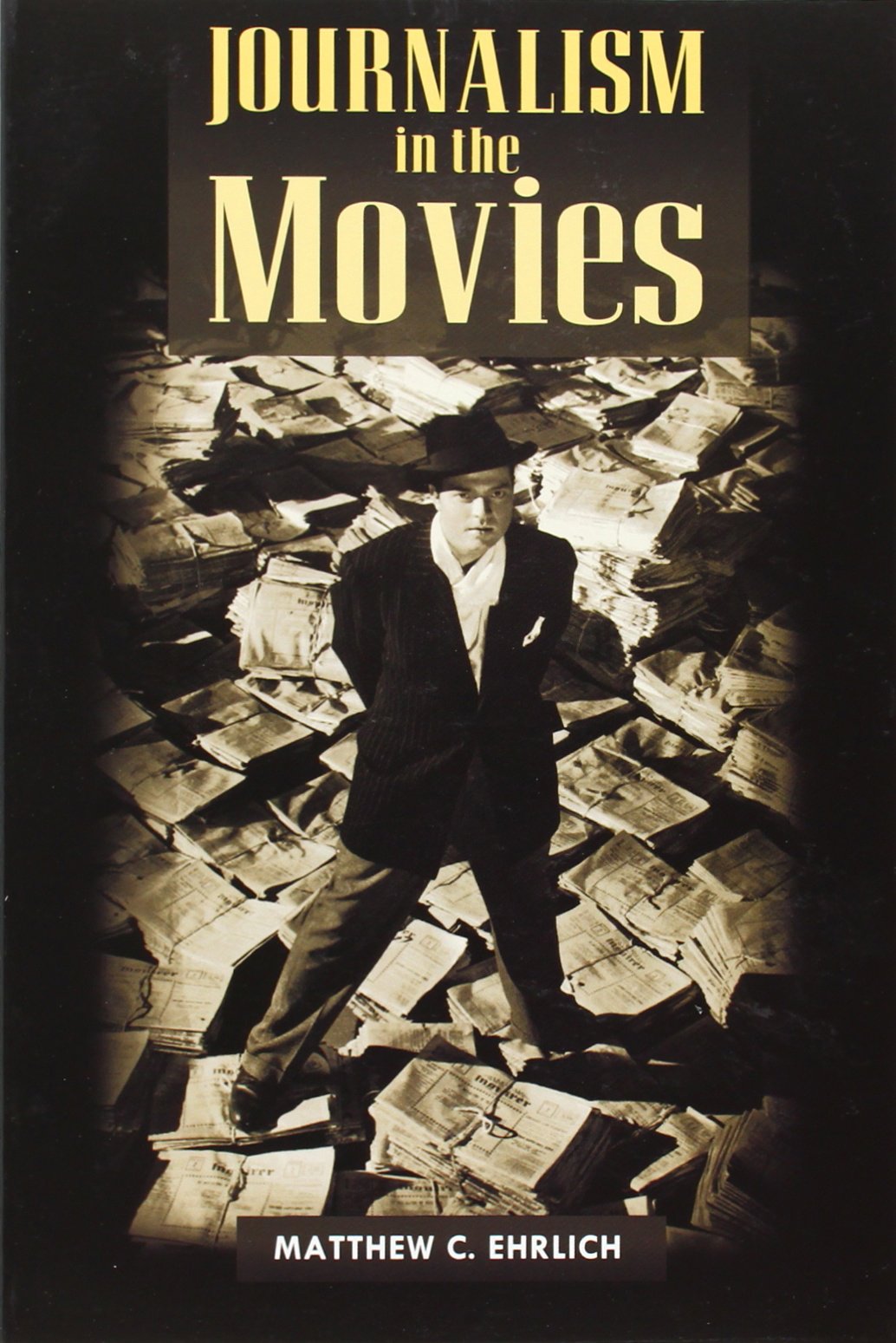
Journalism in the Movies (The History of Media and Communication)
$23.00
by Matthew C. Ehrlich



From cynical portrayals like The Front Page to the nuanced complexity of All the President’s Men, and The Insider , movies about journalists and journalism have been a go-to film genre since the medium's early days. Often depicted as disrespectful, hard-drinking, scandal-mongering misfits, journalists also receive Hollywood's frequent respect as an essential part of American life. Matthew C. Ehrlich tells the story of how Hollywood has treated American journalism. Ehrlich argues that films have relentlessly played off the image of the journalist as someone who sees through lies and hypocrisy, sticks up for the little guy, and serves democracy. He also delves into the genre's always-evolving myths and dualisms to analyze the tensions—hero and oppressor, objectivity and subjectivity, truth and falsehood—that allow journalism films to examine conflicts in society at large. "An incredible job of showing the image of the journalist in the movies and how that influences the public. . . . Ehrlich is one of the preeminent scholars of journalism in the movies."-- Herald Review "Ehrlich wisely avoids cataloguing every journalism movie ever made and manages to proceed both chronologically and thematically, demonstrating how genre begat genre and how archetypal figures have shape-shifted with the currents and tides of culture and history."-- American Journalism Exploring the myths of a free press and people in movies since the 1920s Now in paperback, Matthew C. Ehrlich's Journalism in the Movies is the story of Hollywood's depiction of American journalism from the start of the sound era to the present. Ehrlich argues that films have relentlessly played off the image of the journalist as someone who sees through lies and hypocrisy, sticks up for the little guy, and serves democracy. Focusing on films about key figures and events in journalism, including Mr. Smith Goes to Washington, All the President's Men, and The Insider, Journalism in the Movies presents a unique opportunity to reflect on how movies relate not only to journalism but also American life and democracy. Matthew C. Ehrlich is a professor of journalism at the University of Illinois at Urbana-Champaign. He is the author of Radio Utopia: Postwar Audio Documentary in the Public Interest . Journalism in the Movies By Matthew C. Ehrlich University of Illinois Press Copyright © 2006 Matthew C. Ehrlich All right reserved. ISBN: 9780252074325 Chapter One Studying Journalism through Movies This is a story of how movies have depicted American journalism from the startof the sound era to the present. It examines such films as The Front Page, HisGirl Friday, Mr. Smith Goes to Washington, Citizen Kane, Ace in the Hole, Deadline,USA, All the President's Men, Network, Absence of Malice, The Killing Fields,Broadcast News, and The Insider . The movies have portrayed journalists bothas upstanding citizens and heroes and as scruffy outsiders and villains. Eitherway, Hollywood has reproduced myths in which the press is always at the heartof things and always makes a difference. The films regularly have suggested thatthe journalist can see through lies and hypocrisy, stick up for the little guy,uncover the truth, and serve democracy-or that if those things are no longertrue because the journalist and the press have lost their way, they were trueonce upon a time and someday could be true again. Such an argument is both consistent and at odds with the perceptions ofmany journalists and media critics. They wholeheartedly agree that the pressis important. Bill Kovach and Tom Rosenstiel declare that its duty is to provide"independent, reliable, accurate, and comprehensive information thatcitizens require to be free." That makes journalism every bit as vital as law andmedicine, if not more so. In theory, if law is the pursuit of justice and medicineis the pursuit of healing, journalism is the pursuit of truth; seeking andreporting it is the press's most important obligation. However, just as many believe that the current practices of law and medicinefall well short of meeting their social responsibilities, so is contemporaryjournalism found lacking. It is said to be more concerned with profit than withtruth, too timid and beholden to the powers that be. It is thought to be corrosivelycynical to the point of undermining participation in the democraticprocess. It is seen as running roughshod over the individuals who are fodderfor its headlines and as pandering to the basest instincts in a desperate questfor ratings and circulation. It is declared to be facing an identity crisis or evenextinction. "Modern journalism began around 1890 with the advent of a nationalsystem of communication and has had a pretty long run," James Careyhas written. "Its time now seems to be about up." Others put it more bluntly:"Organized journalism is dead." Or if it is not actually in the grave, it is"pooped, confused, and broke," irrelevant in the face of "a h