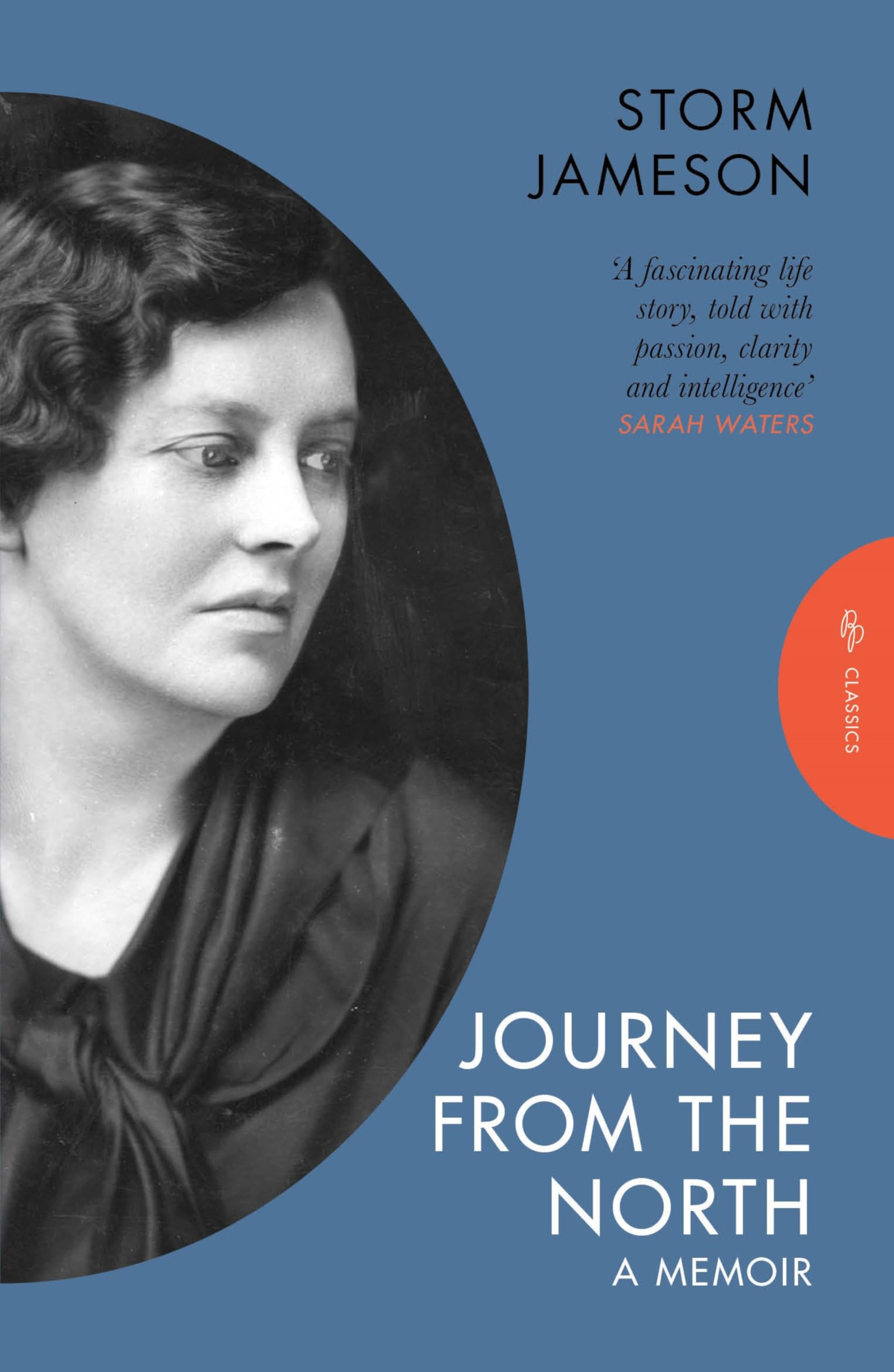



ONE OF THE 20th CENTURY'S FINEST MEMOIRS: the sweeping, candidly told story of a life in writing and politics, with an introduction by Vivian Gornick, who referred to the book as “literary gold” “Stops you in your tracks. I would like to persuade everyone to read it” — Sunday Times A compulsively readable, beautifully written account of a fascinating 20th century woman and life. This candid, affecting portrait of a woman who loathed domesticity explores how she sought to balance a literary career with political commitment. After a lifetime of writing a novel every year, Storm Jameson turned to memoir with this stated ambition: 'I am trying to write without lying'. The result was an extraordinary reckoning with how she had lived: her childhood, shadowed by a tempestuous, dissatisfied mother; an early, unhappy marriage and her decision to leave her young son behind while she worked in London; a tenaciously pursued literary career, always marked by the struggle to make money; and her lifelong political activism, including as the first female president of English PEN, a role she used to help refugees escape Nazi Germany. In a richly ironic, conversational voice, Jameson tells of the great figures she knew and events she witnessed: from encounters with H.G. Wells and Rose Macaulay, to travels across Europe as fascism was rising. Throughout, she writes with electric candour and immediacy about her own motivations and psychology as she traces her lifelong struggle to live on her own terms. 'Her frank voice is as relevant today as ever it was in her own time – and it may still speak to many of our own anxieties around freedom, democracy and the future of liberal thought' -- TLS Margaret 'Storm' Jameson (1891-1986) was an English journalist and author. Born and raised in Whitby, she gained a scholarship to study English at the University of Leeds. After graduating with a First-Class degree, she moved to London where she became active in politics and began to write. Jameson remained committed to politics and literature throughout her life: she published a total of forty-five novels, as well as criticism, short stories and innumerable political articles; she was also the first female president of the British section of International PEN. Vivian Gornick is an American writer and critic. Her books include Approaching Eye Level , The Odd Woman and the City and Fierce Attachments , which was named the best memoir of the past 50 years by the New York Times . She lives in New York City. Chapter 1 There are people, there are even writers, whose lives were worth recording because they were passed in strange or exciting ways, or involved famous persons, or could be written as the story of a great mind in search of its beliefs. I have a good but not a great mind; my chances of meeting great men have been few and I have not sought them: the men and women who have come nearest slaking my curiosity about human nature have been obscure as well as alive with humours. The humours of the great are usually too well groomed. What is a record of my life worth—the life of a writer treated with justice in circles where camaraderie, cette plaie mortelle de la lit- térature, is the merciful rule? Perhaps little, except that as a life it spans three distinct ages: the middle class heyday before 1914, the entre deux guerres, and the present; three ages so disparate that to a person who knows only the third the others are unimaginable. Anyone born before 1900 can examine one civilization as if it were done with—as it is, but for noticing that a few of its ideas and traditions are still feebly active. Indeed, I can excavate two finished stages in society, since I remember sharply the one I rebelled against while continuing to live blindly by more than one of its rooted assumptions: that people of my class do not starve, that reticence in speech, and clean linen, are bare necessities, that books exist to be read. I ought to be able to describe them both. Possibly I lack the coolness to give a dependable account of them to the ignorant. I can try. That arrogant half-sarcastic phrase, it can be tried, is one I heard so often in my North Riding childhood that it has become an instinct. I seldom know when I am being led astray by it. It was a servant’s saying, but a northern servant. The span of my life is even longer than it seems, since its roots are twisted round hundreds of lives passed in the same place. Only a life starting from centuries of familiarity with the same few fields and streets is better than fragmentary. If there is any tenacity in me, any constancy, if there is an I under all the dis- similar I’s seen by those who know or knew me as daughter, as young woman, undisciplined, confident, absurd, as wife, as friend, the debt is owed to obscure men and women born and dying in the same isolated place during hundreds of years. All I could do to destroy the pattern, I have done. What Pascal, writing about Mon