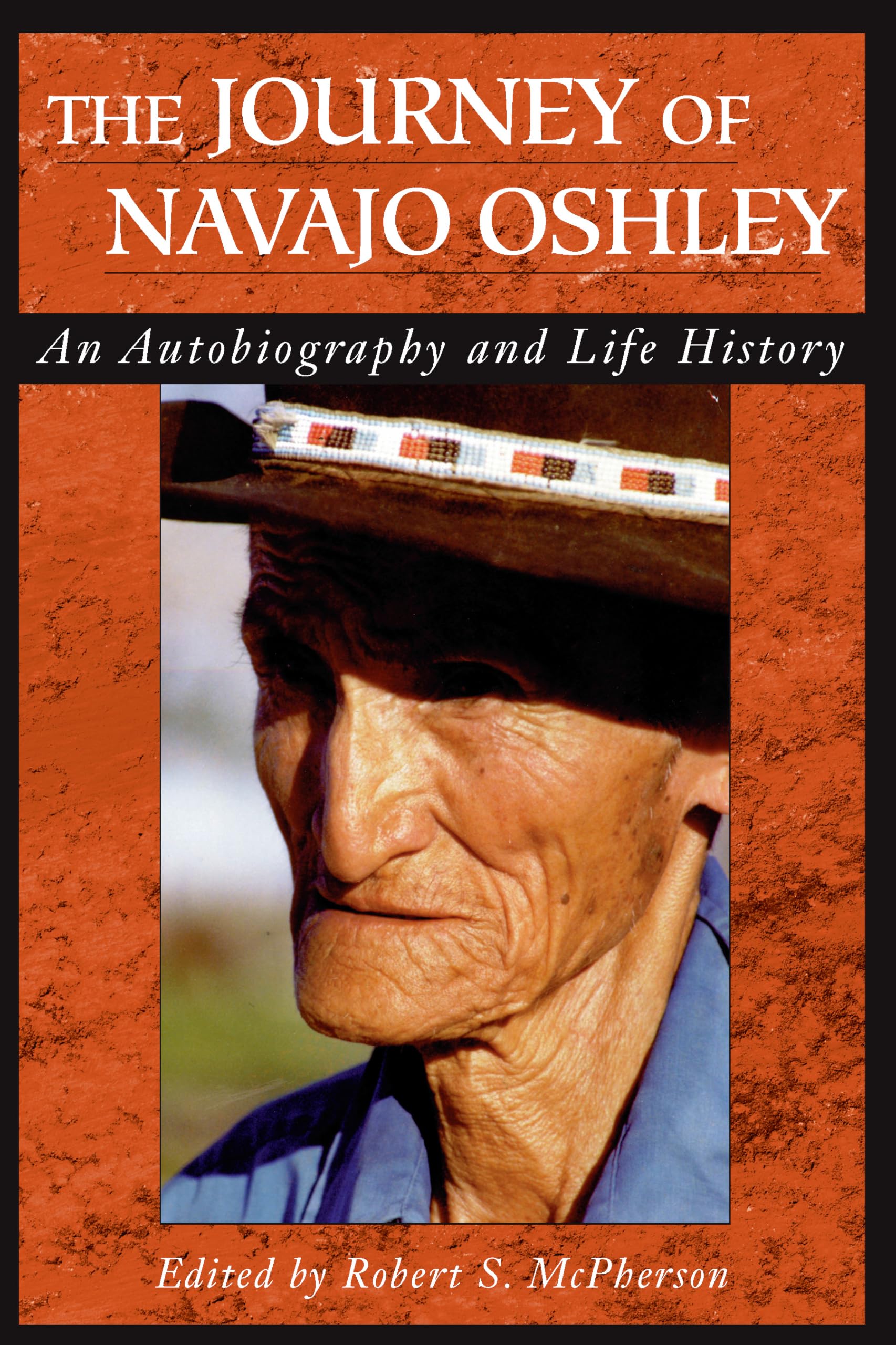



Ak'é Nýdzin, or Navajo Oshley, was born sometime between 1879 and 1893. His oral memoir is set on the northern frontier of Navajo land, principally the San Juan River basin in southeastern Utah, and tells the story of his early life near Dennehetso and his travels, before there were roads or many towns, from Monument Valley north along Comb Ridge to Blue Mountain. During the late 19th and early 20th centuries, Anglos and Navajos expanded their use and settlement of lands north of the San Juan. Grazing lands and the Anglo wage economy drew many Navajos across the river. Oshley, a sheepherder, was among the first to settle there. He cared for the herds of his extended family, while also taking supplemental jobs with the growing livestock industry in the area. His narrative is woven with vivid and detailed portraits of Navajo culture: clan relationships, marriages and children, domestic life, the importance of livestock, complex relations with the natural world, ceremonies, trading, and hand trembling. Robert S. McPherson is professor emeritus of history at Utah State University, Blanding Campus and has published widely on Navajo and Ute history and culture. The Journey of Navajo Oshley An Autobiography and Life History Utah State University Press Copyright © 2000 Utah State University Press All right reserved. ISBN: 978-0-87421-291-4 Contents Illustrations..................................viAcknowledgments................................ixForeword by Barre Toelken.....................xiIntroduction...................................1Genesis of the Project.........................3The Autobiography..............................27The Life of Navajo Oshley......................29Later Life.....................................163The Later Livestock Years......................165Daily Life in Town.............................179Religion and Death.............................203Index..........................................217 Chapter One The Autobiography The Life of Navajo Oshley Earliest Memories I was born at Dennehotso, near a red, round rock. The winter was over, and it was the beginning of summer. My father was of the Bit'ahnii [the Within His Cover People] clan, but I never knew him and do not know his name because he passed away when I was very small. As time went on, my maternal grandmother, 'Asdzaa dee' dii' [Woman with the Four Horns]; my mother, 'Asdzaa hasbidi [Mourning Dove Woman]; and the rest of the family roamed the Dennehotso area. My mother used to live near Comb Ridge, and there was a small box canyon that had a spring and a lot of mourning doves. That is how this place got the name Dove Springs [or Spring with Mourning Doves]. My mother had another name, but I forgot it. She was known to people as Mourning Dove Woman. When she died, her youngest son went to that spring often so the people called him Hasbd yzh [Little (or young, junior) Mourning Dove]. We did not have many sheep, but we did have a lot of goats, and many of the rams had four big horns. This is how my grandmother got the name Woman with the Four Horns. When I was a boy, I was called Ashkii nzii [Taller Boy]. Our names were awful back then. Eventually, my mother had six children, but my first sister died, making me the oldest one in the family. A younger brother also died. As I remember, I did not have any shoes, and my pants were a horror to see. They had holes and were too short. The fabric in my shirt was from a flour sack, but where my relatives got it, I do not know. I did not have a hat so I used a piece of rope or cloth tied together. This is how I grew up. The trading post was very far away. My mother and grandmother would take the burros there, but it was time consuming and very tedious. They brought back flour, coffee, and sugar. It took three to four days before they returned. The children would wonder when grandmother and mother would come back, so one of us would run to the hill and look for them. When grandmother returned with the food, we would get milk from the goats, then butcher a sheep. Everything was used. Even the blood and intestines were fixed, and the wool removed from the hide. After cleaning the skin thoroughly, it was cut into strips, then curled around a piece of fat. We ate it like that. Life was a very hard, long struggle. Sometimes there was little food so we would have just a few mouthfuls to eat before we went to sleep. In the morning, we would drink milk and then go without food the rest of the day. We had a cornfield which we planted when it rained. If there was no moisture, we would go hungry during the summer and into the winter. Life was hard when I was growing up. When I was a child, sheep were the main source of food for survival. The sheep were separated from their lambs and the goats from their kids. They grazed while the lambs and kids stayed in the corral. One time around sundown, the sheep came home and took their lambs. I went after them,