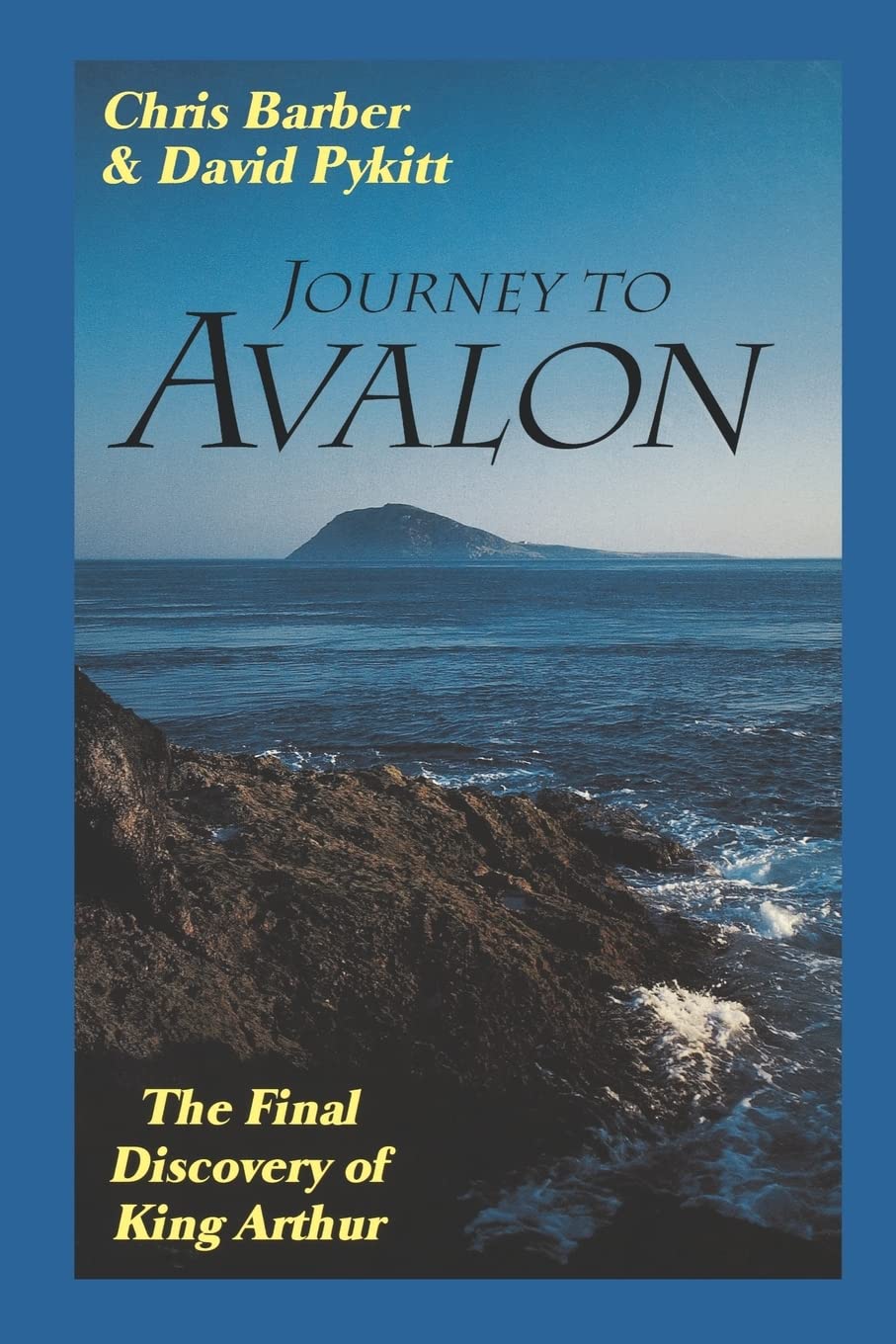



This book reveals the true identity of Arthur, and locates his courts and longforgotten battle sites such as Badon and Camlan. It also uncovers the secret of the mysterious Isle of Avalon and Arthur's resting place in a Breton church. The authors present a convincing and conclusive answer to the puzzle of King Arthur. Glossary of terms in Welsh and English. Bibliography. Index. 78 illustrations. Chris Barber, MBE, FRGS, is the author of over 30 books on Wales' rich heritage. Born and raised in Newport, he has lived in Llanfoist for the last 35 years. For 20 years he was the chief countryside officer for Gwent, and established the Gwent countryside service in 1974. Journey to Avalon The Final Discovery of King Arthur By Chris Barber, David Pykitt Samuel Weiser, Inc. Copyright © 1997 Chris Barber and David Pykitt All rights reserved. ISBN: 978-1-57863-024-0 Contents IllustrationsAcknowledgmentsIntroduction1. Britain in Roman Times2. In the Wake of the Red Dragon3. The Historical King Arthur4. Land of the Silures5. Cornish Connections6. In Search of Camelot7. The Round Table and Arthur's Knights8. Soldier-Saints9. Stories in Stone10. Enemies of the Britons11. The Battle of Llongborth12. The King Goes to War13. Victory at Badon Hill14. The Battle of Camlan15. Across the Sea to Avalon16. Arthur—Duke of Brittany17. The Glastonbury Grave18. Did King Henry VII Know the Truth?AppendicesI. The Literary SourcesII. ChronologyIII. Why has the identity of King Arthur not been revealed before?IV. Alternative TheoriesBibliographyGlossaryIndexAbout the Authors CHAPTER 1 BRITAIN IN ROMAN TIMES The roman occupation of Britain lasted 350 years. During this period, the nativeBritons were first conquered and then gradually converted to the Roman way oflife. Hundreds of forts were established and more than 6,000 miles of militaryhighways constructed which transformed the prehistoric trackway system into ahighly organized network of routes of a standard neither equaled nor surpasseduntil comparatively modern times. Roman forts were always built at locations which were of strategic importance.Thus Chester, Wroxeter, and Gloucester were at positions from which Wales couldbe invaded, and at places where the plain could be defended from the incursionof the mountain tribes. Carlisle, York, and Lincoln all controlled importantroutes and were vital from a military point of view. London was the center ofthe military system which linked with all parts of Roman Britain, and from whichsupplies could be obtained in times of need. Beyond the Straits of Dover, thesystem of roads continued with the entire European network focused on Rome,giving rise to the old saying that "all roads lead to Rome." One of the most important forts constructed by the Romans during their conquestof Wales was at Caerleon-upon-Usk in Gwent. In A.D. 75 they raised an earthenbank and surrounded it by a moat filled with water. By A.D. 110, a turretedstone wall measuring 540 meters by 450 meters had been built to enclose an areaof 20 hectares. Gradually, a very impressive fortress town was constructed withconsiderable quantities of stone transported from Bath by barge down the Avon,across the Severn, and up the Usk. The Second Augustan Legion was stationed here with Julius Frontinus commandingthe garrison, which in its heyday consisted of some 6,000 men. This particularlegion was a highly trained force which had been brought here to deal with thedifficult problem of subduing the Silures, who inhabited this area and were ledin battle by the brave Celtic king, Caratacus. Caer Wysg (Fortress on the Usk) is the ancient name for the settlement, whichwas a center of trade used by the Britons long before the Romans arrived. Butwhen the Romans settled here, they abolished the old British name and their newfort became known as Isca Silurum. They named it Isca after the River Usk, nearwhich it stands, and Silurum after the local tribe to whom they referred asSilures. This was one of three legionary fortresses established in Roman Britainand it was their chief city in South Wales. The name Caerleon is a Welsh rendering of Castra Legionum and the abbreviatedtitle of the Legion's name—LEG II AVG has been found stamped on countless bricksuncovered during many years of archaeological excavation. When GiraldusCambrensis (Gerald of Wales) came here in 1190, the Roman remains were stillvery impressive and he described them as follows: [A]n ancient and authentic city, excellently and well built in olden times bythe Romans. Many vestiges of its former splendour may yet be seen, mighty andhuge palaces with gilded roofs in imitation of Roman magnificence ... a townprodigious in size, wonderful bath buildings, the remains of temples andtheatres, all enclosed within fine walls, which are yet partly standing. Youwill find on all sides, both within and without the circuit of the walls,subterraneous buildings, water-pipes, and underground passages, and, moreremarka