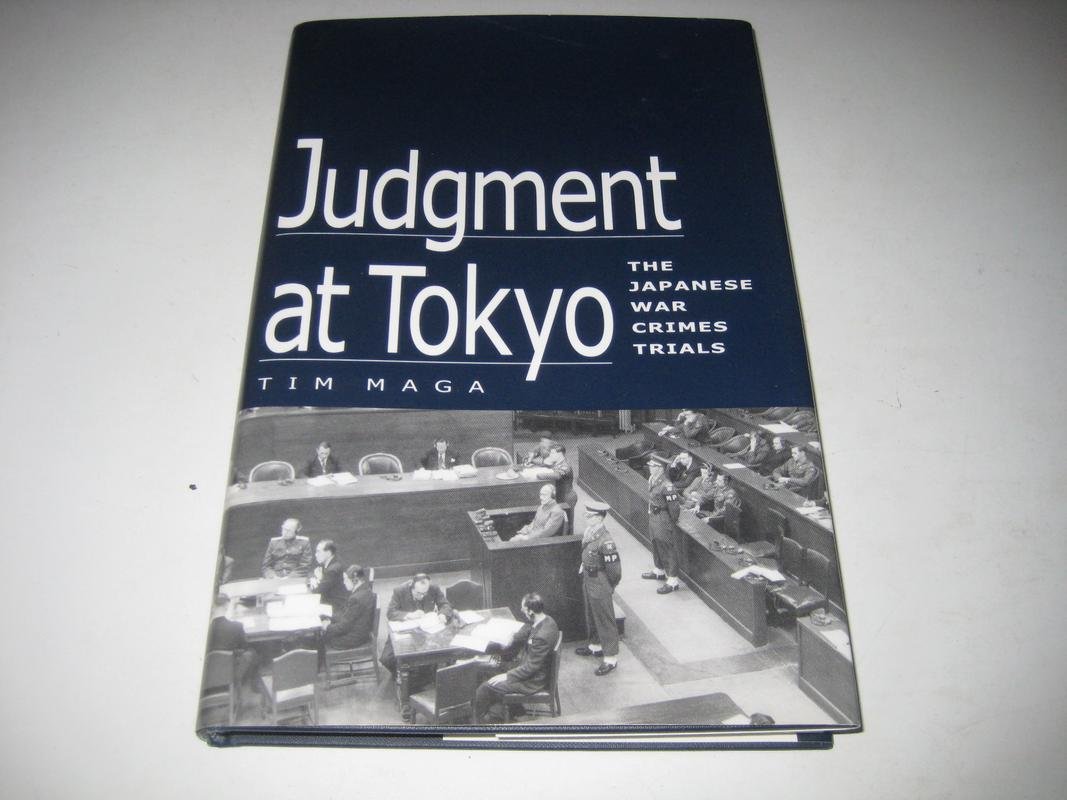



They are plain, ordinary murderers, cried Chief Prosecutor Joseph B. Keenan, and the court at the Tokyo War Crimes Trials believed him. As a result, Japanese officers and soldiers who conducted beheading demonstrations, engaged in unethical medical experiments, or even practiced cannibalism on POWs, were found guilty of the more prosecutable charge of murder. In the years since the Japanese war crimes trials concluded, the proceedings have been colored by charges of racism, vengeance, and guilt. Tim Maga contends that despite these charges, the trials encompassed some of the most fascinating criminal cases of the twentieth century. Judgment at Tokyo is a bold reassessment of the trials, in which defendants ranged from lowly Japanese Imperial Army privates to former prime ministers. Maga shows that these were cases in which good law was practiced and that they changed the ways war crimes trials are approached today. In contrast to Nuremberg, the efforts in Tokyo, Guam, and other locations throughout the Pacific received little attention by the Western press. Once the Cold War began and America needed Pacific allies, the atrocities committed by Japanese soldiers throughout the 1930s and early 1940s were rarely mentioned. The trials were dismissed as phony justice and Japan Bashing. Since the defendants did not represent a government for which genocide was a policy pursuit, their cases were more difficult to prosecute than those of Nazi war criminals. Keenan and his compatriots adopted criminal court tactics and established precedents in the conduct of war crimes trials that still stand today. Maga reviews the context for the trials, recounts the proceedings, and concludes that they were, in fact, decent examples of American justice and fair play. Between 1946 and 1948, a large segment of Japan's wartime military and civilian leadership was tried for war crimes. The trials never received the publicity of the Nuremberg trials. Although the Nuremberg trials have generally been immune from reproach by historians, the Tokyo trials have frequently been criticized as "racist," "hypocritical," or an example of "victor's justice." The fact that Emperor Hirohito was granted de facto immunity enhanced the impression of unfairness. Maga, a professor of American heritage at Bradley University, has previously written extensively on U.S.-Japanese relations. He convincingly asserts that the Tokyo trials must be viewed separately from Nuremberg, since there were no accusations at Tokyo of a calculated plot of genocide. Given the limitations imposed by that fact, Maga believes that the trials were warranted and generally conducted fairly. Furthermore, the Tokyo trials set important precedents in establishing what factors constitute war crimes and how they can be effectively prosecuted. This is a provocative and timely work. Jay Freeman Copyright © American Library Association. All rights reserved "A useful reminder of how little we still know of the Tokyo trials and how much we should." -- Journal of American History "Illuminates the trials for what they were-cumbersome." -- Asahi Shimbun "The author sees the Tokyo trials as effective tools of justice and worries that the trials were downplayed." -- WTBF Covers the gulf between the literature associated with the post-WWII trials of Nazi war criminals and their Japanese counterparts. -- American Society of International Law Newsletter He has done us all a service, reopening the question of what really happened in those terrible years, and why. -- Japan Quarterly The book s length and style serve as a general introduction to this aspect of the war with Japan. -- Journal of Military History Tim Maga, Oglesby Professor of American Heritage at Bradley University and a former coordinator in the House of Representatives Foreign Affairs Committee, is the author of several books, including Hands Across the Sea? U.S.-Japan Relations, 1961-1981. Used Book in Good Condition