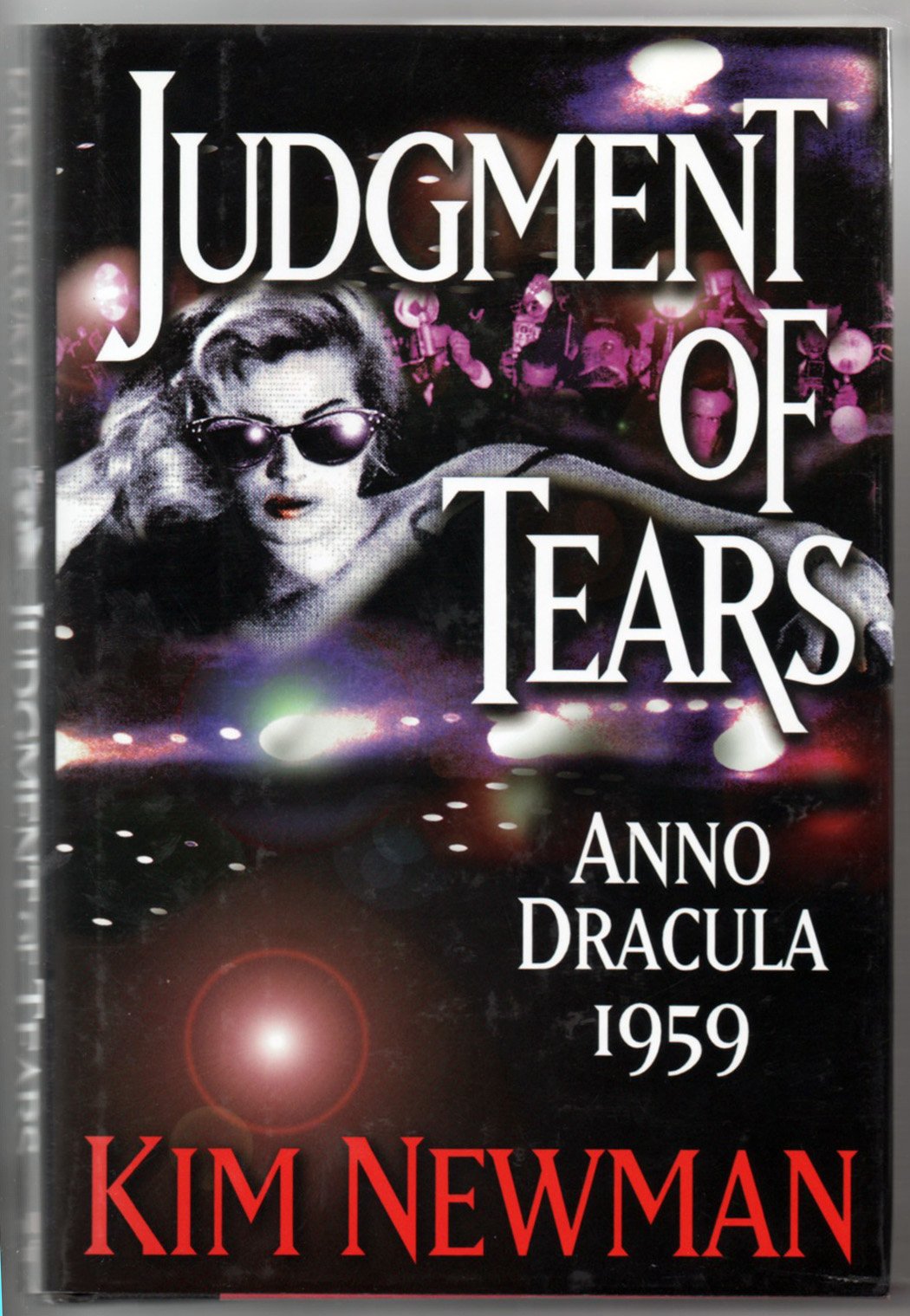



The chillingly imaginative sequel to Anno Dracula and The Bloody Red Baron, set in a nightmarish version of twentieth-century Rome, follows the destinies of three female vampires and the Lord of the Undead. 35,000 first printing. July 1959: The occasion is the marriage of Vlad Tepes, Count Dracula. The world's vampire elite have gathered in Rome for the union. Vlad's past wives have included Hungarian princesses, baronesses from California, and even Queen Victoria; all marriages were arranged for strategic gain rather than love or passion. Reporter Katherine Reed is in Rome to write about the wedding. At just under a century old, she is considered young among the immortal vampires. Now, someone is killing the elders, some of whom have bloodlines stretching back to the Middle Ages. In this alternative history, to "be turned" means persecution. From the beginning of the century--when the vampires first emerged from legend into the public eye--through World War II (when Hitler began targeting the immortals) the vampires continued to be a source of fear and fascination. But vampirism still has its joys. To accept immortality means an extraordinary heightening of all the senses, and blood is both sustenance and narcotic, sexually pleasing and simultaneously nourishing. Judgement of Tears blends horror and humor remarkably well. Semigraphic scenes of bloodsucking and neck biting are interspersed with humorous name-dropping. Among the guests at Vlad's wedding are a black-clad, gloomy couple named Addams, a British spy named Bond, and Orson Wells. Edgar Allan Poe is living as a scriptwriter; since being turned, he hasn't had an original idea. In the end, Judgement of Tears is as much a tale of intrigue as it is a horror novel. The backdrop is an old story of petty politics, set in a world that vampires, zombies, and even Frankenstein-like monsters share with the living. The flashes of wit serve to anchor the story to the real world and provide a connection to 20th-century popular culture. The ending reminds readers that politics prevail--whether for mortals or immortals. --Andy Bookwalter With his third in a series, Newman remains in top form as our sharpest vampire novelist, a far more inventive stylist than Anne Rice. In Anno Dracula (1993), the Count married Queen Victoria and became England's Prince Consort while Newman regaled himself with dense Victoriana. In The Bloody Red Baron (1995), German vampire battle-aces of WWI fought English vampire battle-aces while Newman reveled in the gallows humor of pilots on the edge of darkness. Now in exile, Vlad, Count Dracula, steals Victoria's throne and is about to wed Moldavian princess Asa Vajda in Rome, circa 1959, amid the decay of the Via Veneto so richly observed by Federico Fellini in La Dolce Vita. Newman appropriates much of Fellini's anti-plotting, or cumulative mode of storytelling, introducing the arrival by plane in Rome of the bustiferous starlet Malenka (Anita Ekberg), whos greeted by battering flashbulbs and jaded tabloid journalist Marcello (Mastroianni). On hand from the earlier novels are vampire journalist Kate Reed and vampire detective Genevive Dieudonn (in the company of British secret agent Hamish Bond, a vampire with a license to kill), as well as fresh walk-ons amid the dress extras: a dissolute Errol Flynn, an enormous Orson Welles, H.P. Lovecraft's re-animator Dr. Herbert West, Bride of Frankensteins Dr. Praetorius, and William Peter Blatty's exorcist, Father Merrin. When Dracula is beheaded on the eve of his wedding, is Rome's Crimson Executionerwho has been killing elderly vampiresthe culprit? At last all converges on Mater Lachrymarum, the Mother of Tears, Rome's four-fold guardian girl/youth/woman/crone who protects her city from the living dead. At heart a costume drama in dark glasses rather than tights, with Newman noting every Playboy club signet ring and Patek Lioncourt wristwatch worn by wealthy bloodsuckers. As did Fellinis, Newman's artistry meets the challenge with energy to spare. -- Copyright ©1998, Kirkus Associates, LP. All rights reserved. Used Book in Good Condition