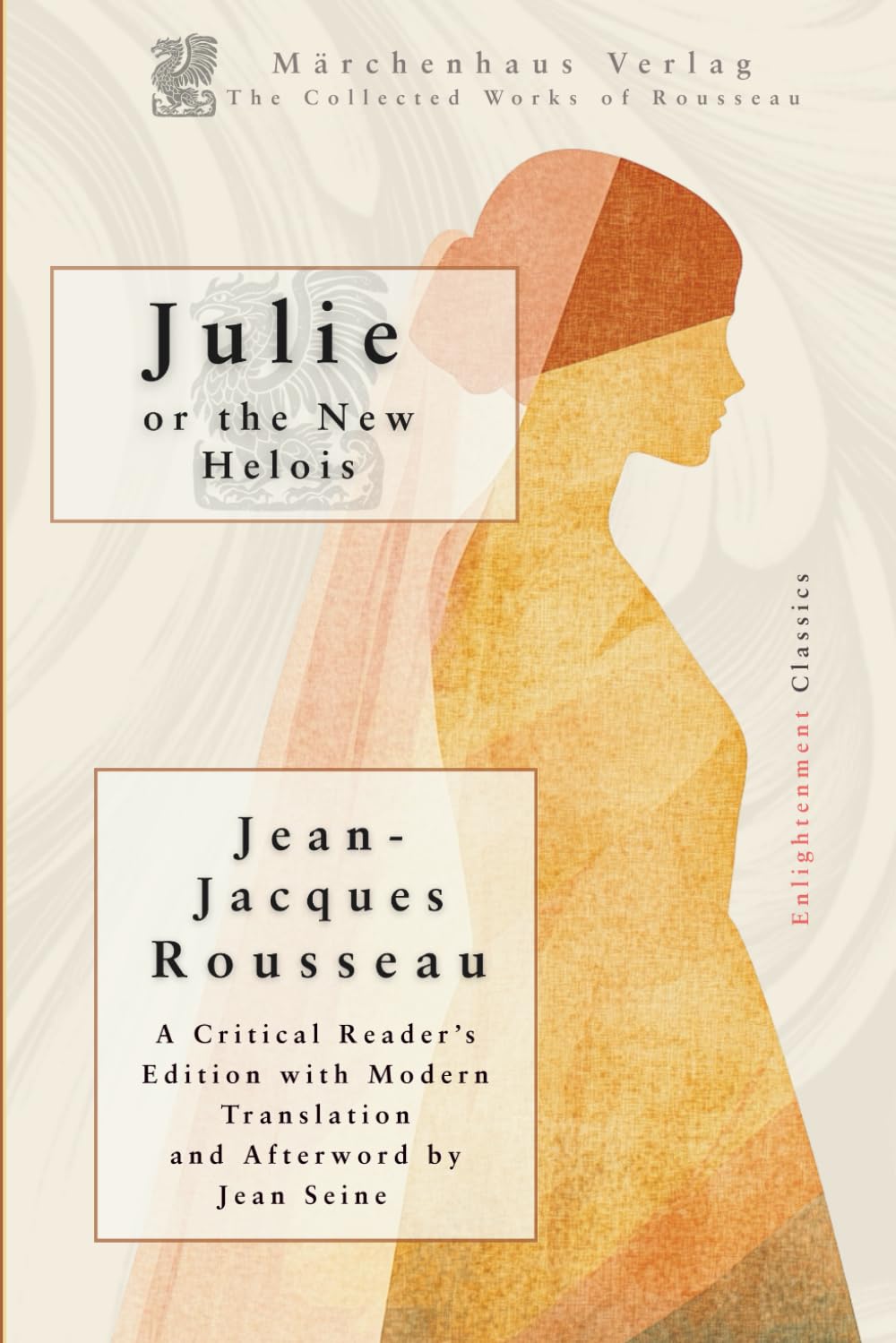



The world possessed her without knowing her; And I who knew her remain here below to weep for her. An epistolary novel of star-crossed lovers, Julie and Saint-Preux, spread across Swiss lakes and French châteaux. Its mix of passion, moral struggle, and lake scenery stirs readers across Europe; printing presses cannot keep pace. The book champions sincerity, nature, and private virtue over salon chatter. Voltaire dismisses the tale as “weeping literature,” while young readers form clubs to share copied passages. Hobbes had described love as appetite; Rousseau treats it as a call to personal growth shaped by conscience. Diderot admires parts yet doubts the moral lesson that order springs from inner feeling rather than social art. Jean-Jacques Rousseau’s Julie, or the New Heloise (1761) presents a profound exploration of the conflict between individual passion and social duty, using the epistolary form to immerse readers in the emotional and moral struggles of its characters. At the heart of the novel lies the romantic relationship between Julie and her tutor Saint-Preux, whose illicit love challenges the boundaries of class, virtue, and familial obedience. Rousseau dramatizes the tension between natural sentiment and societal norms, emphasizing the moral elevation of sacrificing personal desire for collective good. Julie’s eventual renunciation of her love in favor of her marriage to Wolmar, a figure of stoic rationality, underscores Rousseau’s ideal of natural morality—one grounded not in Enlightenment reason but in authentic feeling and self-mastery. This moral vision contrasts with the prevailing rationalist ethos of the period, suggesting that virtue emerges not from abstract principles but from heartfelt engagement with others and oneself. Literarily, Julie was a groundbreaking work in 18th-century European fiction, blending sentimentalism, romanticism, and moral philosophy. Its epistolary structure gives voice to the inner conflicts of multiple characters, offering a panoramic view of emotional and ethical dilemmas while cultivating an intimate connection between reader and text. The novel rejects the detached, analytical stance of Enlightenment rationalism, favoring instead a deeply personal, experiential mode of moral inquiry. Rousseau’s portrayal of Clarens, the idealized rural estate managed harmoniously by Wolmar, serves as a utopian vision of social and emotional balance rooted in nature and paternal authority. At the same time, the novel’s popularity and emotional intensity prefigure Romanticism’s valorization of subjectivity and the sublime. Julie thus occupies a pivotal position in the history of ideas and literature, articulating Rousseau’s critique of modernity and his yearning for a more integrated, morally authentic human life. This modern critical reader's translation from the original French manuscripts includes supplementary materials that bring Rousseau's world and impact to life. This professional translation delivers scholarly depth with amplifying materials. This Reader's Edition includes an illuminating afterword tracing Rousseau's intellectual relationship with Diderot, Voltaire and his reception by Nietzsche, revealing the fascinating dialogue between the period's most influential minds. A comprehensive timeline connects the major events of Rousseau's life with world events, an glossary of Enlightenment terminology frames Rousseau's debates in the intellectual milieu of his day, and a detailed index provides an authoritative guide to his complete writings.