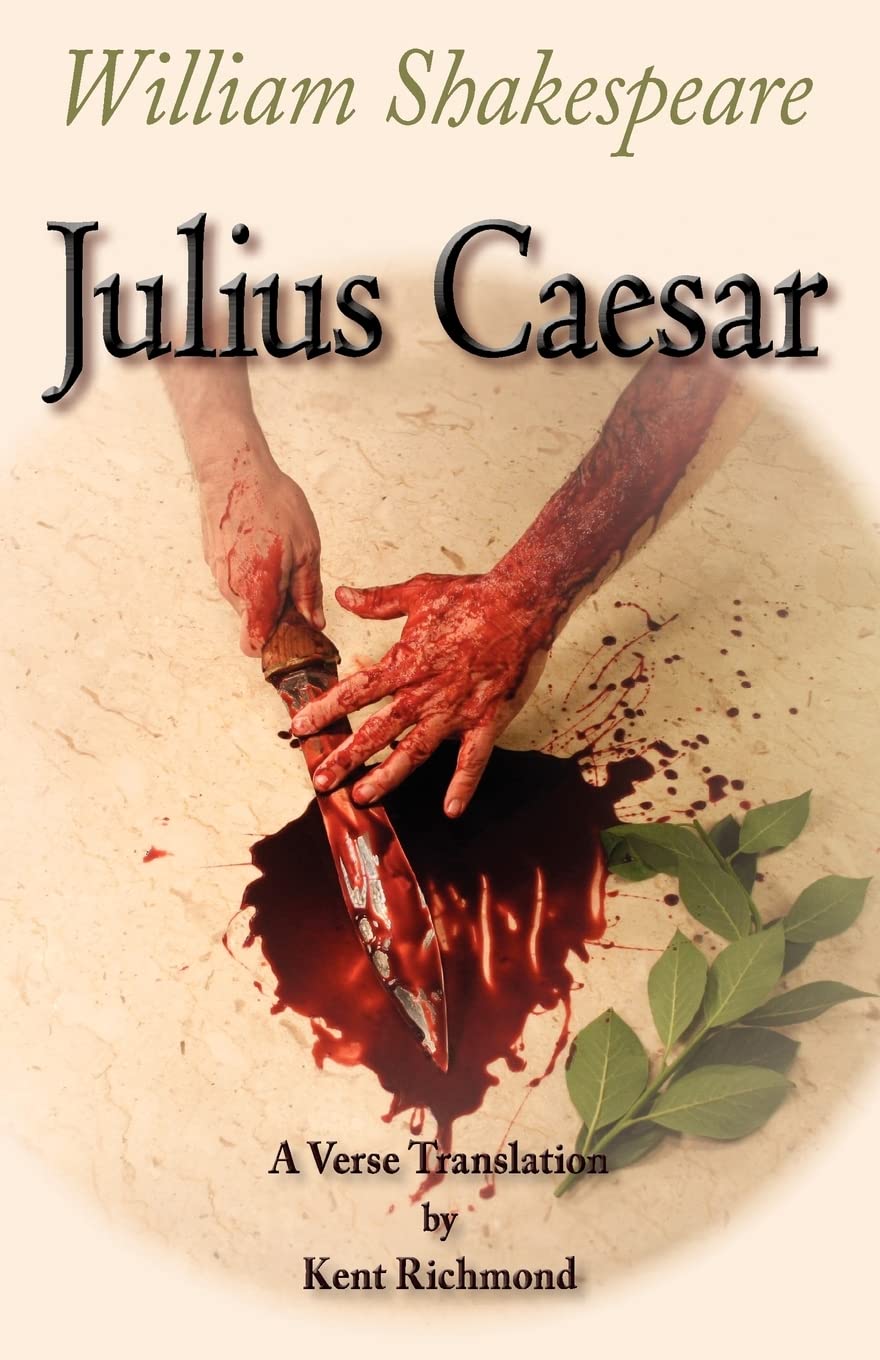



This complete, line-by-line translation of Julius Caesar makes the language of Shakespeare's play contemporary while preserving the metrical rhythm, complexity, and poetic qualities of the original. The aim is to capture both sound and sense of Shakespeare's tragedy without the need for glosses or notes to use contemporary language without simplifying or modernizing the play in any other way. Readers experience Shakespeare's tale of the brutal assassination of Rome's most famous leader with the comprehension and delight of audiences 400 years ago, the way Shakespeare intended. Features "Too often, unless we read a Shakespeare play beforehand, we process the language as if it were coming from a poorly tuned-in radio station. Shakespeare didn't write his plays to be experienced impressionistically as 'poetry;' he assumed his language was readily comprehensible. At what point does a stage of a language become so different from the modern one as to make translation necessary? Mr. Richmond is brave enough to assert that, for Shakespeare, that time has come. The French have Moliere, the Russians have Chekhov and now, we can truly say that we have our Shakespeare." John McWhorter, Manhattan Institute - Line-by-line, not prose paraphrases. - - Complete. No lines deleted. No dumbing down. - - Accurate and authentic iambic pentameter. - - True to the feel and look of Shakespeare's original. - - Tone, complexity, and poetic devices preserved. - - Subtlety and richness revealed without the need of notes and glosses. - - Accessible introduction to classic drama. - - Attractive, uncluttered, easy-to-read layout. - - Stage-ready for an audience-pleasing theatrical. I began this project of translating Shakespeare into more contemporary English after reading John McWhorter's The Word on the Street: Fact and Fable about American English . In the book, McWhorter demonstrates how difficult Shakespeare is for modern theatergoers and calls for careful and thoughtful translations of the plays. From the start, I wanted my translations to be literature and sound like Shakespeare. Getting that sound requires that I use the same style of blank verse (unrhymed iambic pentameter) that Shakespeare used and that I use it accurately. I also wanted the language in my translations to be challenging. Shakespeare used difficult language, both in the size of his vocabulary and the complexity of his sentences. As I translate, I maintain the same sentence length and complexity as in Shakespeare's original, careful not to simplify or "dumb him down." I want readers to forget that they are reading a translation. I hope you get a chance to read one of my translations. The patina that builds up on an antique over time can no doubt add its own beauty, but it can also hide it. You might be surprised just how good Shakespeare is when a bit of the buildup and tarnish left by language change has been removed. Until his retirement in 2008, Kent Richmond taught composition, critical thinking, literature, and linguistics for the English Department and American Language Program at California State University, Long Beach. His chief academic interest is adult second language acquisition and the role that vocabulary learning plays in that process. His textbook, Inside Reading 4 (2008,2012) from Oxford University Press, is part of a reading/vocabulary series that won David E. Eskey Award for Curricular Innovation from the California Teachers of English to Speakers of Other Languages. Drawing on his background in applied lingustics and literature, Kent has taken on the task of writing verse translations of Shakespeare plays in contemporary English. By applying his detailed knowledge of Shakespeare's iambic pentameter, he can give his translations an authenticity that the available prose translation's lack. He has completed translations of Hamlet, Romeo and Juliet, King Lear, Twelfth Night, Much Ado About Nothing, Julius Caesar , and Macbeth . He is currently working on The Tempest. A musician and singer, Kent is a member of the California Trio, a folk-based group that performs regularly in Southern California. Used Book in Good Condition