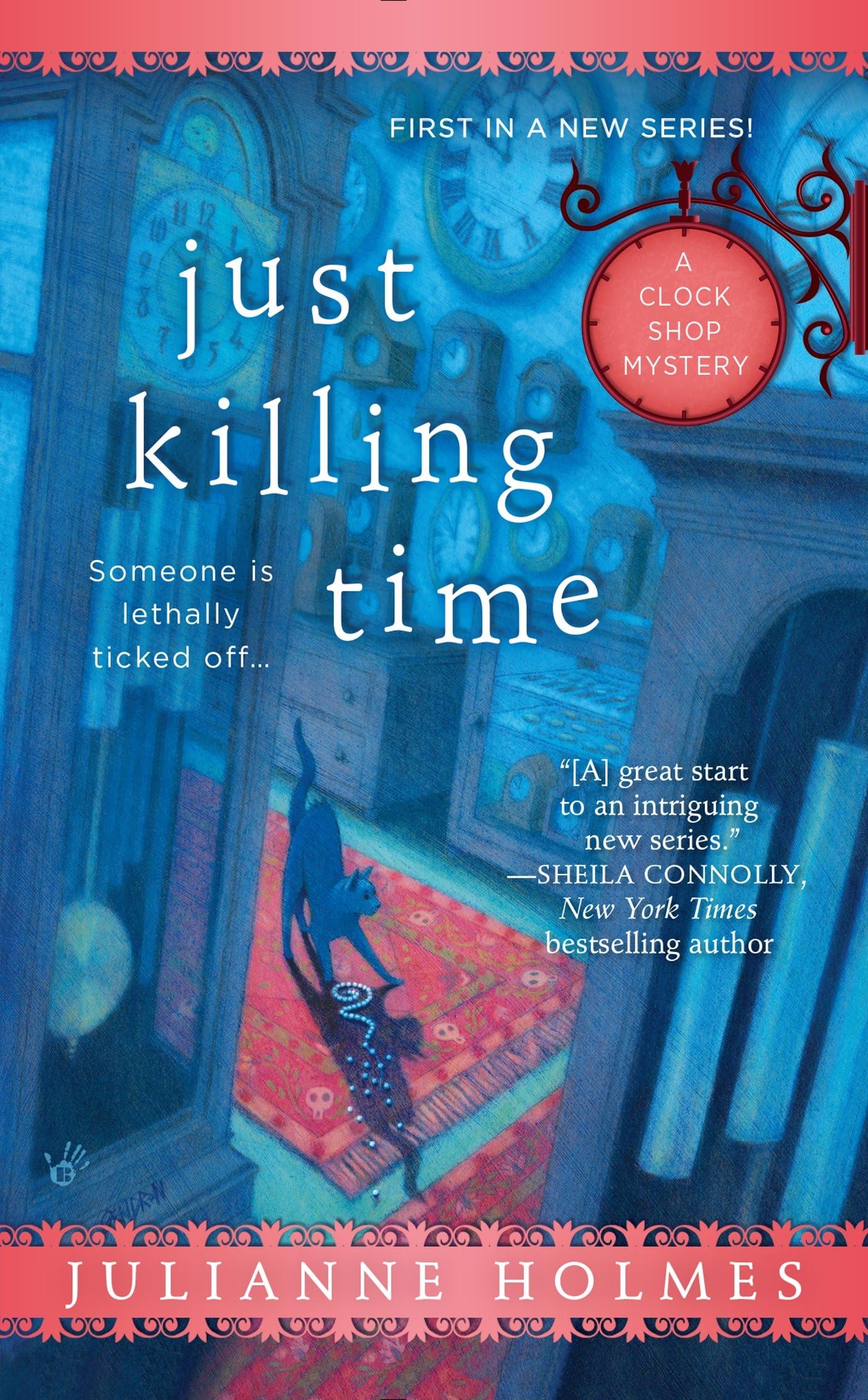



First in a new cozy series that ticks with excitement and mystery! Ruth Clagan may be an expert clockmaker, but she’s always had a tendency to lose track of time. And when trying to solve a murder, every minute counts… Ruth’s beloved grandfather instilled in her a love of timepieces. Unfortunately after her grandmother died and he remarried, Ruth and Grandpa Thom became estranged. She’s wanted to reconnect after her recent divorce, but sadly they’ve run out of time. Her grandfather has been found dead after a break-in at his shop—and the police believe he was murdered. Now Ruth has been named the heir to Grandpa Thom’s clock shop, the Cog & Sprocket, in the small Berkshire town of Orchard, Massachusetts. As soon as she moves into the small apartment above the shop and begins tackling the heaps of unfinished work, Ruth finds herself trying to stay on the good side of Grandpa’s bossy gray cat, Bezel, while avoiding the step-grandmother she never wanted. But as old secrets and grudges start to surface, Ruth will have to kick into high gear to solve the killer case before someone else winds up dead… Julianne Holmes 's short stories have appeared in the award-winning Level Best Books . Just Killing Time is the first in her new Clock Shop mystery series. acknowledgments contents chapter 1 The brochure lied. A week in the mountains of Vermont had not, in fact, helped me achieve a peaceful Zen that would pervade my life for the coming weeks, helping me approach old challenges with fresh energy. Instead it had made me aware of two things. First, much as I hated to admit it, I was addicted to technology. Not being allowed to have my cell phone for seven days was an interesting experiment at first, but an exercise in frustration toward the end. Never mind that the battery was completely drained of power by the time I got it back. The second realization? Coffee and I couldn’t break up. I did wonder, briefly, if a week of no coffee had crushed the addiction. The green tea I’d drunk by the bucketful had enough caffeine to keep the headaches mostly at bay. And I knew that any addiction was a vice. But honestly, aside from the occasional glass of wine or beer, coffee was it. Coffee and baked goods. I walked into the first coffee shop I found on my way back to civilization. I ordered the French roast but hesitated before I ordered the scone. It looked dry and a little anemic. Not worth it, I decided. Maybe that was progress? I did grab a protein bar and filled up my water bottle at the water station in the store. I took the coffee back out to the car and sat inside with the key turned and the windows cracked. I plugged in my phone, but it didn’t come back to life right away. I took a deep breath and looked out the window at the view. October was a stunning time to live in New England. The leaves were turning and the mountains were smeared with splashes of orange, red, yellow, and brown in between the deep green of the pines. The air was crisp, but not cold. Layers were necessary. The sky was a stunning crystal clear blue with white puffy clouds. Even I had to admit the scenery was beautiful. Especially with a cup of coffee. I closed my eyes and took a sip. Heaven. I unwrapped the protein bar and grabbed my black bound notebook from my bag. I’d taken to carrying one notebook and using it as a combination journal, to-do list, sketchbook, and message pad. I took a bite of the protein bar, which tasted like chemicals. I should have tried the scone. I’d inherited the notebook habit from my grandfather, and he’d inherited it from his father. There were boxes of notebooks from all the Clagan clockmakers in my grandfather’s attic. Or at least the past four generations, since the first generation had emigrated from Europe. I wondered if the notebooks were still there, or if G.T.’s wife had tossed them. What was her name, anyway? I honestly couldn’t remember. I’d nicknamed my grandfather G.T., Grandpa Thom, when I was a little girl, during one of my summer-long visits to my grandparents’ house in Orchard, Massachusetts. It wasn’t that he was ashamed of being my grandfather, my grandmother had explained. It was that Grandpa wasn’t professional in the shop. So G.T. it was. If that was the rule for working in the shop, I was more than happy to comply. Because my summer visits hadn’t just been a welcome reprieve from my parents’ benign neglect, they had been my introduction to clocks and time and how humans could work with both. G.T. was a master clockmaker, and he had passed on his passion, and some of his skill, to me. I turned on my phone, which finally booted up. I checked the time and smiled. There was great accuracy to the clock on my cell phone, but little art. Time could be so much more. I flexed my shoulders back and mentally prepared myself to check my voice mail. I had been in a vulnerable place during a “Healing” workshop at my yoga retreat last week, and I’d sent G.T. a postcard asking him if I could stop by on