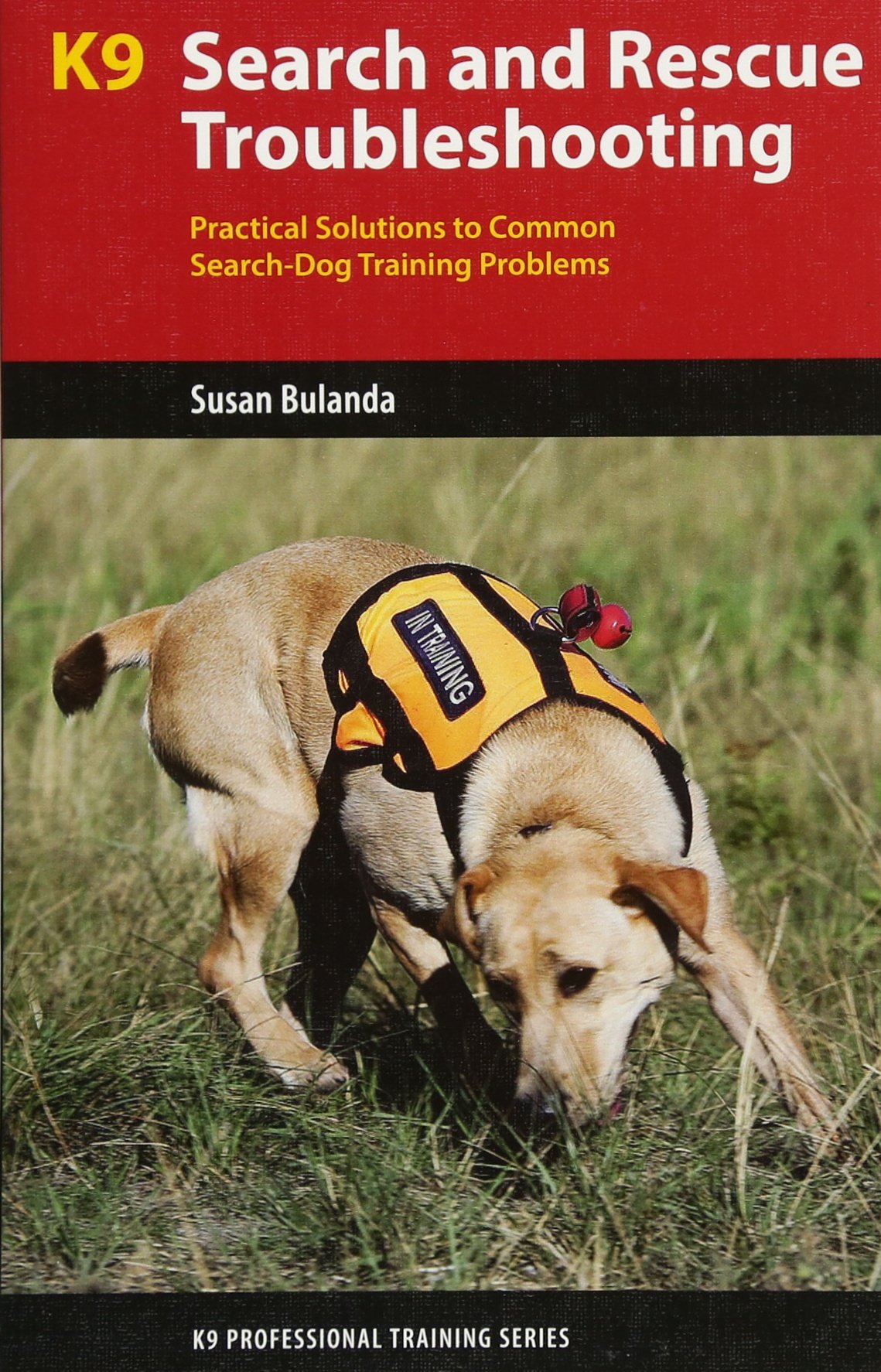
K9 Search and Rescue Troubleshooting: Practical Solutions to Common Search-Dog Training Problems (K9 Professional Training Series)
$24.95
by Susan Bulanda



Diagnose and fix the most common training errors in your SAR dog with positive, effective methods. Susan Bulanda, bestselling author of Ready! Training the Search and Rescue Dog , is back with a new book that every SAR dog handler needs. Susan has spent decades working with SAR dog handlers around the world to improve the performance of their K9 teams with her positive, professional approach to training. Now, she shares the tips and tricks she’s learned over the decades to help handlers not only properly raise and train SAR dogs from puppies, but also to fix problems in dogs that have been improperly trained. Susan explores how the stages of a dog’s early development affect its behavior as an adult. She also presents the latest research in scent: what it is, how dogs detect it, and what they detect—crucial information for all SAR dog handlers, and a fascinating look at how dogs perceive the world. Learn how to: Find the right dog for SAR work. - Pick the right training method for you and your dog. - Avoid common handler mistakes during SAR operations. Susan Bulanda provides an easy read, particularly for those new to the world of K9 SAR. This is an excellent starter book that also has tips for the more experienced handler. I could relate to many of the problems Susan identifies. -- Norma Snelling, President, National Search Dog Alliance I found Susan’s book to be comprehensive and well written, with clear descriptions. Her book is useful and educational for both novice and seasoned K9 handlers. -- Sue Wolff, Secretary, National Search Dog Alliance I found Susan’s book to be comprehensive and well written, with clear descriptions. Her book is useful and educational for both novice and seasoned K9 handlers. -- Sue Wolff, Secretary, National Search Dog Alliance I found Susan’s book to be comprehensive and well written, with clear descriptions. Her book is useful and educational for both novice and seasoned K9 handlers. Susan Bulanda is recognized worldwide as an expert in animal behavior and K9 search and rescue who has formed and run two K9 SAR units. She is a founding member of the National Search Dog Alliance and a former vice president and dog chairperson of the International Association of Animal Behavior Consultants. An award-winning author, Susan has written hundreds of articles and eight books. CHAPTER 1: FINDING A GOOD SAR DOG The selection of a dog to use for SAR is the first step toward developing a successful SAR dog team. By the same token, the wrong dog (or handler) is a recipe for failure. There are three categories of SAR dogs that handlers attempt to train. Type One: The Pet When you decide to join a canine SAR team, you typically want to train your pet dog. Often, you entertain notions about you and your dog saving people and being heroes. If this is you and you are sincere, and your dog is capable and willing, this combination can succeed. However, the first lesson you must learn is that to be a good SAR dog handler, you must first be trained as a rescue person. Then you can specialize in the K9 aspect of SAR. A SAR dog handler is a rescue person who specializes in the use of the K9. The K9 is only one tool a rescue person uses to find missing people, and not all missions require the use of a dog. Understanding and accepting this key aspect of the SAR dog handler’s job is important because it influences your handler mindset, giving the dog a better chance to succeed. If you view SAR as just another activity for your dog, or a fun thing to do, you will inadvertently communicate that to your dog, which can affect the dog’s attitude toward the work. If you do not take SAR work seriously, your dog may not, either. Of course, the dog must enjoy the work and think it is fun. But your attitude toward SAR work should not be the same as when you are playing a game of fetch with your pet. When people have the “It’s all a game” attitude, the dog can interpret it to mean, “It is okay if I don’t feel like doing it today,” or the dog may feel it is acceptable to only do the parts he wants to do. The dog may even feel that if something better comes along, he will do that instead. As any working dog handler with experience knows, dogs are in tune with the moods and attitudes of the handler, even to the point where they can feel the handler’s attitude through the leash. A dog can smell your mood, since our moods change our body chemistry just enough to give a scent signal to a dog. Think of the dog that knows when his owner is afraid and the change in the dog’s behavior as a result, or the reaction of the dog when the owner is happy and excited. It is not only the tone of your voice, your body language, and your facial expressions that communicate to the dog, but your scent as well. Recent studies have shown that dogs have a special area in their brain to process human faces, which gives us another clue as to why dogs are sensitive to human social cues. Dogs are much more aware of what their handlers think