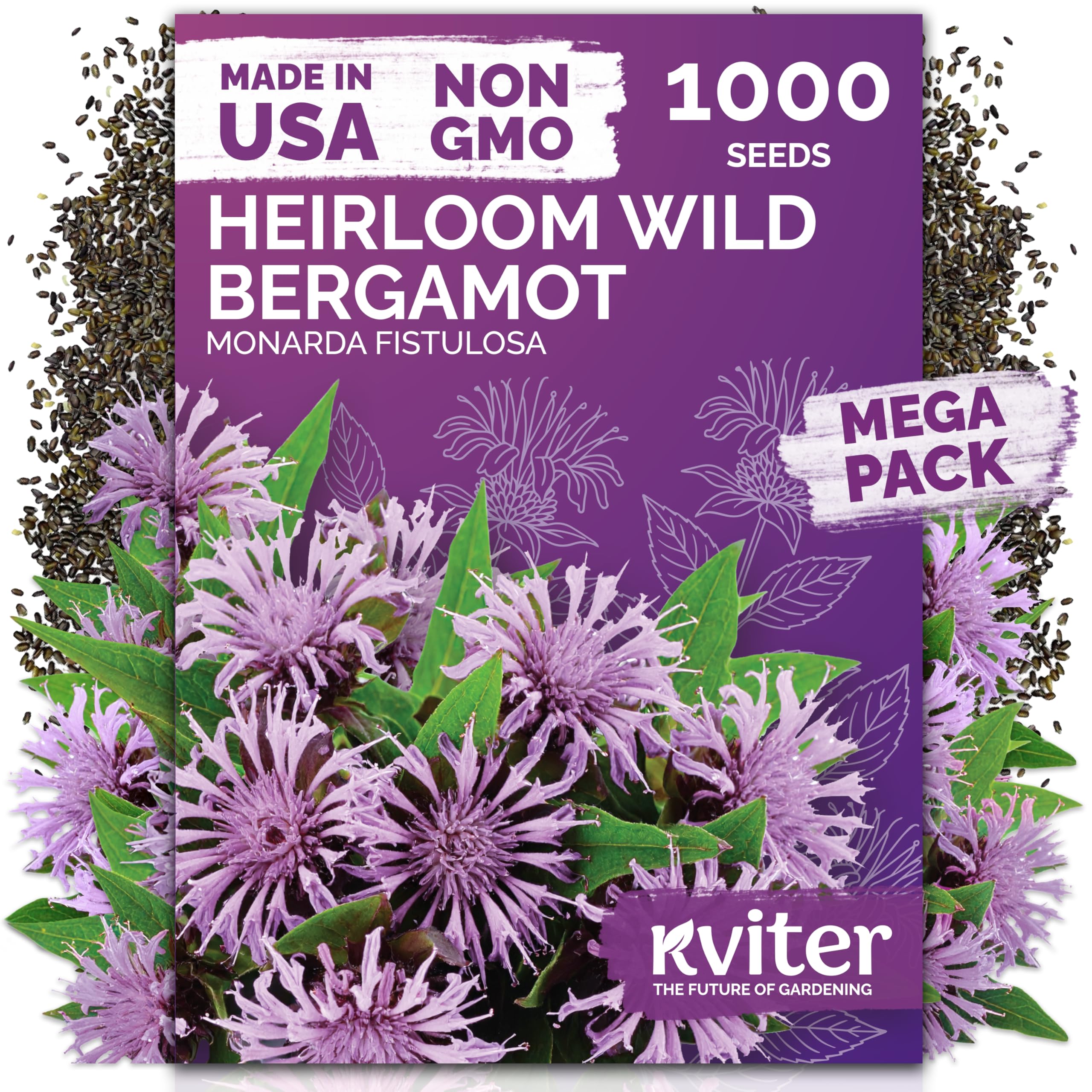



Wild Bergamot—also known as, Bee Balm seeds, Horsemint seeds, Oswego tea, or Monarda fistulosa—is a native perennial cherished for vivid color and soothing herbal flavor. From 1000 non‑GMO heirloom seeds you’ll grow upright 48 in. clumps that slowly spread by rhizome, painting beds in pink‑purple blooms from late summer to early fall. Nectar‑rich flowers attract hummingbirds, honeybees, butterflies, while the citrus‑mint scent keeps deer at bay. It is considered as wildflower herb seeds.
SOWING: Press bee balm seeds perennial on the soil surface outdoors in early spring at 60–70 °F, or start native bee balm plant seeds indoors 6–8 weeks before the last frost. Keep lightly moist; germination appears in 10–20 days. Thin or transplant bee balm plants live seedlings 12–18 in. apart to improve air flow.
Deadhead for extra bloom, cut stems to 4 in. after frost, and divide clumps every 2–3 years. Self‑seeding lightly, bee balm naturalizes into graceful perennial wildflower drifts without becoming invasive, filling herb garden paths with citrus fragrance. Moderate fertility produces stronger stems and richer color; avoid soggy sites that invite mildew.
USES: Harvest flowering stems just as buds open for fragrant bouquets. Dry petals for potpourri or brew citrusy leaf tea often called bergamot tea. Edible blossoms brighten salads and desserts.
ECO VALUE: Hardy in USDA 2‑9, this easy perennial anchors pollinator gardens, prairie mixes, and herb beds. Pair with echinacea, rudbeckia, or switchgrass to create a nectar corridor supporting native bees from spring through frost. Whether you sow flower seeds to plant outside in meadow strips or tuck a few perennial seeds into patio containers, Wild Bergamot delivers effortless, medicinal, and ornamental charm..
bee balm plants live perennial,semillas de flores para sembrar,cut flower seeds,edible flower seeds