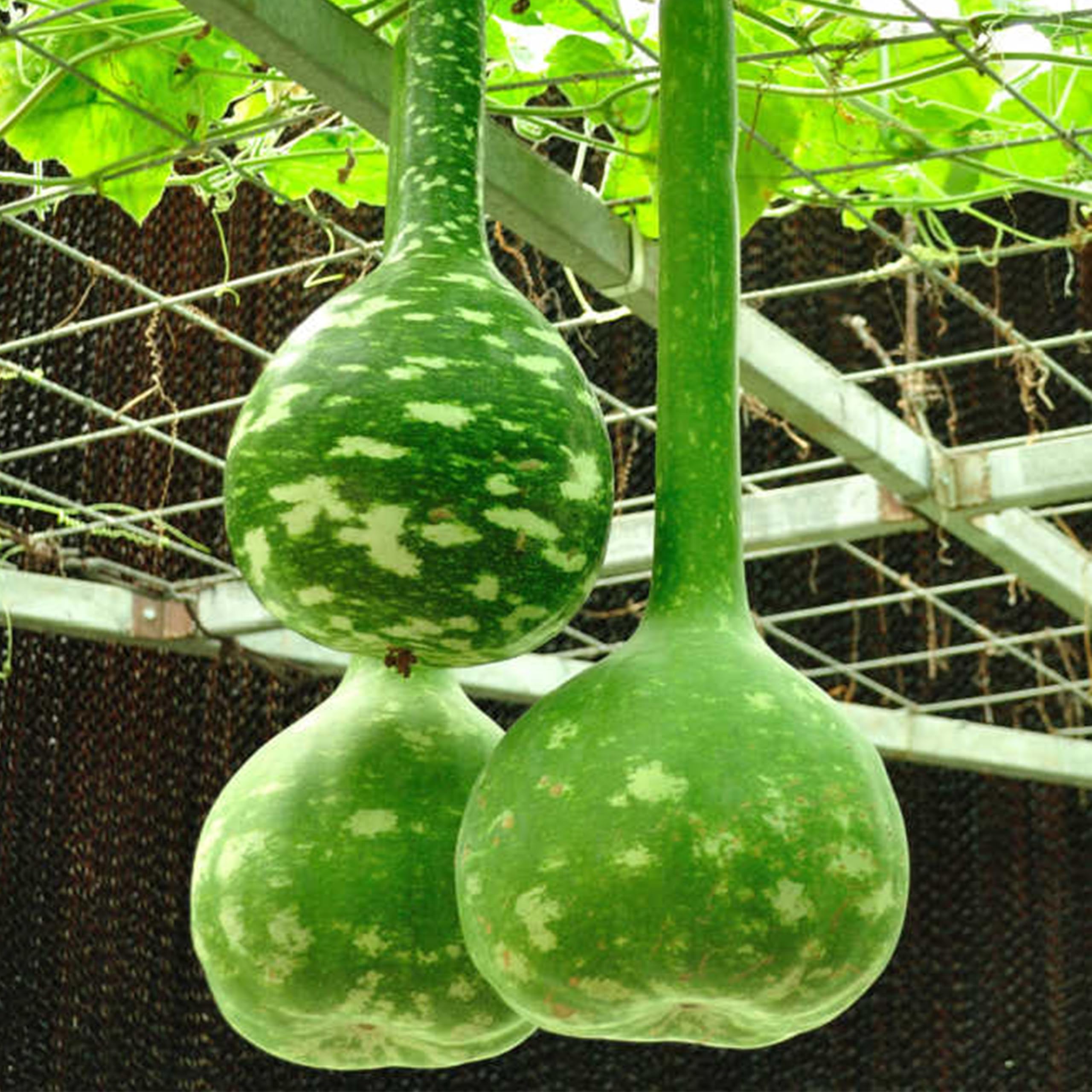



Embark on a creative gardening journey with the Dipper gourd, a fascinating variety of Lagenaria siceraria, in different areas it may occasionally be called as calabash gourd, White-Flower Gourd, Bottle Gourd etc. Known for its iconic elongated neck and “dipper” base, this gourd matures in about 120 days, transitioning from green to tan upon drying, and offers endless DIY possibilities, from ladles to birdhouses.
Start by sowing gourds seeds for Planting indoors 3–4 weeks before the last spring frost, ensuring a steady soil temperature near 70°F. For direct sowing, plant Gourd seeds for Planting outdoors in well-draining, loamy soil once the earth warms. Space seeds 1 inch deep and 5 feet apart, thinning to the strongest seedling. Provide a sturdy support structure, like a fence or arch, to help the plant’s climbing tendrils thrive.
A cousin to the bottle gourd, these ornamental gourd seeds are prized for their artistic appeal once cured. Training vines vertically improves airflow and prevents rot. Gardeners appreciate how swan gourd seeds and long handle gourd seeds share dramatic forms and similar growth habits. For variety, try a gourd seeds variety pack, which features shapes from elongated necks to whimsical silhouettes. After harvest, clean each gourd with a mild vinegar solution and let it dry thoroughly for weeks until it’s lightweight with rattling seeds inside.
Beyond artistry, a mature gourd plant yields multiple fruits, making it ideal for both decorative and functional uses. As an heirloom seeds choice, these vines preserve a time-honored gardening tradition. Cross-pollinate with decorative gourd seeds to expand your harvest or enhance vertical accents. With minimal care—consistent watering, sun, and moderate soil temperature—these vine seeds reward you with sprawling growth and stunning shapes. Elevate your garden with the robust fruit of Lagenaria siceraria, perfect for any creative endeavor.