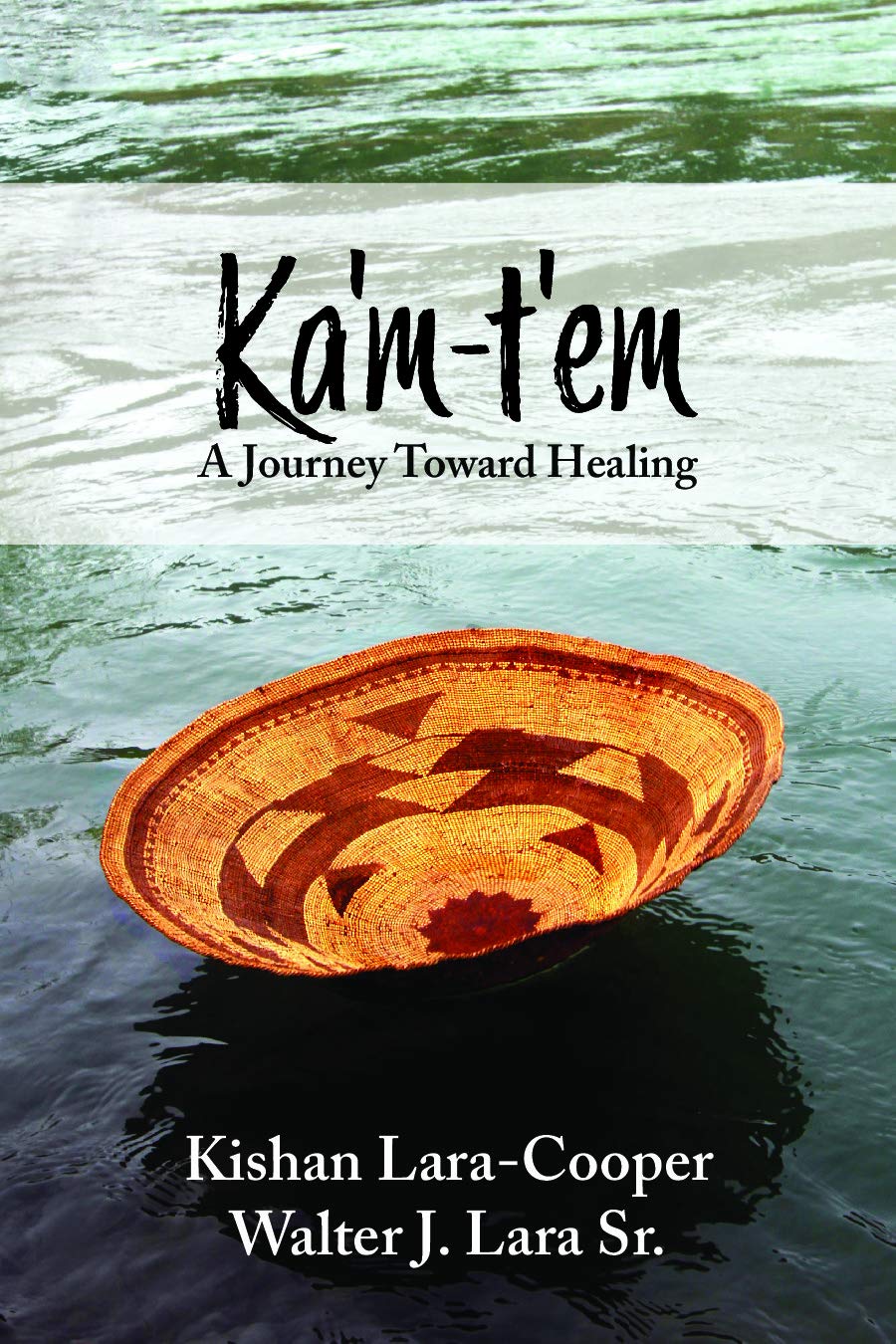



Many generations ago, along the Klamath River, there lived a wise woman who wove the most beautiful baskets known to humankind. Her baskets were woven so tightly that water could not penetrate them. She was aging and had many experiences to share. Through prayer, she began to weave a basket for the people. The wise woman worked day after day, weaving, praying, and singing. As her strong hands moved gracefully over her materials, she shared a story to be retold, a song to be sung again, and a lesson to be learned. When she finished, she had created a large beautiful basket bowl. She called this basket Ka'm-t'em because it held the treasures of the people. In a Yurok village at Bluff Creek, the woman placed the basket in the water where two rivers join together, and stood silent as the basket began its journey. Ka'm-t'em: A Journey toward Healing was inspired by this piece of history. Just as the woven basket was made to share knowledge, one purpose of this book is to expose you, the reader, to Indigenous knowledge, the journey to protect it, and the healing that occurs through transmitting it to younger generations. This book presents Indigenous testimonials of resistance, renewal, advocacy, resilience, beauty, and awakening. The precious knowledge shared in this book inspires reclamation of identity and encourages readers to seek, search, embrace, and value their own truth. Dr. Kishan Lara-Cooper (Yurok/Hupa/Karuk) is an Associate Professor and Chair of the Department of Child Development at Humboldt State University, where she teaches courses in child development, language development, history, social and cultural considerations, and instructional practices in American Indian education. She earned her Doctor of Education degree from Arizona State University in Curriculum and Instruction with an emphasis in Indian Education and a specialization in language revitalization, community-based education, and culturally-based pedagogy; her Master of Arts degree in Linguistics from the University of Arizona; and her Bachelor of Arts degree in Native American Studies from Humboldt State University. She has a vested interest and dedication to the preservation of language, culture, and ceremony. She is actively involved in the revitalization of the flower dance (a women’s rite of passage ceremony) and the jump dance (a ceremony for the continuance of humankind) on the Nererner coast. She cherishes her relationships with elders, the community, the natural environment, and the spiritual elements of the world. As a professional, she understands the impact of language, culture, and ceremony on healing, identity, self-esteem, and self-efficacy. She is an advocate of shifting the paradigm of education and institutional frameworks. Walt Lara Sr. (Yurok) is a respected spiritual leader and wisdom keeper of the Yurok tribal people. He is recognized as a Native cultural and political luminary among Tribal Nations throughout the State of California. Walter has dedicated his life to the renaissance of Earth Healing and Earth Renewal Ceremonies and the revitalization of spiritual practices and lifeways of the Yurok People. He has been guided in advocacy by his late uncle, Milton Marks. Mr. Lara is the co-founder of the Northwest Indian Cemetery Protective Association (NICPA), a community-based organization established for the protection of tribal burial sites (cemeteries) and sacred places. NICPA was instrumental in the first repatriation of Yurok human remains and artifacts and the passage of the American Indian Religious Freedom Act in 1978. He was appointed as a commissioner of the Native American Heritage Commission of California. The Commission, through the Office of the State’s Attorney, was a key litigant in the infamous landmark case Lyng v. The Northwest Indian Cemetery Protective Association (NICPA), an American Indian religious freedom case with national precedence. The Heritage Commission, working with California Tribal Nations, was instrumental in the repatriation of human remains and funerary item that were warehoused within the State Parks Department. The Commission also established statutory protection to prevent continued looting and desecration of graves and ceremonial sites. In addition, Mr. Lara served as the chairperson and Area 1 Director of the Inter-Tribal Council; the chair of Tricounties; a member of the Indian Action Council; a member of the California Rural Indian Health Board’s (CRIHB) traditional health board; a member of the California State Native American Graves, Protection, and Repatriation Act (NAGPRA) Commission; and the Smithsonian NAGPRA Advisory Board. Mr. Lara is an honored recipient of numerous awards, including the Society for California’s Archeology’s California Indian Heritage Preservation Award. He is the author of “Blacksnake’s Corner” in the Smoke Signals Journal, where he shares historical information that is unique to California. Mr Lara has worked alongside his wife, Callie and h