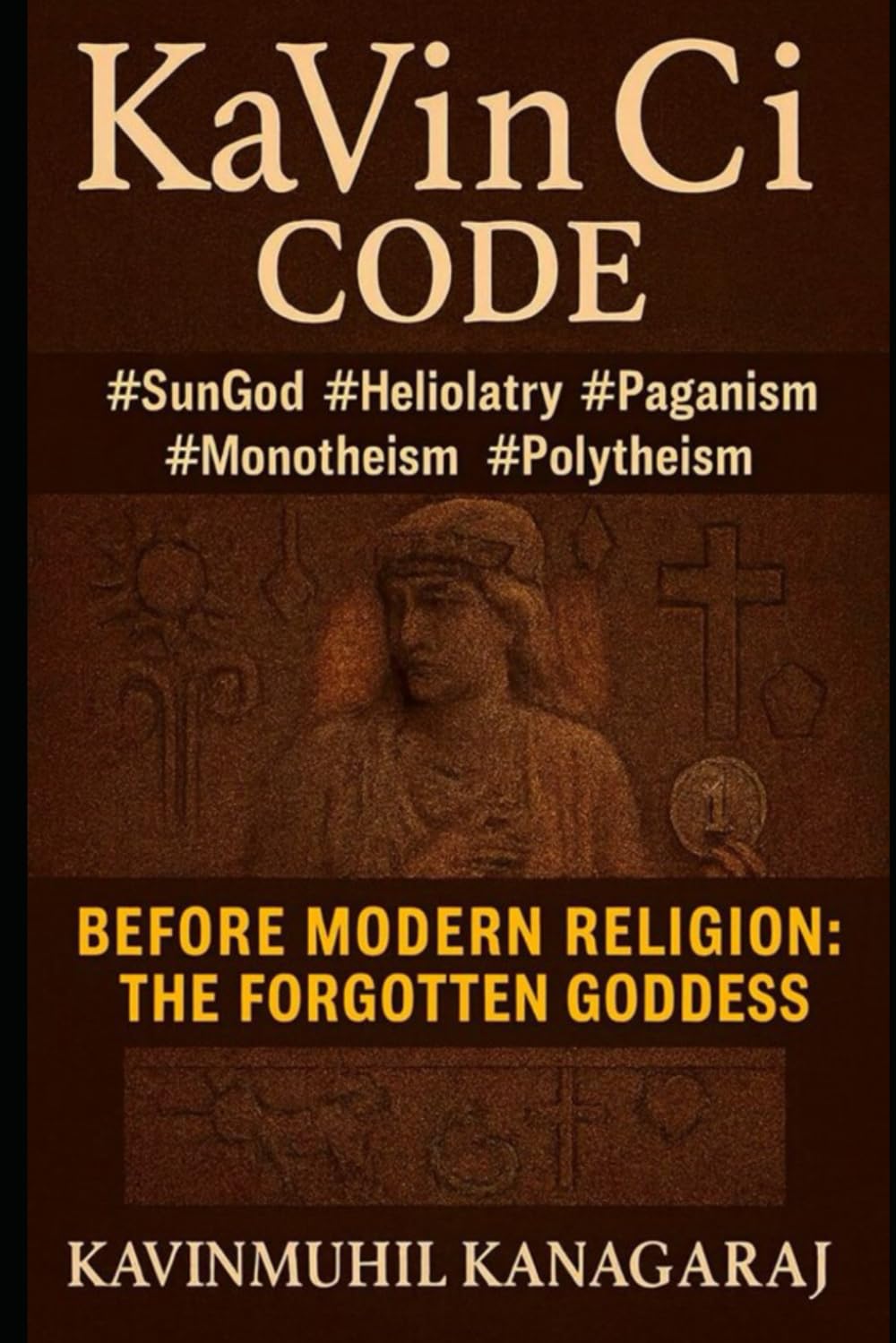



Forgotten Goddess is a reflective, cross‑cultural exploration of how human survival instincts—fear, observation of nature, seasonal logic, and social pressure—gradually transformed into symbols, rituals, and organized religions. Moving fluidly across Georgia’s pagan past, Vedic thought, Abrahamic traditions, Hermeticism, and ancient astronomy, the book argues that belief systems did not emerge from sudden revelation alone, but from accumulated human responses to light, death, fertility, power, and uncertainty. Beginning with personal hunches and unpreached truths, the narrative traces why early humans trusted stones, stars, trees, and cycles more than written sentences. It examines how astrology, solar observation, geometry, and agricultural science were once practical knowledge—later reframed as doctrine, erased, or rebranded under political and social pressure. Symbols such as the Tree of Life, the cross, halos, snakes, wine, zodiac figures, and sacred architecture are shown to predate formal religions, repeatedly repackaged to preserve continuity while asserting new authority. A central thread follows the evolution of light: from the sun as a watched guide rather than a worshipped god, to doctrines that domesticated cosmic forces into moral systems. The book pays special attention to women’s history, showing how freedom, beauty, Venus, the moon, and sensuality were alternately honored, restricted, and sanctified as power shifted. Through case studies—from Georgian rituals and Medea’s legacy to Qur’anic and Biblical references to the sun—the work reveals a shared human pattern: defense becomes devotion, survival becomes sacred, and strategies of life quietly march into ritual. Ultimately, Under the Same Sun asks whether religious humanity represents progress or regression—and proposes harmony as the forgotten middle path. It invites readers to look upward not for dogma, but for understanding, reminding us that across cultures and centuries, we were always shaped by the same light, telling different stories beneath it.