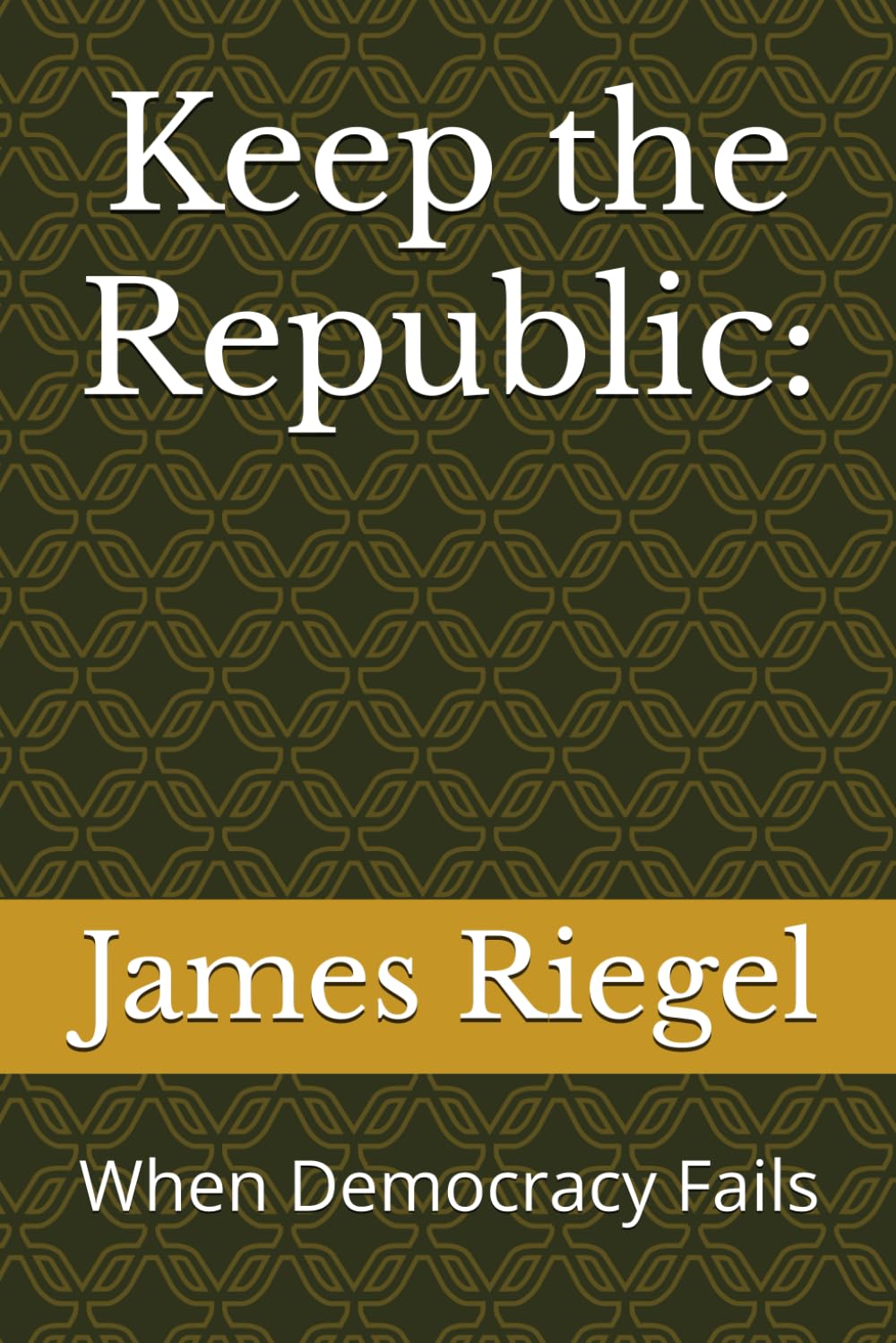



The year is 1976; in a freshman economics class at a prestigous university I'm listening to a bored graduate assistant drone on about the virtues of Keynesian economics. There are a variety of elegant bar graphs and pie charts showing how we can manipulate the value of money, produce that which will bring the country into equilibrium and make the world a better place. Yet everything taught is daily being refuted in the headlines of the morning papers. I left there, realizing that their type of knowledge was never going to be useful to me, and started a program of reading to really educate myself. I began to see similar ideas written in different eras by different men with different backgrounds, related to each other; but seldom did the writers trace their ideas backwards to their origins or forward to their most likely outcome. It became readily apparent that a proper study of the economics of prosperity has little to do with statistics of labor utilization and the allocation of natural resources, but rather with the behavior of human beings.Humans act on the basis of the ideas which they hold to be true so the first object is to discover those which are the most effective in the real world. Comparing Aristotle to Plato, Jefferson to Hamilton, Darwin to St. Augustine, Adam Smith to Marx, and Hayek to Hitler exposes a set of positive moral principles that runs like an arrow through time leading to better answers. Family and culture are the agents for transmission of those principles from one generation to the next which lead to the knowledge and maturity necessary for self government to come into being. Universal, organic but often hidden processes, intuited by the Founding Fathers, but not then capable of full expression can be mirrored in the institutional arrangements of society, government and the economy, allowing the progress of man to continue free of destructive authority. The resulting extended order allows each individual to come as near as he or she can to the realization of those creative powers which are peculiarly and distinctively included in their own personality. Where that order is allowed to evolve there is prosperity. Where it is inhibited there will be poverty. The first Riegels came to Pennsylvania in 1734 and fought in the Revolution. My ancestors went on to create two Fortune 500 companies and provide employment for thousands of people in four states. The focus of the book is to describe the ideas which made this and other similar American stories possible, and what needs to be done to create a second Renaissance through their re-discovery and application. Keep the Republic takes the unfinished thoughts and scattered ideas gleaned from our country's history and weaves them into a comprehensive discussion of the most important issues facing us today. In the end it tells the story of becoming free and finding a fulfilling life in the unfolding of the potentials hidden within each of us. The book is the biography of a most important idea. We all bring our own bits of knowledge to market, to advance the knowledge of all, in the effort to develop and preserve the convictions necessary for man's continued growth and evolution.