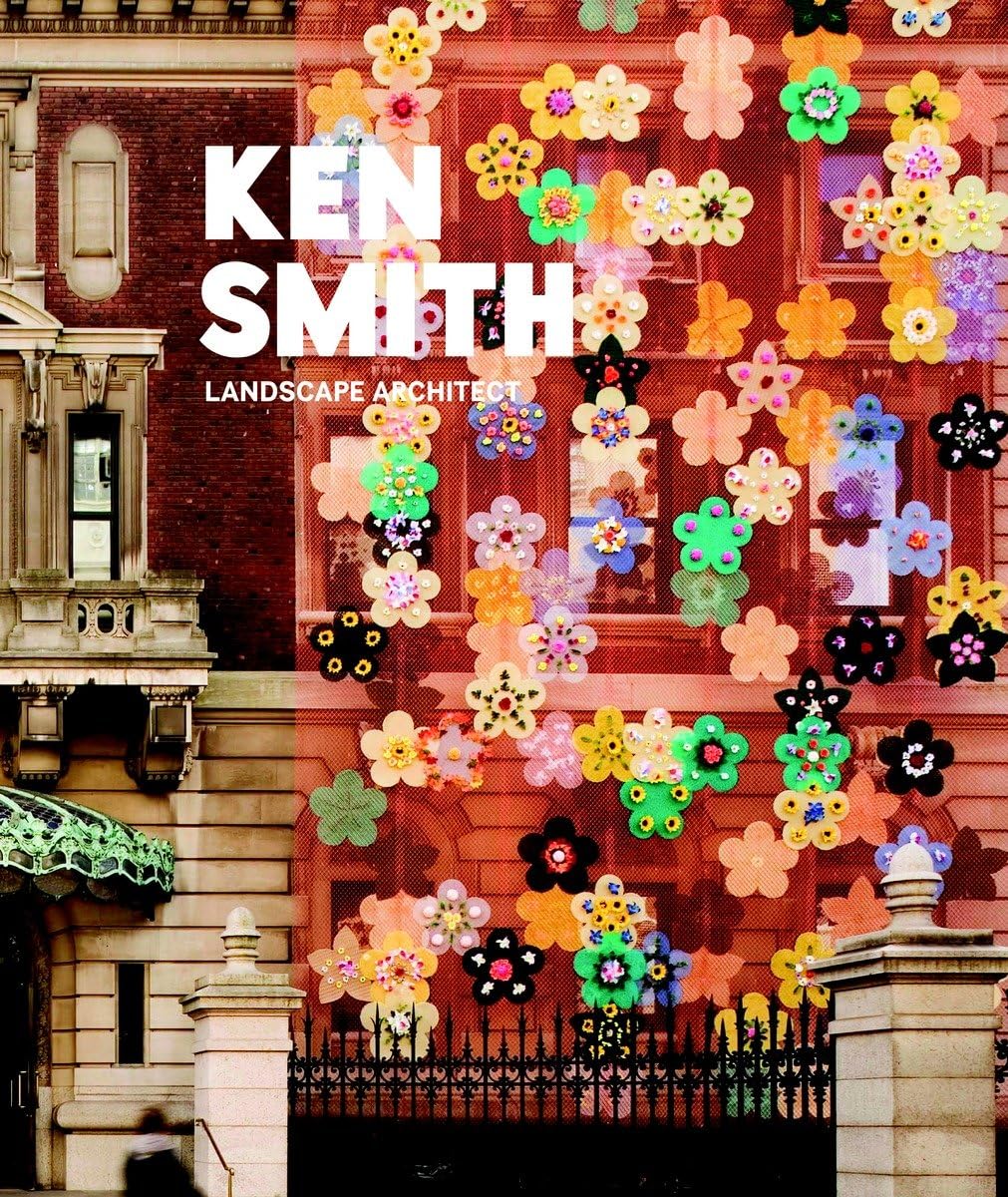



Both a landscape designer and a public artist, Ken Smith produces designs that range in scale from small public installations to vast parks. He is known for inventive and imaginative gardens and landscapes, some of which use little or no natural plant material. His projects include public, commercial, and private work: urban parks, streetscapes, plazas, gardens, public art commissions, memorials, museums and institutions, urban development and multiuse projects, restoration of modern-era landscapes, waterfront planning and design, and residential projects. Among Smith’s best-known projects are the MoMA Roof Garden, consisting of white gravel, recycled black rubber, crushed glass, sculptural stones, and artificial boxwood plants in a camouflage pattern; the Elevated Acre, a one-acre urban plaza with a sloping topography of planted dunes and an elevated view of New York Harbor; and Orange County Great Park, California, a redevelopment of a Marine Corps air station to include a 2.5-mile canyon, 20-acre lake, cultural terrace, botanical gardens, great lawn, performing arts venue, veterans memorial, aircraft museum, sports park, nature preserve, and wildlife corridor. "An essential for anyone interested in the cutting edge of landscape and garden design . . . Smith’s own introductions to the projects are concise, unpretentious and mercifully jargon-free, while John Beardsley’s measured introduction puts the work in its context without resort to flattery or hype." ―The Daily Telegraph "If there's one thing for certain about the gardens designed by landscape architect Ken Smith, it's that you'll never forget the ones you've experienced, whether in person or on the printed page." ―GardenDesignOnline “The monograph breaks new ground in landscape architecture books with its integrated use of text, graphic layout, and photography of built projects, which are structurally formulated to reinforce the author's design approach . . . A lovely book, extremely informative, well photographed and shows the range of work.” ―Association of Landscape Architects 2010 Professional Awards Jury Ken Smith is the principal of Workshop: Ken Smith Landscape Architect, with offices in New York and Irvine, California. He is a graduate of the Harvard Graduate School of Design, where he is currently a visiting design critic, and Iowa State University. John Beardsley is a senior lecturer in the department of landscape architecture at the Harvard Graduate School of Design and director of garden and landscape studies at Dumbarton Oaks in Washington, D.C. He has written extensively on public and environmental art, including the books Earthworks and Beyond: Contemporary Art in the Landscape and Gardens of Revelation: Environments by Visionary Artists. From: Introduction: Lines of Work John Beardsley Dig into the projects presented in this book—which effectively constitutes a midcareer retrospective of Ken Smith's work—and you may find yourself wondering: What on earth does he think he is up to? Is he a landscape architect or an installation artist? A public servant or a provocateur? An elite gardener or a populist? A careful site sculptor or an in-your-face simulator? The perplexing truth is that Ken Smith is unapologetically all of these things—and others as well. In the space of two short decades, he has worked on an astonishing array of projects, from public parks in Toronto, Santa Fe, and Orange County, California, to private gardens in posh communities like Sagaponack, New York; from over-the-top art installations of glowing topiary, artificial stone, and plastic flowers to serene urban plazas in Manhattan, a colorful public schoolyard in Queens, and a community garden in Brooklyn. All of which prompts yet another question: How on earth are we to make sense of this? It might help to know that Smith regards his practice as in some ways analogous to a fashion house, with different product lines for different market niches. Just as a clothing designer might produce both haute couture and prêt-à-porter, Smith responds to various client demands, from private to public, from high-end to pro bono. He also likens his training to that of a budding fashion designer, someone who works in another shop—in his case, the various offices of Peter Walker and Martha Schwartz—before taking a distinctive silhouette and starting his own house. While analogies between fashion and landscape architecture might seem a stretch, Smith is quick to point to the efforts of curators and writers like Richard Martin and Harold Koda to present fashion as a sophisticated art with its own cultural histories, whether in the service of elite or popular culture. Their attention to their subject as social phenomenon as well as medium and craft suggests that an equally careful interrogation of the modes, meanings, and cultural uses of landscape is possible—which is very much what Ken Smith is about. Whatever the intended audience for his work and however much humor