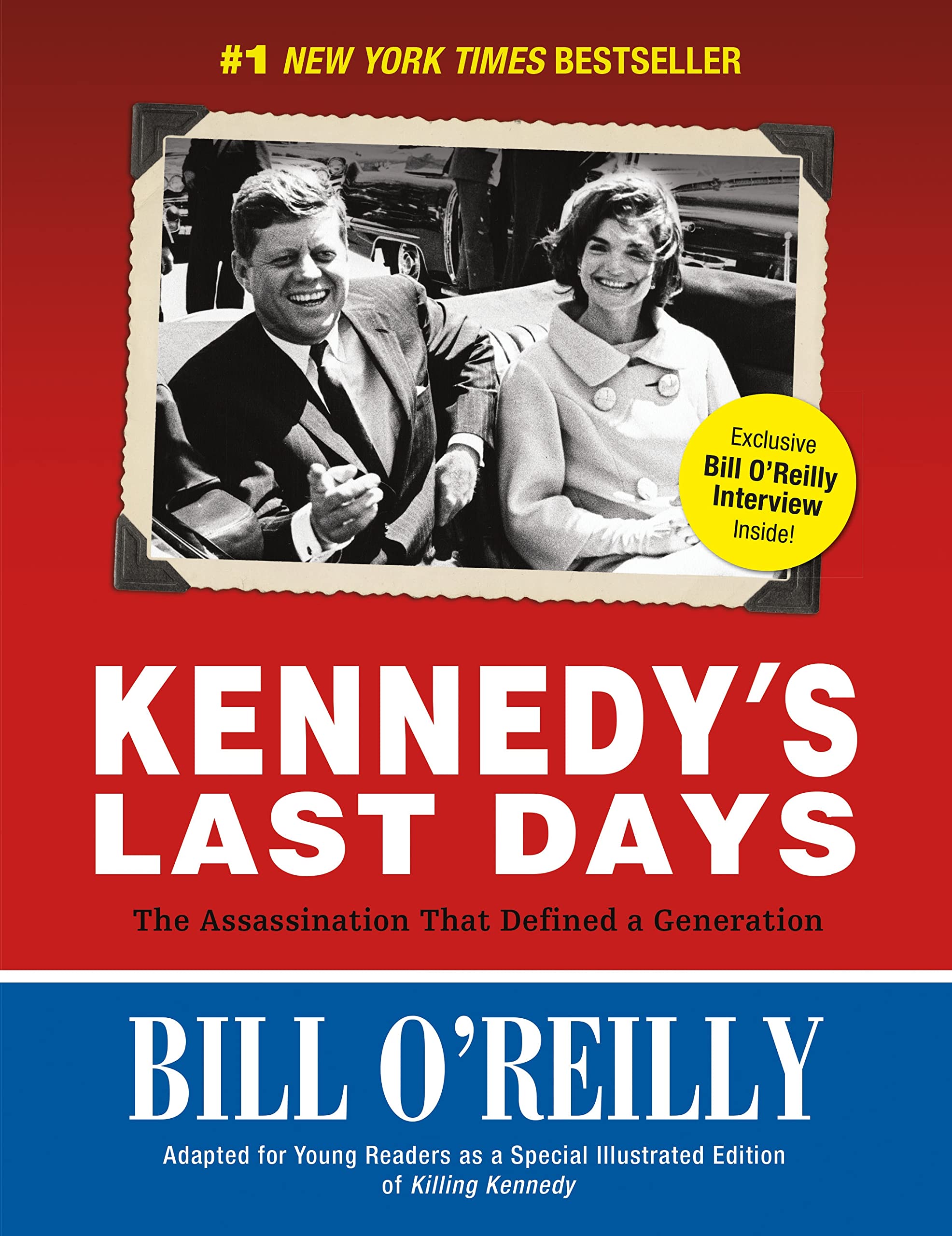



On a sunny day in Dallas, Texas, at the end of a campaign trip, President John Fitzgerald Kennedy is assassinated by an angry, lonely drifter named Lee Harvey Oswald. The former Marine Corps sharpshooter escapes briefly but is hunted down, captured, and then shot dead while in police custody. Kennedy's Last Days is a gripping account of the events leading up to the most notorious crime of the twentieth century. Author Bill O'Reilly vividly describes the Kennedy family's life in the public eye, the crises facing the president around the world and at home, the nation's growing fascination with their vigorous, youthful president, and, finally, the shocking events leading up to his demise. Adapted from Bill O'Reilly's bestselling historical thriller Killing Kennedy , with an unforgettable cast of characters, page-turning action, and art on every spread, Kennedy's Last Days is history that reads like a thriller. This exciting book will captivate adults and young readers alike. “The popularity of the adult title will drive interest, but this book is strong enough to draw its own audience. An excellent choice for middle-school libraries.” ― School Library Journal BILL O’REILLY’ s success in broadcasting and publishing is unmatched. He was the iconic anchor of The O'Reilly Factor , the highest-rated cable news broadcast in the nation for 16 consecutive years. His website BillOReilly.com is followed by millions all over the world, his No Spin News is broadcast weekday nights at 8 and 11 (ET) on The First TV, and his O’Reilly Update is heard weekdays on more than 225 radio stations across the country. He has authored an astonishing seventeen #1 bestsellers; his historical Killing series is the bestselling nonfiction series of all time, with over 18 million books in print. O’Reilly has received a number of journalism accolades, including three Emmys and two Emmy nominations. He holds a History degree from Marist College, a master's degree in Broadcast Journalism from Boston University, and a master’s degree from Harvard’s John F. Kennedy School of Government. O’Reilly lives on Long Island where he was raised. His philanthropic enterprises have raised tens of millions for people in need and wounded American veterans. Chapter Six February 1961 The White House 1:00 p.m. THE PRESIDENT OF THE UNITED STATES is on schedule. Almost every afternoon, at precisely 1:00 p.m., he slips into the heated indoor pool located between the White House and the West Wing. John Kennedy does this to soothe his aching back. The pain is constant and so bad that he often uses crutches or a cane to get around, though rarely in public. He wears a back brace, sleeps on an extra- firm mattress, and receives regular injections of an anesthetic to ease his suffering. Aides know to look for a tightening of his jaw as a sign that the presidentÕs back is acting up. The half hour of breaststroke and the heat of the pool are part of KennedyÕs physical therapy. The White House staff is getting used to the new president and his family. Very little that was unexpected happened in the White House during the eight years the previous president, Dwight Eisenhower, lived there. But now everything has changed. The Kennedys are much less formal than the Eisenhowers. Receiving lines are being abolished, giving formal functions a more casual feel. The first lady is readying the East Room for per for mances by some of AmericaÕs most notable musicians, such as cellist and composer Pablo Casals, opera singer Grace Bumbry, jazz artist Paul Winter, and even full symphony orchestras. Still, the White House is a serious place. The presidentÕs daily schedule revolves around periods of intense work followed by breaks for swimming and family time. He rises each morning around seven and reads the newspapers in bed, including the New York Times, Washington Post, and Wall Street Journal. Kennedy is a speed- reader; he can read and understand 1,200 words per minute. He is done with the newspapers in just 15 minutes, and then moves on to a pile of briefing books, reports prepared by his staff that summarize information about events going on around the world. The president then has his usual breakfast in bed: orange juice, bacon, toast slathered in marmalade, two softboiled eggs, and coffee with cream. He is in the Oval Office at nine oÕclock sharp. He sits back in his chair and listens as his appointments secretary, Kenny OÕDonnell, maps out his schedule. Throughout the morning, as Kennedy takes calls and listens to advisers brief him on what is happening in the rest of the world, he is interrupted by his handpicked staff. In addition to Dave Powers, who is now special assistant to the president, and Kenny OÕDonnell, there are men such as the former Harvard history professor Arthur Schlesinger Jr.; Ted Sorensen, the Nebraska- born special counselor and adviser; and Pierre Salinger, the former child prodigy pianist who serves as press secretary. After